



Key Takeaways
- The iPhone 8 weighs 148 grams, making it comfortable for one-handed use over long periods.
- The iPhone 8 Plus weighs 202 grams, which can cause arm strain during extended use like gaming or video recording.
- Most users do not experience actual discomfort from either phone's weight.
- The subjective feeling of weight differs significantly between the iPhone 8 and 8 Plus during marathon sessions.
Table of Contents
- Understanding the iPhone 8 Size Specs
- Head-to-Head Size Comparison
- Practical Dimension Applications: Finding the Right Size
- Weight Distribution and Comfort
- Thickness: The Overlooked Dimension
- Selecting Cases Based on Exact Dimensions
- Display Specifications and Viewing Experience
- Color Accuracy and Brightness Performance
- Practical Dimension Applications: Lifestyle Matching
- Measuring Your iPhone for Accessories
- Protection Without Size Compromise
- Historical Context and Modern Relevance
Understanding the iPhone 8 Size Specs
The size of iPhone 8 and 8 Plus represents two distinct approaches to smartphone ergonomics. The standard iPhone 8 measures 138.4 mm (5.45 inches) tall, 67.3 mm (2.65 inches) wide, and 7.4 mm (0.29 inch) thick, weighing 148 grams. This creates a one-handed device that fits comfortably in standard pockets while delivering a 4.7-inch Retina HD display with 1334x750 pixel resolution at 326 ppi.
The iPhone 8 Plus expands to 158.4 mm (6.24 inches) tall and 78.1 mm (3.07 inches) wide, adding 20 mm in height and nearly 11 mm in width. At 202 grams, it weighs 54 grams more than the standard model, equivalent to carrying an extra golf ball. The larger footprint accommodates a 5.5-inch display with 1920x1080 resolution at 401 ppi, delivering noticeably sharper text and more screen real estate.
For those considering a new case or accessory, it's important to note that older iPhones like the iPhone 8 and 8 Plus have unique sizing needs that differ from newer models.
Display Technology Behind the Numbers
Both models use Retina HD technology with IPS LCD panels, but pixel density differs significantly. The iPhone 8's 326 ppi ensures individual pixels remain invisible at typical 10-12 inch viewing distances, while the Plus's 401 ppi creates even sharper text rendering. This density advantage becomes apparent when reading small fonts or examining detailed photos up close.
Head-to-Head Size Comparison

| Specification | iPhone 8 | iPhone 8 Plus |
|---|---|---|
| Height | 138.4 mm (5.45") | 158.4 mm (6.24") |
| Width | 67.3 mm (2.65") | 78.1 mm (3.07") |
| Thickness | 7.4 mm (0.29") | 7.5 mm (0.30") |
| Weight | 148 g (5.22 oz) | 202 g (7.13 oz) |
| Screen Size | 4.7 inches | 5.5 inches |
| Resolution | 1334x750 px | 1920x1080 px |
| Pixel Density | 326 ppi | 401 ppi |
The thickness difference is negligible at just 0.1 mm, making both equally slim. The real distinction lies in height and width, where the Plus creates a fundamentally different user experience through its expanded dimensions.
Practical Dimension Applications: Finding the Right Size
Your daily routine determines which iPhone 8 and 8 Plus specifications work best. The iPhone 8's 67.3 mm width slides easily into jacket pockets and fits comfortably in most hands for one-handed operation. Its 148-gram weight feels nearly weightless during extended calls or texting sessions.
The Plus model's 78.1 mm width pushes pocket compatibility limits, especially in fitted clothing. Standard men's jean pockets accommodate phones up to 72 mm comfortably, the Plus creates noticeable tension. However, the extra 20 mm height and 0.8-inch larger display eliminate constant scrolling when reading articles or browsing social media.
If you're looking for more guidance on choosing the right case for your device, check out this helpful article on the iPhone 8 and 8 Plus case for tips and recommendations.
One-Handed vs. Two-Handed Usage
The iPhone 8's 5.45-inch height allows most users to reach the top corners without shifting their grip. Apple designed the Plus with Reachability (double-tap home button) specifically because its 6.24-inch height exceeds comfortable one-handed reach for many users. This feature slides the interface down for easier thumb access, acknowledging the ergonomic challenge.
Pocket and Purse Considerations
Women's clothing typically features narrower pockets, making the iPhone 8's compact dimensions more practical for everyday carry. The Plus requires purse carry or cargo pockets for comfortable accommodation. When sitting, the Plus's width can create pressure points in tight pockets, while the standard model remains unnoticeable.
Weight Distribution and Comfort
The 54-gram difference between models becomes apparent during extended use. The iPhone 8 at 148 grams can be held one-handed indefinitely without fatigue, making it ideal for lengthy phone calls or gaming sessions. The Plus at 202 grams introduces noticeable heft that benefits from two-handed operation during extended periods.
This weight difference stems partly from the Plus's larger battery, which provides 1-2 hours additional video playback compared to the standard model. Heavy phone users often find the trade-off worthwhile, slightly more weight for significantly longer battery endurance throughout the day.
Impact on Extended Use
Long texting sessions or video recording reveal the weight distinction clearly. The iPhone 8 at 148 grams can be held one-handed indefinitely without noticeable fatigue. The Plus at 202 grams introduces arm strain during extended gaming or video recording when muscles accumulate tension. Neither weight creates actual discomfort for most users, but the subjective "feel" differs significantly during marathon usage sessions.
Heavy phone users spending 4+ hours daily engaged with their device find the standard model's lightness becomes a genuine advantage. The Plus benefits from two-handed operation during extended sessions, though one-handed use remains possible. Casual users adapt to either weight within days, but power users notice the difference throughout extended workflows.
Battery Impact from Weight Difference
The Plus's extra weight stems partly from its bigger battery, which delivers meaningfully longer endurance, typically 1-2 hours additional video playback compared to the standard model. This creates a direct trade-off: slightly more weight yields significantly extended usage between charges. For remote workers and frequent travelers, the Plus's heft feels justified by all-day battery performance.
Larger displays require more power to illuminate additional pixels, but the Plus compensates with proportionally larger battery capacity. The size of iPhone 8 and 8 Plus directly correlates with battery endurance, making the weight difference functionally beneficial rather than purely aesthetic.
Thickness: The Overlooked Dimension

At 7.4 mm for the iPhone 8 and 7.5 mm for the Plus, thickness represents remarkable engineering achievement. Both phones slide effortlessly into standard pockets and fit most desk organizers. The 0.1 mm difference is imperceptible, both feel equally slim in hand. However, the Plus's greater overall footprint creates the illusion of additional bulk despite matching thickness.
Case selection impacts thickness perception more than bare phone dimensions. A slim case adds roughly 2-3 mm, bringing total thickness to 9.5-10.5 mm. Protective cases add 3-5 mm more, reaching 12-13 mm for fortified setups. This progression matters when filling tight spaces or navigating drawer organizers designed for specific device profiles.
Modern phones have largely abandoned the race toward extreme thinness, but both iPhone 8 models remain remarkably slim by 2025 standards. The engineering from 2017 still impresses, few current devices match this profile while maintaining structural integrity and wireless charging capabilities.
Selecting Cases Based on Exact Dimensions
Finding cases that fit perfectly requires matching exact phone dimensions within tight tolerances. iPhone 8 cases measure approximately 142 mm tall and 71 mm wide, while iPhone 8 Plus cases reach 162 mm tall and 82 mm wide. Mixing cases between models creates two critical problems: undersized cases leave edges exposed to impact damage, while oversized cases shift during pocket movement, creating false security.
Slim cases add roughly 2-3 mm thickness and 1-1.5 mm width per side. The iPhone 8 with protection reaches 70-71 mm wide, still comfortable in standard pockets. The Plus with equivalent protection hits 80-81 mm wide, becoming noticeably snug when sitting. For essential pocket carry, pair the Plus with minimal-profile cases that prioritize dimensional accuracy.
Pro Tip: Hard plastic shells maintain consistent thickness, while silicone materials can compress under pressure, creating dimensional variance that affects pocket fit predictability.
Smartish Wallet Slayer: Precision Engineering
Best for: Users who demand exact fitment with integrated functionality
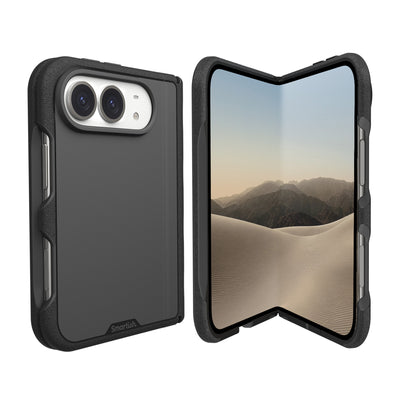
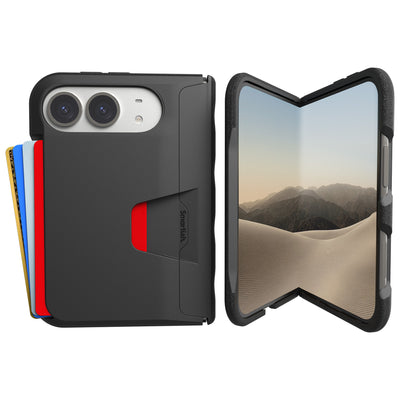
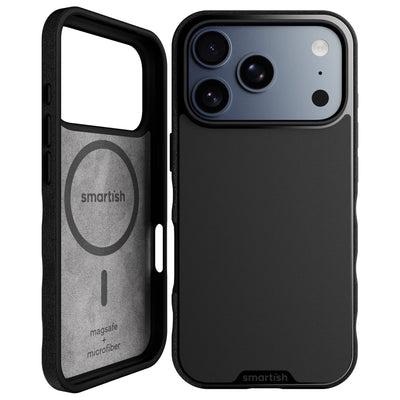
The Wallet Slayer line delivers precisely engineered dimensions that complement both iPhone 8 models without compromising their slim profiles. Vol. 1 maintains the phone's original thickness while adding card storage through spring-loaded retention, no flaps or hinges that increase bulk. Vol. 2 integrates a kickstand within the same dimensional constraints, enabling hands-free viewing without pocket-carry penalties.
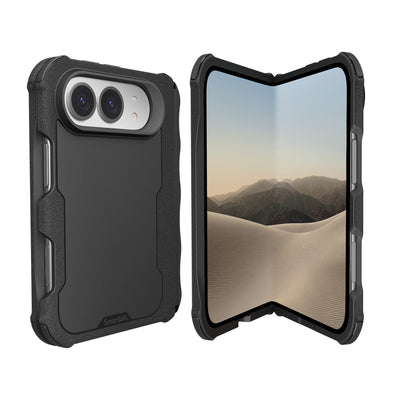
Air-pocket corners absorb impact while maintaining the case's minimal footprint. Raised edges protect face-down surfaces without adding noticeable thickness. The textured sides provide grippy-not-sticky handling that prevents drops while ensuring smooth pocket insertion. Each design prioritizes the size of iPhone 8 and 8 Plus as foundational constraints, building functionality within those limits rather than around them.
Display Specifications and Viewing Experience
Both models share Retina HD technology but deliver distinct viewing experiences through sheer scale differences. The iPhone 8's 326 ppi creates optimal pixel density where text remains crisp at normal 10-12 inch viewing distances. The Plus's 401 ppi eliminates any hint of pixelation even under close inspection, making small text inherently more legible through density advantage alone.
Resolution differences create practical implications beyond sharpness. The Plus's 1920x1080 display shows more content simultaneously, longer email threads, additional webpage content, extra spreadsheet rows. For productivity and content consumption, this real estate advantage justifies the larger footprint. Casual social media and messaging see minimal practical benefit from the extra resolution.
| Display Feature | iPhone 8 | iPhone 8 Plus | Practical Impact |
|---|---|---|---|
| Screen Size | 4.7 inches | 5.5 inches | 0.8" more viewing area |
Color Accuracy and Brightness Performance

Both displays use IPS LCD technology with P3 color gamut and True Tone adjustment. IPS ensures viewing angles remain accurate even when tilted significantly, important when sharing content or watching videos with others. P3 color gamut captures richer, more saturated colors than standard RGB, while True Tone adjusts color temperature based on ambient lighting to reduce eye strain.
Maximum brightness reaches 625 nits (typical) on both models, providing adequate outdoor visibility but not exceptional performance in direct sunlight. The size of iPhone 8 and 8 Plus doesn't affect brightness levels, both struggle equally in harsh lighting conditions. For extended outdoor photo review or reading, neither model excels, but both handle typical outdoor scenarios competently.
Practical Dimension Applications: Lifestyle Matching
Your daily routine determines which dimensions work optimally. Commuters using public transit benefit from the iPhone 8's 67.3 mm width and 148-gram weight for streamlined jacket pocket access. The narrow profile prevents fabric catching during quick retrieval. Conversely, users spending hours browsing social media, editing documents, or streaming video find the Plus model's extra 20 mm height and wider display eliminate constant scrolling and zooming.
One-handed operation favors the iPhone 8's 5.45-inch height, most users reach across the screen without shifting grip. The iPhone 8 Plus at 6.24 inches pushes one-handed boundaries, requiring Apple's Reachability feature (double-tap home button) to slide content downward for thumb access. Password entry and banking app navigation become notably more challenging on the Plus without grip adjustment.
Pocket Reality Check: Standard men's jeans accommodate phones up to 72 mm width comfortably. The iPhone 8 fits with minimal stress, while the Plus creates tension, especially when sitting.
Vehicle Mount and Desk Compatibility
Dashboard suction-cup mounts rated for 75 mm width accommodate the iPhone 8 with room to spare. The Plus requires mounts explicitly designed for larger phones, existing iPhone 8 mounts likely won't work when upgrading. Car vent mounts handle both sizes equally, provided weight limits aren't exceeded (the Plus's 202 grams remains well within typical 300+ gram capacity).
Desk stands and charging docks follow similar patterns. The iPhone 8's dimensions work with most universal stands, while the Plus demands larger-specific accessories. This compatibility difference affects total ownership costs when upgrading between models or replacing accessories.
Measuring Your iPhone for Accessories
Accurate measurement prevents purchasing incompatible cases or mounts. Place your phone flat against a ruler, align the top edge, and note the bottom position. Repeat for width across the widest points. This 30-second process eliminates guesswork when shopping online.
For case shopping, measure including any existing protective bumpers or screen protectors. Compare your measurements against accessory specifications rather than assuming model name compatibility, some cases add unnecessary thickness that compounds pocket-fit issues. The size of iPhone 8 and 8 Plus varies slightly between manufacturing batches, making manual verification more reliable than specification sheets.
Digital measurement apps exist but manual ruler measurement remains most accurate. Several smartphone apps calculate dimensions by comparing against reference objects, but physical measurement eliminates app-based inconsistencies and provides definitive numbers for accessory compatibility. For more tips on measuring and matching your device, you might also enjoy this article on 5 subtle ways to check your partner's phone size.
Protection Without Size Compromise

The right case transforms slim iPhone dimensions into productivity tools without sacrificing portability. Material selection affects dimensional accuracy, hard plastic shells maintain consistent thickness, while silicone materials compress under pressure, creating unpredictable pocket fit.
Smartish Wallet Slayer Vol. 1 - Minimalist Integration
Best for: Users demanding card storage without bulk penalties
The Wallet Slayer Vol. 1 holds 1-3 cards plus cash within a 1mm raised edge design that prevents face-down scratches while maintaining pocket-friendly dimensions. Spring-loaded card retention eliminates flaps or hinges that add bulk. Air-pocket corners absorb impact without increasing the phone's footprint. Textured sides provide grippy-not-sticky handling that prevents drops while ensuring smooth pocket insertion.
This design prioritizes the original size of iPhone 8 and 8 Plus as foundational constraints, building card storage functionality within those limits rather than around them. The result maintains the phones' slim profiles while adding genuine utility for wallet-free carry.
Smartish Wallet Slayer Vol. 2 - Kickstand Functionality
Best for: Hands-free viewing without desktop clutter
Vol. 2 integrates a kickstand within identical dimensional constraints as Vol. 1, enabling hands-free video viewing without pocket-carry penalties. The kickstand mechanism adds zero thickness when folded, maintaining the phone's original slim profile. Multiple viewing angles accommodate desk work, video calls, and media consumption without requiring separate stands or props.
Card storage capacity matches Vol. 1 specifications while adding kickstand versatility. The engineering challenge, fitting additional functionality within existing dimensions, showcases precision design that respects the iPhone's original form factor while expanding capabilities.
Historical Context and Modern Relevance
The iPhone 8 and Plus established sizing standards that influenced the entire smartphone industry. The 4.7-inch standard model became a reference point for compact usability, while the Plus’s larger format set expectations for productivity-focused devices. If you’re interested in how iPhone sizing and case compatibility have evolved, explore this overview of iPhone and case trends and tips.
Frequently Asked Questions
How do the size and weight differences between the iPhone 8 and iPhone 8 Plus affect daily usability and comfort?
The iPhone 8 weighs 148 grams, making it comfortable for extended one-handed use. The iPhone 8 Plus is heavier at 202 grams, which can cause arm strain during long sessions like gaming or video recording. Most users find both manageable, but the Plus feels noticeably heavier during marathon use.
What are the exact dimensions of the iPhone 8 and iPhone 8 Plus, and how do these impact case compatibility?
The iPhone 8 measures 138.4 x 67.3 x 7.4 mm, while the iPhone 8 Plus is larger at 158.4 x 78.1 x 7.5 mm. These size differences mean cases designed for one model won’t fit the other, so picking the right case depends on matching these exact dimensions for proper fit and protection.
How does the display quality, including resolution and pixel density, differ between the iPhone 8 and 8 Plus?
The iPhone 8 has a 4.7-inch Retina HD display with 1334x750 resolution at 326 ppi, while the 8 Plus offers a larger 5.5-inch screen with 1920x1080 resolution at 401 ppi. The higher pixel density on the Plus delivers sharper text and more detailed images, especially noticeable when viewing small fonts or close-up photos.
What practical considerations should I keep in mind when choosing between the iPhone 8 and 8 Plus based on pocket fit and one-handed use?
The iPhone 8’s smaller size fits comfortably in most pockets and is easier to use one-handed. The 8 Plus is bulkier and may not fit as easily in tighter pockets, making one-handed use more challenging. Consider your daily carry and how often you use your phone single-handedly when choosing between the two.