



will iPhone 17 screen protectors fit iPhone 18 Pro
If you’re asking, “will iPhone 17 screen protectors fit iPhone 18 Pro,” the short answer is: not all of them. Standard iPhone 17 glass is not the same bet as iPhone 17 Pro glass, and the Pro-to-Pro match is the one worth examining. A protector can look close enough on the box and still miss the display edge, sensor area, or case clearance by a frustratingly tiny amount.
Key Takeaways
- Not every iPhone 17 screen protector is guaranteed to fit the iPhone 18 Pro.
- Compatibility between standard iPhone 17 models and Pro models differs, so focus on Pro-to-Pro matches.
- Even small measurement differences can cause screen protectors to miss edges or sensor cutouts.
The good news: the iPhone 17 Pro and iPhone 18 Pro share the same 150.0 mm height and 71.9 mm width, according to the chassis measurements in the research brief. That gives properly labeled Pro glass a sensible starting point. “Close enough” still needs to survive real-world alignment, front-glass borders, and a protective case pressing around the perimeter.
iPhone 17 vs. iPhone 18 Pro: Will Your Screen Protector Still Fit?
An iPhone 17 Pro screen protector may fit an iPhone 18 Pro, but standard iPhone 17 glass should not be treated as interchangeable. The base iPhone 17 and the Pro model can have different display footprints, border dimensions, sensor placement, and edge profiles. That is enough to create misalignment even when the diagonal screen size sounds similar.
Understanding Apple's Annual Refresh Cycle
Annual phone updates do not always bring a dramatic change to the front panel. Manufacturers may keep the same overall chassis dimensions while adjusting the bezel, glass border, camera plateau, or curvature. Those changes are small to your fingertips and very noticeable to tempered glass. Screen protectors need room around the display, speaker, sensors, and case lip, so a fraction of a millimeter can decide whether the adhesive settles or starts plotting its escape.
What's Actually Changed, and What Hasn't, for Screen Protectors
The shared Pro chassis measurements point toward useful compatibility between generations, yet they do not prove that every protector transfers cleanly. The iPhone 18 Pro may use a slightly different front-glass border or sensor opening, while the camera plateau thickness changes by 0.1 mm, from 11.4 mm on iPhone 17 Pro to 11.5 mm on iPhone 18 Pro. That camera change does not determine screen-glass fit by itself, but it shows why model-specific verification beats guesswork.
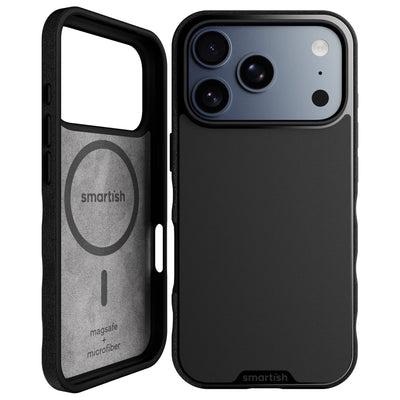
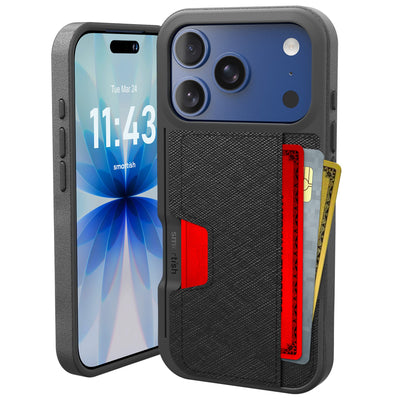
If you already own glass for the standard iPhone 17, pause before installing it. For a case pairing, the Gripmunk with MagSafe® - Slim Case for iPhone 16 Pro is designed for iPhone 16 Pro, so it is not an iPhone 18 Pro fit recommendation. The Gripmunk with MagSafe® - Slim Case for iPhone 16 Pro is a useful reminder that phone accessories are model-specific for a reason: the right case and glass need to agree around every edge.
Decoding the Dimensions: iPhone 17 & 18 Pro Screen Specs
iPhone 17 (Base Model) vs. iPhone 17 Pro Display Sizes
The base iPhone 17 and iPhone 17 Pro should be treated as separate accessory targets. Display size is only one measurement. The glass outline also depends on the active screen area, black border, earpiece opening, front-camera region, corner radius, and the distance between the adhesive edge and the phone frame. A protector made for the standard model can be too narrow, too wide, or incorrectly positioned on the Pro display even if it covers most of the visible screen.
iPhone 18 Pro vs. iPhone 17 Pro Front Glass Footprint
The Pro models offer the more promising comparison. Both chassis measure 150.0 mm high and 71.9 mm wide, based on the supplied physical measurements. That shared footprint supports compatibility testing, especially for glass with a slightly reduced perimeter rather than a rigid edge-to-edge design. It does not erase the need to check the actual front-glass border, adhesive perimeter, and case clearance.
| Compatibility point | iPhone 17 | iPhone 17 Pro | iPhone 18 Pro |
|---|---|---|---|
| Model family | Standard | Pro | Pro |
| Chassis height | Verify by model | 150.0 mm | 150.0 mm |
| Chassis width | Verify by model | 71.9 mm | 71.9 mm |
| Best glass match | iPhone 17 labeled glass | iPhone 17 Pro labeled glass | iPhone 18 Pro labeled glass or verified dual-label glass |
Dynamic Island & Sensor Alignment: Precision Matters
Dynamic Island and front-sensor openings must sit in the correct position, not merely appear somewhere near the top center. A misaligned cutout can cover part of the sensor area, leave an awkward gap, or force the adhesive to cross a border it was not shaped to follow. Alignment frames can help, but a frame made for the wrong model can center the wrong outline with impressive confidence.
The Case for Slight Variations: Bezel Thickness & Curvature
Bezel thickness and corner curvature are the quiet fit factors. A protector may match the phone’s height and width while its rounded corners or side edges sit differently against the frame. Check for model verification, front-glass measurements, sensor placement, and case-friendly spacing before opening a multi-pack. Tiny hardware updates are not exciting, but they are excellent at turning three sheets of glass into three tiny regrets.
The Dreaded Edge Lift: Why Your Screen Protector Peels (and How to Stop It)
The “Edge-Lifting” Defect: A Common Annoyance
Edge lift happens when tempered glass loses contact with the display border. You may see a bright crescent, a bubble that will not press flat, or a corner that slowly collects pocket lint like it has a tiny hobby. The usual causes are uneven adhesive contact, dust along the frame, a protector that is slightly oversized, or pressure from a case lip.
This problem often appears after installation rather than immediately. Heat, pocket friction, repeated case removal, and normal flexing can expose a weak edge. If every sheet in a multi-pack peels at the same corner, the glass is probably meeting a fit problem, not suffering from three unrelated bad-luck incidents.
How Phone Cases Interfere with Full-Coverage Glass
Full-coverage glass protects more of the display, but its outer edge has less room to miss the case. A rigid bumper can push upward against the protector’s perimeter, especially near rounded corners. Raised lips designed to protect the screen may contact the glass instead of stopping just short of it. That upward force breaks the adhesive seal and can create a growing halo around the display.
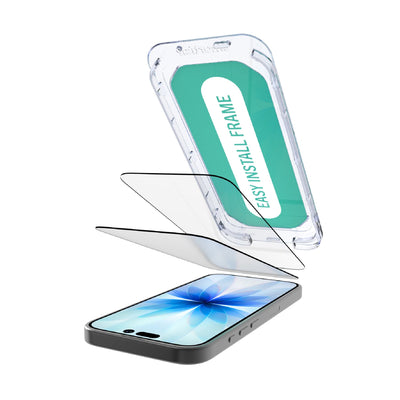
Alignment frames add another variable. A frame intended for a slightly different front-glass outline may center the protector neatly while placing its edges too close to the case. Check the glass after the frame is removed, then test the case with gentle pressure around each corner.
The 0.1mm Tolerance: Finding the Sweet Spot for Case-Friendly Protectors
A fraction of a millimeter can separate a flat installation from a peeling one. Case-friendly glass usually leaves a narrow margin around the display instead of stretching to the outermost edge. That small gap gives the case lip room to flex without pushing the adhesive boundary. Look for clear model compatibility, a reduced perimeter, rounded edges, and installation instructions that account for case clearance.
Smartish’s Approach: Designing for Harmony Between Case and Glass
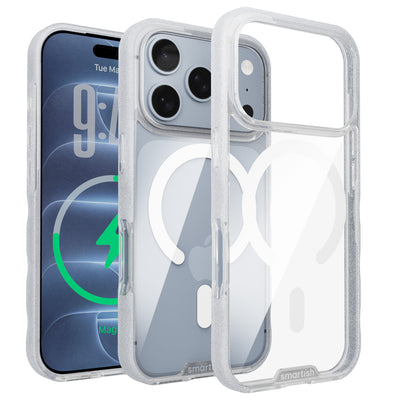
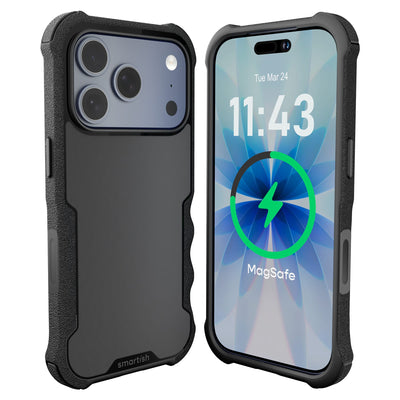
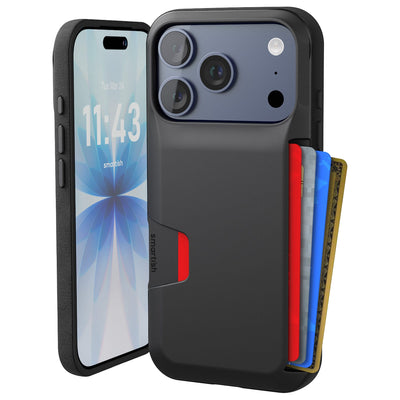
The Gripmunk with MagSafe® - Slim Case for iPhone 16 Pro shows why the case model matters. Its raised edges are designed around the iPhone 16 Pro screen, so it should be paired with glass verified for that phone rather than assumed compatible with a newer model. The Gripmunk with MagSafe® - Slim Case for iPhone 16 Pro uses grippy sides, protective air-pocket corners, and precise model-specific coverage, but no case can correct glass that is shaped for the wrong frame.
For any generation pairing, install the protector first, inspect every border, and add the case slowly. If the lip touches the glass, choose a case-friendly protector or a case verified with that exact glass outline. That beats sacrificing an entire three-pack to one stubborn corner.
Choosing the Right Screen Protector: A Compatibility Checklist
Compatibility Labels to Look For (and What They Mean)
If you are still asking, “will iPhone 17 screen protectors fit iPhone 18 Pro,” start with the label, not the picture on the package. The safest wording is “iPhone 18 Pro.” A dual label naming both iPhone 17 Pro and iPhone 18 Pro can also work, provided the manufacturer verified the glass outline, display border, sensor placement, and case clearance. “Fits iPhone 17” alone points to the standard model and does not confirm Pro compatibility. Model family, screen size, front-glass footprint, and camera or sensor openings all matter.
- Look for an exact iPhone 18 Pro label or verified iPhone 17 Pro and iPhone 18 Pro pairing.
- Check whether the package specifies case-friendly or edge-clearance design.
- Confirm that the installation frame matches the same phone models listed on the glass.
- Review return coverage before opening a multi-pack.
When “One Size Fits All” Doesn’t Work for Glass
Glass is not a stretchy little blanket. A protector can cover the visible display and still miss the phone’s corner radius, black border, speaker channel, or adhesive zone. Generic sizing also leaves more room for a case lip to press against the perimeter. That pressure can create bubbles, bright halos, and corner lift even when installation looked perfect at first. If a listing groups the standard iPhone 17, iPhone 17 Pro, and iPhone 18 Pro under one vague size, treat that as a request for closer inspection, not a compatibility guarantee.
Evaluating Cutouts: Dynamic Island vs. Notch
Check the top opening before installation. A protector designed around a Dynamic Island needs its cutout centered over the front-camera and sensor area. A notch-shaped opening, an offset frame, or glass that covers part of the sensor region can interfere with visibility and alignment. Full-coverage glass without a large cutout may still be suitable, but only if the manufacturer confirms sensor clearance. The camera and port cutouts are not interchangeable proof of screen fit, either. They belong to separate parts of the phone and should not be used as a shortcut.
Your Smartish Buyer’s Guide: What to Prioritize
Prioritize verified model coverage, a case-friendly perimeter, rounded edges, clean adhesive, and an alignment frame made for the same generation. If you are pairing an iPhone 16 Pro, the Gripmunk with MagSafe® - Slim Case for iPhone 16 Pro is the properly labeled case choice. The Gripmunk with MagSafe® - Slim Case for iPhone 16 Pro is not an iPhone 18 Pro recommendation, and that distinction is the whole point: accessory labels should match the phone in your hand.
For iPhone 18 Pro, choose glass verified for that exact model or for a documented Pro-to-Pro pairing. That approach costs less frustration than burning through every sheet in a multi-pack and wondering whether the final protector will magically develop better manners.
Frequently Asked Questions
Are screen protectors the same for iPhone 17 and iPhone 17 Pro?
iPhone 17 and iPhone 17 Pro screen protectors should not be treated as interchangeable. Different display footprints, bezels, sensor placement, and edge profiles can cause poor alignment, so choose glass labeled for the exact model.
Which iPhones can share the same screen protector?
iPhone 17 Pro and iPhone 18 Pro may share a screen protector when the manufacturer verifies both models. Their chassis measurements are both 150.0 mm tall and 71.9 mm wide, but the glass border, sensor opening, and case clearance still need to match.
What size screen protector is compatible with the iPhone 17 Pro?
An iPhone 17 Pro screen protector should be labeled for iPhone 17 Pro and sized to match its front-glass outline. Phone height and width alone do not determine fit, since the protector also needs the right corner shape, sensor alignment, and perimeter spacing.
Can you use an iPhone 17 screen protector on an iPhone 16 Pro?
An iPhone 17 screen protector should not be assumed to fit an iPhone 16 Pro. Screen glass can differ in display borders, sensor placement, curvature, and case clearance, so use a protector specifically verified for iPhone 16 Pro.
What are the differences between iPhone 16 Pro and iPhone 17 Pro screen protectors?
iPhone 16 Pro and iPhone 17 Pro screen protectors can differ in their glass outline, bezel spacing, sensor openings, and corner curvature. A close-looking fit is not enough for reliable installation, so select glass marked for the exact iPhone Pro model.
Will an iPhone 17 Pro screen protector fit an iPhone 18 Pro?
An iPhone 17 Pro screen protector may fit an iPhone 18 Pro if the manufacturer verifies both models. The two Pro phones share 150.0 mm height and 71.9 mm width, yet front-glass borders, sensor alignment, and case pressure can still affect the final fit.