



iPhone fold screen protector
A foldable phone needs a split-screen protection plan. The outer display behaves like familiar smartphone glass, while the inside panel bends, flexes, and carries more scratch risk. The right iPhone fold screen protector setup uses rigid glass on the cover screen and flexible film on the folding display, not one sheet trying to do both jobs.
Key Takeaways
- Foldable phones require distinct protection strategies for their outer and inner displays.
- The outer screen can use standard rigid glass, while the flexible inner screen needs a more adaptable film to prevent scratches.
- Using a single protector for both the folding and rigid parts of a foldable phone is not the most effective approach.
A protector can look fitted in the store and still bubble, lift, or interfere with closing if its material, thickness, or hinge clearance is wrong. Here’s how to choose one without turning your expensive phone into a science project.
The Dual-Screen Dilemma: Why Your iPhone Fold Needs Two Different Protectors
Use tempered glass for the rigid outer cover screen and flexible film for the inner folding display. Tempered glass offers strong scratch and impact resistance on a flat surface, often with a 9H hardness rating based on the pencil-hardness scale. The inner panel needs material that can flex through repeated open-and-close cycles. Rigid glass cannot follow the crease cleanly and may create pressure points, cracks, touch problems, or damage beneath the display.
Meet the iPhone Fold's Two Screens: Different Needs, Different Protection
A foldable phone has two display environments joined by a hinge. The cover screen faces pockets, tables, keys, and drops. Its glass stays flat, so a precisely cut protector can sit on top without changing how the phone opens. The inner screen has a flexible cover layer and an active folding area that must move with the device.
The inner panel is more exposed to fine scratches and pressure marks than conventional exterior glass. A particle trapped between the halves can press into the surface when the phone closes. Protection must account for motion, flex tolerance, adhesive behavior, and the gap around the hinge, not only scratch rating.
The Outer Cover Screen: Your Everyday Glass Guardian
A quality glass shield can take contact from coins, bag hardware, and countertop grit before those nuisances reach the screen. Look for accurate camera and speaker cutouts, smooth rounded edges, an oleophobic coating, and enough case clearance around the perimeter.
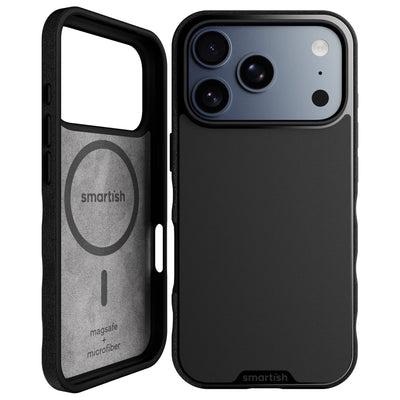
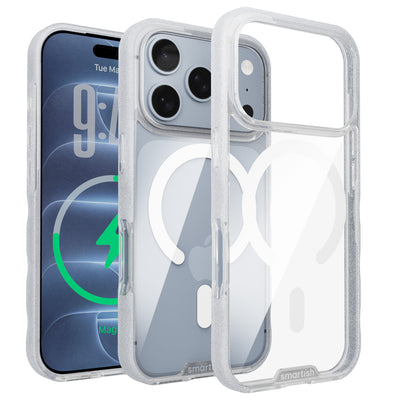
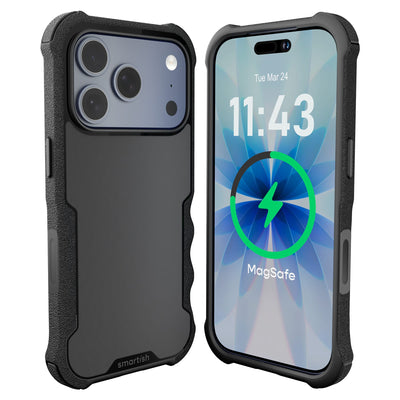
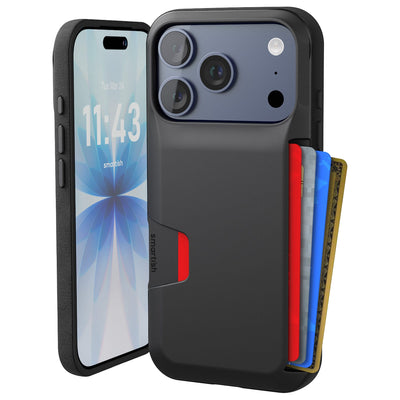
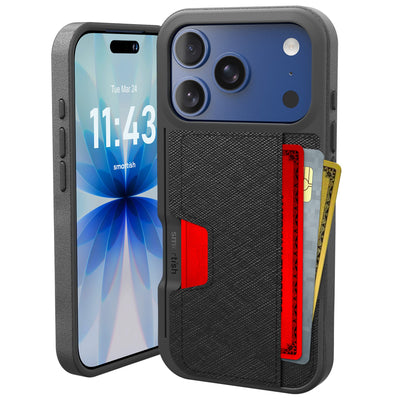
The Gripmunk with MagSafe® - Slim Case for iPhone 16 Pro illustrates useful case details: raised edges help keep the display away from flat surfaces, while textured sides make a slippery phone easier to hold. A protector still needs room. If the case lip presses against the glass, edge lift can appear quickly.
The Inner Folding Display: A Flexible Frontier Requiring a Delicate Touch
The inner display calls for thin, flexible film, commonly made from TPU, PET, or hybrid polymer. These materials bend across the crease without acting like rigid glass and provide a sacrificial surface for scuffs, skin oils, and light dust contact.
Film is not a force field. It can show marks sooner than glass, and its coating may wear along swipe zones or near the fold. Its job is to flex with the screen and preserve normal opening and closing.
Why Rigid Tempered Glass is a No-Go for the Inner Screen (and What Happens When You Try)
Do not put tempered glass on the inner folding screen. Glass has limited bend tolerance, while the panel changes shape at the crease. When the phone closes, the protector can lift, develop stress fractures, press unevenly against the display, or prevent clean closure.
That pressure can create touch dead spots, trapped bubbles, adhesive separation, and damage to the factory-applied protective layer. Check the phone’s instructions before removing pre-installed film. If the device includes one, it is designed around the display’s flex and should not be treated as packaging. Do not stack an aftermarket layer over it unless the manufacturer allows that setup.
Choosing Your Inner Screen Film: Flex, Feel, and Future-Proofing
The Material Breakdown: TPU Film vs. Hybrid Polymers for the Inner Display
TPU film bends readily, conforms to the crease, and absorbs light scuffs without shattering. Its softer surface may show impressions or fine marks, and installation can require patience because the material stretches. PET feels firmer and can offer crisp clarity, though it needs a design suited to repeated folding. Hybrid polymers aim to balance flexibility, surface hardness, optical clarity, and dimensional stability.
Material labels tell only part of the story. Adhesive quality, film thickness, crease design, and cut accuracy determine whether the protector stays put after weeks of opening and closing. A thin film is not automatically better: it needs enough structure to resist wrinkling without adding pressure when the phone folds shut.
What to Look For: Clarity, Touch Sensitivity, and Self-Healing Properties
Choose film that preserves brightness, color accuracy, and touch response. Haze can make the display look dirty, while excess adhesive can create rainbowing or uneven patches. Self-healing material may reduce minor scuffs but will not erase cuts, deep dents, or damage caused by grit under pressure.
- Flex tolerance: The film should follow the crease without whitening, cracking, or buckling.
- Touch response: Swipes, taps, keyboard input, and stylus compatibility should remain consistent if supported.
- Optical clarity: Look for low haze and adhesive that avoids visible distortion.
- Surface treatment: An oleophobic coating helps fingerprints wipe away, though it wears with use.
- Cut accuracy: Openings and edges should align without covering sensors or entering the hinge channel.
The Hinge Hurdle: How Screen Protectors Interact with the Fold
The hinge needs a clean operating zone, and the protector must stop short of areas that pinch, rub, or collect adhesive. A case adds another boundary, so an inset film cut may be needed to prevent the case edge from catching the protector at the hinge corners.
Thickness affects closure. A film that looks harmless open can create contact as the halves meet. Watch for resistance, a new gap, rubbing sounds, or a more pronounced crease. The Gripmunk with MagSafe® - Slim Case for iPhone 16 Pro shows why case geometry belongs in the buying decision: raised edges and air-pocket corners help cushion drops, but any case lip still needs clearance from a folding display protector.
Application Anxiety: Tips for Bubble-Free Installation on a Flexible Surface
Work indoors on a clean, low-dust surface. Wash and dry your hands, remove shedding fabric, and clean the display with the supplied wipe. Align carefully; crooked first contact can pull film toward the crease and leave tension along one edge.
- Open the phone fully on a stable, flat surface.
- Clean the display and remove remaining specks with a dust-removal sticker.
- Align the film with the display edges and hinge-safe cut lines.
- Apply adhesive gradually with a squeegee or soft card, working outward.
- Leave small bubbles alone if the instructions allow time for dissipation. Lift the film only for a visible particle.
- Open and close the phone slowly. Check for edge lift, crease whitening, rubbing, or closure resistance.
Never use a pin to pop a bubble on the inner screen. It can pierce the film or mark the display. Persistent corner lift usually indicates dust, misalignment, excess thickness, or case contact. Reinstalling the same sheet repeatedly rarely helps.
Outer Screen Defense: Tempered Glass vs. Advanced Films
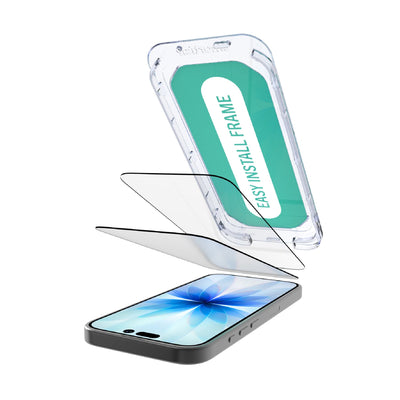
The outer display is the place for a traditional iPhone fold screen protector. It stays flat and benefits from tempered glass scratch resistance. Look for precise fit, rounded edges, dependable adhesive, and a rating such as 9H on the pencil-hardness scale. That rating describes scratch resistance, not protection from every drop.
Tempered Glass: The King of Cover Screen Protection
Tempered glass gives the cover screen a firm sacrificial layer with a familiar feel. It resists light abrasions and distributes contact from small impacts. The best fit leaves openings for the camera, speaker, sensors, and bezel controls. A slightly smaller protector may be smarter if it leaves room for a case lip.
Extra thickness can improve rigidity but conflict with a tight case or make swipes awkward. Check thickness, adhesive coverage, and compatibility. Privacy glass reduces side viewing angles but may make the display dimmer.
When to Consider a Film for the Outer Screen (Hint: It's Rare)
Film suits buyers who value minimal thickness, curved-edge coverage, easy case clearance, or a softer feel. PET feels firmer; TPU is softer and more forgiving around curves. For most flat cover screens, glass remains practical because film marks more easily and offers less protection from concentrated contact. If choosing film, prioritize clarity, touch response, adhesive quality, and a cut away from the hinge-side edge.
Beyond Basic Glass: Features Like Oleophobic Coatings and Edge-to-Edge Coverage
An oleophobic coating helps fingerprints and oil wipe away, though it wears in swipe zones. Edge-to-edge coverage protects more display, but the perimeter must stop short of the frame and case lip. A narrow border often stays attached better than a protector bullied by the case.
Case Compatibility: Ensuring Your Outer Screen Protector Plays Nice with Your Case
Dry-fit the protector with the case and check its distance from the bezel, hinge-side edge, speaker opening, and case lip. After installation, inspect the perimeter for bubbles or lifting during normal handling. The Gripmunk with MagSafe® - Slim Case for iPhone 16 Pro has raised edges, air-pocket corners, textured sides, and a smooth back, but the cover-screen protector still needs independent clearance.
Cover Screen Protector Pros and Cons
Pros
- Tempered glass offers strong scratch resistance and a familiar touch feel.
- Rounded edges and an oleophobic coating improve comfort.
- Case-compatible cuts reduce edge lift and bubbling.
Cons
- Thicker glass can conflict with a tight case lip.
- Privacy treatments may reduce brightness or viewing angles.
- Film is thinner but can show scuffs and impressions sooner.
The Real Enemy: Pocket Grit and Hinge Havoc
Pocket grit, lint, skin flakes, and fibers collect around the bezel and hinge, then move as the device opens and closes. Flexible inner displays can face up to three times the scratch vulnerability of conventional exterior glass, according to research on foldable devices. The iPhone fold screen protector is only part of the defense plan; cleaning and correct clearances matter too.
Pocket Grit: The Silent Killer of Folding Screens
Research cited in the supplied technical findings notes that particles as small as 50 microns can create permanent micro-indentations in ultra-thin glass when the phone closes under pressure. Keep the phone away from loose change, unlined pockets, beach bags, and gritty work surfaces. Before closing, inspect both halves and the hinge borders. Use a clean microfiber cloth; avoid close-range canned air, sharp tools, and household cleaners.
How Dust, Lint, and Debris Damage Your Inner Display Over Time
Debris causes abrasion, pressure, and uneven contact. A fiber can drag across film; a hard particle can become a pressure point; adhesive residue can collect more lint. Possible results include a scratch, bubble, haze, or mark visible only at certain angles. Inspect after cleaning and do not press a trapped particle flat, since pressure can transfer damage below the film.
Hinge Clearance: Why Some Protectors and Cases Cause Peeling and Binding
A protector reaching too far can rub during closure, while a case edge can catch its corner. Repeated contact pulls adhesive upward and causes lifting or bubbles. Use an inset cut designed for the device and case. Check the hinge channel, even edges, and absence of adhesive in moving areas. Close slowly and listen for rubbing. The Gripmunk with MagSafe® - Slim Case for iPhone 16 Pro has raised edges and protective air-pocket corners, so check lip contact rather than assuming compatibility.
Preventing Crease Fatigue and Micro-Cracks: Daily Habits for Longevity
Open the phone from the center with clean hands, keep nails and hard objects away from the crease, and never close it over cards, crumbs, or lint. Store it away from loose grit. Every few weeks, check for crease whitening, bubbles, lifting corners, closure resistance, touch irregularities, or fine lines that remain after cleaning.
Common Questions About Grit, Hinges, and Peeling
What happens if pocket grit gets trapped between the screens? It can press into the inner display during closure, leaving a dent, scratch, or hazy mark.
Can an aftermarket protector cause peeling at the crease? Yes, if its cut, adhesive, thickness, or hinge clearance does not suit the display and case.
Does thickness affect how cleanly the phone closes? Yes. Excess material can create contact, resistance, and stress on the crease or adhesive.
Smartish Picks & Practical Advice: Your Fold Protector Checklist
Choosing an iPhone fold screen protector should pass a simple test: does it protect the right screen without making the phone harder to use? Check display type, material, cut, adhesive, hinge clearance, and case fit. A protector is doing its job when you stop thinking about it.
The 'Ish Test' for iPhone Fold Screen Protectors
The Gripmunk with MagSafe® - Slim Case for iPhone 16 Pro reflects practical foldable-phone protection. Raised edges help keep the outer display away from surfaces, textured sides improve grip, and air-pocket corners cushion drops. Pair a case with a protector that leaves room around the bezel and hinge while supporting swipes, folding, wireless charging alignment, and pocket use.
- Choose tempered glass for the flat outer cover screen.
- Choose flexible TPU, PET, or hybrid film for the inner display.
- Confirm the exact phone model.
- Check hinge clearance, adhesive coverage, and case compatibility.
- Look for clear installation instructions and dust-removal tools.
When to Replace Your Protector (Don't Wait for Disaster)
Replace the layer when it has a spreading crack, persistent haze, deep indentation, exposed adhesive, or lifting along the crease. Growing bubbles usually indicate dust or case pressure. Reduced touch response, a worn oleophobic coating, or new closure resistance also signals replacement time.
Common Mistakes to Avoid at All Costs
Do not put rigid tempered glass on the inner panel, stack layers without checking instructions, or trim near the hinge with household tools. Avoid closing over crumbs, coins, or lint. Do not press a lifted edge down without finding the cause. If the fit is wrong, replace the protector.
Your Quick-Reference Guide: Outer vs. Inner Protection Summary
| Protection area | Recommended material | Purchase priorities |
|---|---|---|
| Outer cover screen | Tempered glass | Scratch resistance, smooth touch, oleophobic coating, case clearance |
| Inner folding display | Flexible film | Flex tolerance, low haze, thin profile, crease and hinge clearance |
| Case pairing | Model-specific fit | Inset edges, raised borders, no corner pressure, normal closure |
The Gripmunk with MagSafe® - Slim Case for iPhone 16 Pro has a smooth back for pocket use, precise Camera Control access, and a soft microfiber interior. Match its edges with a properly fitted outer glass protector, and keep inner film clear of the hinge path: glass where the phone stays flat, flexible film where it bends, and no accessory asked to perform beyond its design.
Frequently Asked Questions
Can you put a screen protector on a folding phone?
A folding phone can use screen protectors, but each display needs the right type. An iPhone fold screen protector setup should use tempered glass on the flat outer screen and flexible film on the inner folding display. Check hinge clearance, case fit, adhesive quality, and the phone maker’s instructions before installation.
Does the iPhone have a foldable screen?
The iPhone does not currently have a commercially available foldable model confirmed by Apple. If an iPhone Fold becomes available, its outer and inner displays will likely need different protection, with glass for the cover screen and flexible film for the folding panel.
Do iPhones really need screen protectors anymore?
iPhones do not require screen protectors, but an iPhone fold screen protector can help reduce everyday scratches and scuffs. Foldable displays face added pressure near the crease, so a compatible protector offers a sacrificial surface. Protection still depends on correct fit, careful use, and keeping grit away from the folding area.
Will there be a case for the iPhone Fold?
An iPhone Fold case would need to protect both halves while leaving the hinge free to move. Look for a design with separate sections, accurate edges, clearance around the fold, and enough room for the outer screen protector. A case that presses against the hinge or protector can cause lifting and closing problems.
Will the iPhone Fold fail?
An iPhone Fold would not automatically fail because it uses a folding display, but folding hardware needs careful protection and handling. An iPhone fold screen protector should flex through repeated opening and closing without buckling, cracking, or pressing into the hinge. Matt’s rule is simple: if the phone cannot close naturally, change the setup.
What type of protector is best for an iPhone Fold?
The best iPhone fold screen protector setup combines tempered glass for the rigid cover display with thin flexible film for the inner screen. TPU, PET, or hybrid film can follow the crease, while glass handles scratches on the flat exterior. Choose low-haze material with accurate cuts, reliable adhesive, and consistent touch response.