



Compare MagSafe vs standard wireless charging cases
MagSafe vs Standard Wireless Charging Cases Compared
MagSafe vs. Standard Wireless Charging: What's Actually Different
When you compare MagSafe vs standard wireless charging cases, it boils down to magnets and speed. MagSafe uses a ring of magnets to snap your iPhone into perfect alignment every time. Standard Qi wireless charging? You're on your own to get the placement right.
Key Takeaways
- MagSafe uses magnets to snap your iPhone into perfect alignment for charging.
- Standard wireless charging requires you to manually position your phone to find the right spot.
- MagSafe's precise connection means a faster and more dependable power-up.
- If you want a no-fuss charging experience, MagSafe takes the guesswork out of it.
The magnetic alignment advantage
That satisfying magnetic click? It's not just for show. With standard wireless charging, your phone can shift overnight when you roll over or when your cat decides to explore. You wake up to 23% battery because your phone slid half an inch to the left. MagSafe locks into place and actually charges your phone.
Charging speed breakdown (15W vs. 7.5W)
MagSafe delivers up to 15W of power to compatible iPhones. Standard Qi wireless charging caps out at 7.5W for iPhones. That's double the wattage--which means faster charging when you're rushing out the door.
| Feature | MagSafe | Standard Qi Wireless |
|---|---|---|
| Max Power Output | 15W | 7.5W |
| Alignment | Magnetic snap | Manual placement |
| Accessory Options | Wallets, stands, batteries | Chargers only |
| Case Requirement | MagSafe-compatible case | Any wireless-compatible case |
Compatibility: Which devices work with what
MagSafe works with iPhone 12 and newer (including iPhone 17). Standard Qi wireless charging works with iPhone 8 and up, plus most recent Android phones. If you're juggling an older iPhone or switching between devices, standard wireless charging gives you more flexibility.
Do You Actually Need a MagSafe Case?
Honest answer? Depends on how you use your phone.
When MagSafe cases make sense
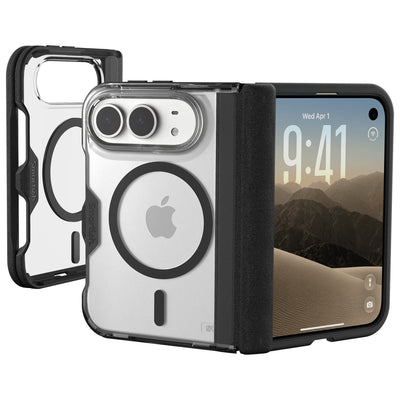
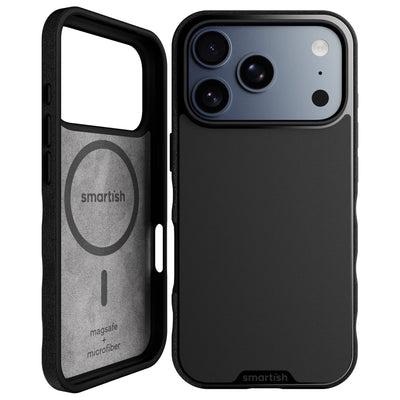
You'll love MagSafe if you use accessories like magnetic wallets, car mounts, or battery packs. The snap-and-go convenience beats fumbling with clips or stands every single time. Our Gripmunk and Gripzilla cases work seamlessly with MagSafe accessories while protecting your phone with air-pocket corners and raised edges.
Standard wireless charging cases: Still solid
Standard wireless charging does exactly what it says on the tin. Drop your phone on a pad at night and wake up charged. No magnets needed. You'll save some cash on both the case and charger, and you're not locked into one ecosystem.
The real-world difference in daily use
Here's where it matters: MagSafe lets you pick up and use your phone mid-charge without losing the connection. Standard wireless charging requires your phone to stay flat and perfectly still--pick it up to check a text and you're starting over.
Speed, Heat, and Efficiency: The Practical Impact
How much faster is MagSafe really?
MagSafe typically adds 30% to 40% more charge in 30 minutes compared to standard wireless charging. That means roughly 20% to 25% battery versus 15% to 18% on a Qi pad. Great for quick top-ups. Less noticeable for overnight sessions when you're asleep anyway.
One catch: that speed advantage vanishes if your MagSafe charger isn't paired with a 20W or higher power adapter. An underpowered adapter makes your fancy magnetic puck perform like a basic pad.
Alignment precision and energy loss
Misaligned charging wastes energy as heat instead of sending it to your battery. MagSafe's magnetic snap centers your phone every time, reducing that energy loss. Standard Qi pads? You're eyeballing it.
A crooked phone on a Qi pad might charge slowly or not at all. You won't know until you grab it later and find a dead battery. MagSafe's click confirms charging started.
Heat generation and device health
Both methods generate heat. MagSafe concentrates it in a smaller area around the magnetic ring. Standard Qi spreads heat across a wider surface. Neither should damage your phone during normal use, but high heat over years can reduce battery capacity faster.
Case thickness matters here. Gripmunk's slim profile helps with heat management during charging. Gripzilla adds more protective material while still supporting wireless charging--just expect slightly slower speeds through the extra bulk.
Building Your Charging Setup: Cases, Accessories, and Options
Case thickness and how it affects charging
Wireless charging typically works through cases up to about 3 mm thick. Beyond that, you'll see reduced efficiency or no charging at all. Both Gripmunk and Gripzilla support wireless charging while delivering protective features like air-pocket corners, raised screen edges, and raised camera rings.
Got a wallet case? Remove cards before wireless charging. Heat buildup and magnetic interference are real problems for credit cards left in place.
The accessory options (wallets, stands, batteries)
MagSafe accessories snap on and off in seconds. Magnetic wallets hold cards. Stands prop up your phone for video calls. Battery packs add power without cables. The ecosystem includes car mounts, tripod adapters, and desk accessories that all click into place.
Standard wireless charging accessories stop at the pad itself. You get cable-free power. That's it. If you prefer a minimal setup without modular add-ons, standard Qi fits better.
Mixing and matching: What works together
Most MagSafe-compatible cases work with MagSafe accessories across brands. Same goes for Qi cases and Qi pads--broad compatibility across manufacturers.
You can mix charging methods, but expect compromises. A MagSafe case charges on a standard Qi pad without snapping into place. A non-MagSafe case sits on a MagSafe charger, but magnetic accessories won't hold securely. For the cleanest setup, pick the system that matches how you actually use your phone.
Which Option Is Right for You?
MagSafe for iPhone 12 and newer owners
If you've got a compatible iPhone and like the idea of magnetic accessories, MagSafe's worth the investment. Faster charging and snap-on accessories justify the higher cost for most people. Our Gripmunk and Gripzilla both support MagSafe while protecting your phone from drops and daily wear.
Standard Qi for flexibility and broader compatibility
Older iPhones, mixed-device households, and people who just want simple wireless charging benefit from standard Qi. Lower charger costs and broad pad compatibility mean you won't hunt for specific accessories. Any protective case designed for wireless charging will work.
Your lifestyle determines the right choice
Active users who swap accessories throughout the day get more value from MagSafe. People who charge overnight and rarely use add-ons can save money with standard Qi. Compare MagSafe vs standard wireless charging cases based on how you actually use your phone--not features you might never touch.
Frequently Asked Questions
What's the real difference between MagSafe and standard wireless charging?
The big difference comes down to magnets and speed. MagSafe uses a ring of magnets to perfectly align your iPhone with the charger, ensuring a consistent connection. Standard wireless charging relies on you placing your phone just right, which can sometimes lead to missed charges.
How is a MagSafe case different from a standard case for wireless charging?
A MagSafe case has a special ring of magnets built right in. This allows it to snap securely onto MagSafe chargers and accessories, ensuring perfect alignment every time. A standard case for wireless charging just needs to be thin enough for power to pass through, without any magnetic features.
Is MagSafe charging better than standard wireless charging?
It really depends on how you use your phone. MagSafe offers faster charging, up to 15W, and the convenience of magnetic accessories like wallets and stands. If you're looking for quick top-ups and a secure connection, MagSafe is a smart choice. For simple overnight charging, standard wireless charging still gets the job done.
Can a MagSafe case still charge on a standard wireless pad?
Absolutely! If you have a MagSafe case, you can still drop it onto a standard Qi wireless charging pad. Just remember, it won't magnetically snap into place, and you'll get the standard 7.5W charging speed, not the faster 15W that MagSafe offers.
Does MagSafe really charge my iPhone faster?
Yes, it does! MagSafe can deliver up to 15W of power to compatible iPhones, which is double the 7.5W you get from standard Qi wireless charging. This means you can often see 30% to 40% more charge in 30 minutes, especially useful for those quick power boosts. Just make sure you're using a 20W or higher power adapter to get the full speed.
Why does magnetic alignment matter for wireless charging?
Magnetic alignment is key to consistent and efficient charging. With MagSafe, the magnets ensure your phone is always perfectly centered on the charging coil, preventing accidental shifts that can stop charging. This also minimizes wasted energy and heat from poor placement, so your phone actually charges as expected.
What kind of accessories work with MagSafe?
MagSafe opens up a whole world of snap-on accessories. Think magnetic wallets that attach right to your phone, stands that prop it up for video calls, or even portable battery packs that click into place. It's all about making your phone experience more convenient and hands-free.