



iPhone Duo durability
A foldable iPhone has more failure points than a standard slab phone: a flexible display, moving hinge, tighter internal packaging, and a crease that must survive thousands of openings and closings. That makes iPhone Duo durability less about one lab number and more about resistance to pocket grit, table drops, thumb pressure, and accidental falls.
Key Takeaways
- Foldable iPhones fail in more ways than regular phones because of the moving hinge, flexible screen, and tight internal layout.
- Real-world durability is about resisting pocket grit, drops, and repeated opening rather than just a single test score.
- Apple must solve the crease problem by making the display survive thousands of bends without cracking.
- The hinge is the biggest weak point, and it needs to keep dust out while staying smooth over time.
Apple can likely make a foldable that lasts through normal use, but “unbreakable” is unrealistic. The screen and hinge will require careful engineering, while owners will need better habits than tossing a $2,000 phone onto a countertop.
iPhone Duo Durability: The Big Picture (And Why You Should Care)
The $2,000 Question: Is it Built to Last?
Premium foldable smartphones commonly launch around $2,000, according to PhoneArena’s reporting on Apple’s possible foldable plans. At that price, a phone should handle years of calls, streaming, swipes, charging, and commuting. The harder question is whether a first-generation folding design can survive three or four years of daily use, not whether it looks perfect after a controlled demonstration.
Reliability testing examines repeated folding, hinge tension, display stress, ribbon-cable movement, and component alignment. Research around Apple’s reported design points to hundreds of thousands of Duo cycles, a useful target for multi-year use. Cycle testing does not recreate a phone closing around a crumb, hitting concrete, or being opened one-handed.
What's Different About Folding Phone Tech?
A traditional iPhone uses a rigid display supported by a solid frame. A foldable uses layered materials that bend along a controlled radius and a hinge that guides movement while protecting internal electronics. A rumored configuration pairs a 5.4-inch outer cover screen with a 7.6-inch inner display, creating two usable faces and more potential impact points.
A rigid cover glass can distribute a hit across a firm surface. A folding display must flex without separating, creasing beyond its design limit, or transferring excessive force into the panel beneath it. Motherboard placement, magnet alignment, hinge geometry, and ribbon-cable routing all matter.
Your Everyday Stress Test: Beyond Lab Cycles
Lab cycles measure repetition; real life adds contamination and bad timing. Pocket lint can gather near moving parts, fine grit can press against the display during closure, and a rough table can apply concentrated pressure. A corner drop can twist the frame before the hinge can help.
That is the practical meaning of iPhone Duo durability: dependable operation after ordinary abuse, not immunity from physics. Protection should begin before the first drop because repairing a flexible display or hinge assembly is far less pleasant than buying a case.
Deconstructing the Foldable Display: Glass, Plastic, and That Crease
Ultra-Thin Glass (UTG) vs. Traditional iPhone Screens
Ultra-thin glass, or UTG, gives a folding display a smoother, more glass-like surface than plastic alone. It can improve touch feel and scratch resistance, yet it must remain thin enough to bend. A standard iPhone uses rigid protective glass that does not flex around a hinge. UTG can feel premium while remaining more sensitive to sharp pressure, point impacts, and bending outside the intended fold path.
| Display layer or design | What it does well | Where caution still makes sense |
|---|---|---|
| Rigid cover glass | Firm surface, strong resistance to everyday contact | Can still chip or crack after an edge impact |
| Ultra-thin glass | Glass-like touch feel with controlled flexibility | Sharp pressure and drops can stress the folding panel |
| Protective PI film | Flexible top layer that helps shield the display | Can mark more easily than rigid glass and should not be removed casually |
The Transparent Polyimide (PI) Film Layer: Your First Line of Defense
Transparent polyimide, or PI film, is a flexible polymer layer used in folding displays. It bends with the panel and protects the display stack from direct contact. Compared with PET, PI can offer better heat tolerance and flexibility for repeated folding. It is still a film, not a force field: fingernails, sharp edges, abrasive debris, and trapped grit can mark it more easily than rigid glass.
The factory-applied film deserves care. Peeling it off, pressing hard at a bubble, or adding an incompatible protector can affect touch response or folding behavior. If film lifts at the crease, replacement through an authorized repair channel is safer than attempting a home repair.
Understanding the Crease: Is it a Flaw or Feature?
The crease is the bend zone where the display changes shape. Hinge radius, panel tension, adhesive behavior, and layer thickness affect its visibility. A carefully designed hinge may reduce it, yet side lighting and a fingertip can still reveal it.
A visible crease does not automatically signal failure. Watch for bubbling film, unusual touch behavior, a spreading dark area, clicking during movement, or a hinge that no longer holds position. Media playback may hide the crease, while scrolling across it can make the texture change more noticeable.
Scratch Resistance: Fingernails, Keys, and Pocket Grit
Keys and coins are obvious risks, while dust can act like sandpaper under pressure. Repeated poking at the crease or pressing into soft film can create wear. Keep sharp objects separate, brush debris away before closing the phone, and avoid placing the inner screen on a rough tabletop.
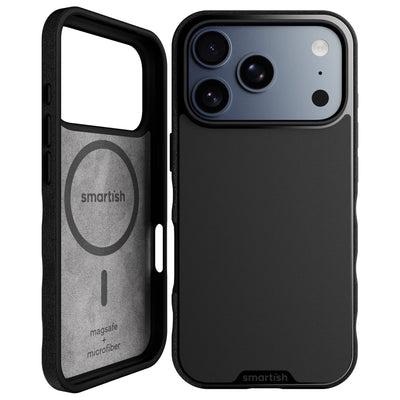
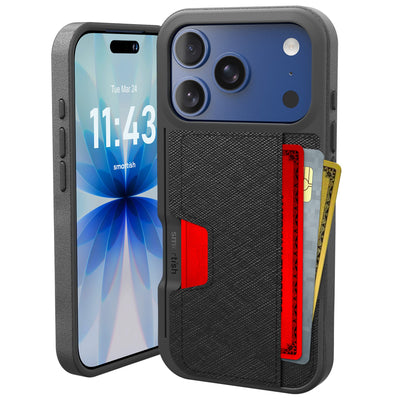
Cases should have raised edges, a clean interior, and dependable grip. The Gripmunk with MagSafe® - Slim Case for iPhone 16 Pro illustrates those features with textured sides, air-pocket corners, raised screen and camera edges, and a soft microfiber lining. It is designed for iPhone 16 Pro, not a foldable, so it is a protection reference rather than a fit claim. The Gripmunk with MagSafe® - Slim Case for iPhone 16 Pro also shows why grip and clean contact surfaces matter before a phone takes its first tumble.
The Hinge: Engineering a Moving Part That Needs to Last
Hinge Architecture: How it Folds and Unfolds Smoothly
A foldable hinge controls the opening angle, aligns both halves, and keeps bending forces away from the display, motherboard, and ribbon cables. A well-tuned design spreads motion across several pivot points instead of forcing one sharp bend. Hinge tension keeps the phone from flopping open or snapping shut.
Ribbon cables must bend repeatedly without cracking, while internal parts need clearance so they do not rub against the mechanism. The frame, magnets, adhesive layers, and display supports all contribute to motion. Smooth operation is evidence that moving parts remain aligned and supported.
Cycle Fatigue: How Many Times Can It Open and Close?
Manufacturers repeat opening and closing to measure cycle fatigue. Research on foldable reliability points to hundreds of thousands of cycles as a target for normal multi-year use. Testing checks hinge friction, panel stress, cable routing, adhesive stability, and alignment changes, but does not recreate every pocket condition.
A hinge can pass repetitive testing yet suffer after a drop twists the frame or debris enters the mechanism. Watch for clicking, uneven resistance, wobble, a panel that no longer sits flat, or a phone that stops holding its intended angle.
Dust and Debris: The Pocket Lint Problem
Dust, lint, and grit can increase friction, scratch internal surfaces, or prevent even closure. Debris near the Duo may be pressed into the flexible panel when the phone closes. Keep the phone away from sandy surfaces, inspect the hinge after outdoor use, and brush loose debris away with a clean, soft tool. Do not force the phone shut or poke hinge openings with a pin.
Water and Dust Resistance (IP Rating): Can a Moving Hinge Be Sealed?
A moving hinge is difficult to seal because it needs flexibility and controlled movement. An IP rating reflects tested resistance to specific dust and water exposure, not permanent protection from every spill, pool, or pocket accident. IP68 is associated with high dust protection and water resistance, though exact limits depend on certification.
Seals, gaskets, mesh barriers, adhesives, and shaped hinge covers can limit ingress. Wear, impacts, and repeated exposure may weaken those barriers. Treat water resistance as a safety margin, dry the phone after it gets wet, avoid charging until the port is clear, and have unusual hinge behavior inspected.
The Real-World Drop Test: Beyond the Lab Bench (MISSING COMPETITOR SECTION)
Impact Physics: Where Does the Force Go?
During a drop, impact energy travels through the frame, hinge, display layers, and catching surface. A corner strike concentrates force, while a flat impact can flex a larger panel. A hit can affect alignment as well as the outer shell, leaving a hinge bracket shifted or a ribbon cable stressed even when the phone looks fine.
The “Butterfingers” Moment: Drops on Hard Surfaces
Concrete, tile, and asphalt give little under impact. A corner landing can chip the frame, while a face-first landing can stress the inner display or cover screen. Fixed-height lab drops are useful, but real falls include spinning, uneven ground, pebbles, and different open or closed positions. That is where iPhone Duo durability gets its real test.
Tabletop Dangers: Face-Down Scenarios
Sliding face down across a rough table can scratch a display, while a crumb beneath the phone creates concentrated pressure. An open foldable may land with one half supported and the other suspended, loading the hinge and frame unevenly. Check the surface, close the phone without trapping debris, and avoid placing the flexible display on abrasive material.
Pocket Hazards: Keys, Coins, and Grit
Keys and coins can scratch exposed surfaces, while grit can enter seams and hinge channels. A crowded pocket creates twisting pressure when you sit or bend. Keep metal objects separate and clean the phone with a soft, dry cloth. The Gripmunk with MagSafe® - Slim Case for iPhone 16 Pro demonstrates useful principles for a compatible iPhone: textured sides, air-pocket corners, raised edges, and a microfiber interior. Its 50-drop test from 6 feet is product-specific evidence, not a promise that every foldable survives every fall.
What Real-World Protection Can and Cannot Do
Pros
- Grip can reduce slips before impact.
- Corner cushioning helps manage edge strikes.
- Raised edges can keep surfaces away from screens and cameras.
Cons
- A case cannot erase hinge or display weaknesses.
- Open-screen impacts remain difficult to control.
- Dust trapped during closure can still cause damage.
Smart Protection: Keeping Your Foldable Safe and Sound (MISSING COMPETITOR SECTION)
Why Cases Matter More Than Ever for Foldables
A case cannot make a flexible display indestructible, but it can reduce damage. Foldables need protection around the frame, hinge, corners, and outer screen, not just a back shell. Look for a snug fit, raised borders, a clean interior, and materials that will not shed grit into moving parts.
The Gripmunk with MagSafe® - Slim Case for iPhone 16 Pro illustrates these priorities for its confirmed model. It has air-pocket corners, raised screen and camera edges, and a microfiber lining. Its testing, 50 drops from 6 feet, is product-specific evidence rather than a guarantee against every impact.
Grip Matters: Textured Sides and Secure Handling
Grip is preventive protection. A phone that stays in your hand is less likely to hit a sidewalk, sink, or table. Textured sides provide control without making pockets difficult. The Gripmunk with MagSafe® - Slim Case for iPhone 16 Pro combines textured sides with a smooth back. Its magnets support MagSafe accessories and high-speed wireless charging. For any folding-phone case, check magnet, button, speaker, microphone, and camera alignment.
Corner Protection: Absorbing the Shock
Corners often strike first, concentrating impact. Air pockets, flexible bumpers, and reinforced frame sections can spread force before it reaches the display or hinge. Raised lips provide a buffer when the outer screen lands flat, though they cannot cover every angle.
Choose coverage that does not block folding motion, hinge clearance, or even closure. Inspect the hinge area and replace a case if it splits, warps, or loses grip.
Screen Protectors and Hinge Shields: What's Worth It?
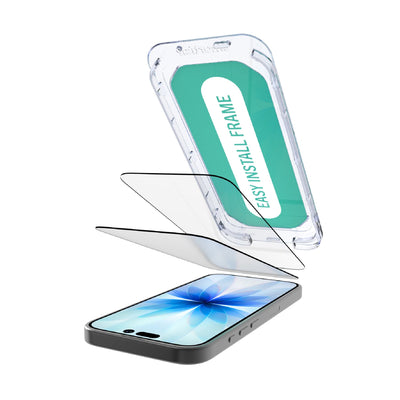
Do not remove a factory-applied inner film or add an unapproved protector casually. Folding displays rely on matched layers, and an incompatible accessory may affect touch response, adhesive behavior, or closing pressure. Use a protector only when the manufacturer supports that product and installation method.
Hinge shields may block lint and light scuffs, but a poor fit can trap debris or restrict movement. Clean the hinge with a soft, dry tool and stop if movement feels rough. Protection should not add problems to the mechanism.
Your Everyday Defense Plan: Best Practices
- Use a correctly fitted case with grip, corner cushioning, raised edges, and a clean lining.
- Keep keys, coins, sand, and loose grit away from the phone.
- Check both screens before closing the device, especially after outdoor use.
- Set the phone on a clean, smooth surface rather than face down on rough material.
- Never force the hinge through sudden resistance, clicking, or uneven movement.
- Keep liquids away from openings, and follow the manufacturer’s drying guidance after exposure.
Protection is mostly routine. A good case, organized pockets, and a quick surface check can prevent a repair bill that makes a $2,000 phone feel even more expensive.
iPhone Duo Durability: The Verdict and Your Next Steps
Recap: What to Expect from an iPhone Fold
Expect capable hardware with more specific care requirements than a rigid phone. The display must tolerate repeated bending, the hinge must guide movement, and internal cables and seals must keep working. A case should protect the frame and corners without blocking hinge travel, while careful handling limits scratches, debris, and direct pressure.
Is it “Unbreakable”? Let's Be Real.
iPhone Duo durability will mean ordinary reliability, not defeated physics. Cycle testing shows repeated opening and closing, while concrete, grit, face-down drops, and a badly timed fall remain separate challenges. Apple may deliver a foldable suitable for several years of normal use, yet no flexible screen or hinge should be treated as drop-proof.
Frequently Asked Questions
Is the iPhone Duo worth it?
The iPhone Duo may be worth it for buyers who value a larger inner display in a pocket-friendly design and accept added durability concerns. A premium price near $2,000 makes long-term hinge and screen reliability especially important. Smartish-style thinking applies here: protect an expensive phone before the first drop, not after the first repair bill.
How long will a folding phone last?
A Duo iPhone could last three to four years with careful daily use, though real-world life depends on drops, grit, hinge wear, and screen pressure. Reported designs target hundreds of thousands of fold cycles, yet lab testing cannot recreate every pocket crumb or concrete impact. Keeping debris away from the hinge and closing the phone gently can help.
Which iPhone has the worst durability?
No iPhone can fairly be labeled the least durable without verified testing across specific models and failure types. A future foldable iPhone would face more potential failure points than a standard iPhone because it adds a flexible display, moving hinge, crease, and tighter internal packaging. That does not make it doomed, just more demanding to protect.
Are folding phones still fragile?
Folding phones remain more vulnerable in certain situations than standard slab phones, especially around flexible screens, hinges, sharp pressure, grit, and corner drops. Modern engineering can support regular use, but flexible display film can mark more easily and hinge parts need clearance. Good habits, raised case edges, and a clean interior can reduce everyday risk.
What is the disadvantage of a Duo iPhone?
The main disadvantage of a Duo iPhone is added mechanical and display complexity, which can mean more ways for dust, impact, pressure, or repeated movement to cause trouble. A visible crease may be normal, while bubbling film, dark spots, clicking, or poor hinge positioning signal concern. Repairs can also be more complicated and expensive than standard phone repairs.
How can you improve iPhone Duo durability?
iPhone Duo durability improves when owners keep grit away from the hinge, brush debris off before closing the phone, and avoid pressing hard on the inner display. A protective case should offer grip, corner cushioning, raised edges, and enough screen clearance. Treat the flexible screen like precision gear, not a countertop coaster, and use authorized service if the film lifts.