





how strong is magsafe on iPhone 18 Pro
If you’re asking how strong is magsafe on iPhone 18 Pro, research benchmarks place the bare phone’s internal magnetic ring at roughly 900 to 1,100 grams of vertical pull force. That handles everyday charging and light accessories, but a 211-gram phone on a shaking dashboard faces sideways shear, not only a clean upward tug.
Key Takeaways
- The internal magnets in the bare phone deliver around a kilogram of vertical hold, yet a car vent mount introduces sideways shear and vibration that the standard pull test never measures.
- The 211-gram weight of the phone creates a serious prying effect on bumpy roads, turning a solid desk grip into a loose connection that can slide or pop off.
- That lab test number gives you a false sense of security for anything beyond a flat charging pad. Real-world mounting lives and dies by friction and rotational force, not pure vertical adhesion.
- The full story of MagSafe strength only comes together when you test it out in the car, where vibration and movement reveal the difference between spec sheet strength and daily usability.
Bare magnets are useful, while an integrated magnetic case gives more margin for road bumps, accessory movement, and drops. Both setups can work, but a stronger case reduces the chance of a sudden phone-to-pavement meeting.
How Strong Are the iPhone 18 Pro’s Bare Magnets? (Real Pull-Force Numbers)
The iPhone 18 Pro’s bare MagSafe ring is expected to produce about 900 to 1,100 grams of vertical pull force, based on the research benchmarks provided for its internal magnets. Apple technical documentation lists the phone at 211 grams, or 7.44 ounces, so the magnetic connection has several times the phone’s static weight in a straight pull. That does not mean the phone can safely survive every mount, wallet, or pothole. Pull force depends on alignment, contact distance, surface texture, and load direction.
Measuring the Built-In MagSafe Ring: Grams of Pull Force
A pull-force test measures the force needed to separate the phone directly from a magnetic surface. The 900 to 1,100-gram range is a reference for the bare internal ring, not a promise that every charger or mount will deliver the same result. Magnet grade, ring alignment, the accessory’s steel plate, and the gap between surfaces change the reading.
A vertical pull is tidy, while real use includes twisting, sliding, cable tension, and bumps. The ring can be strong while the setup fails at a loose mount arm or poor surface contact.
Bare Phone vs. Case: How Much Grip Do You Lose?
A case adds material between the phone and accessory, so backplate thickness and magnet placement matter. A well-designed magnetic case positions its ring correctly and uses enough magnet strength to offset the added distance. Research benchmarks place high-grade magnetic case strength around 1,500 to 2,200 grams of holding force.
| Setup | Research benchmark | Best suited for | Watch point |
|---|---|---|---|
| Bare iPhone 18 Pro | About 900 to 1,100g vertical pull | Charging pucks and light desk accessories | Less margin for vibration and sideways movement |
| High-grade magnetic case | About 1,500 to 2,200g holding force | Stands, wallets, and car mounts | Ring alignment and case construction still matter |
What These Numbers Mean for Desk Chargers and Pucks
On a desk, the phone usually rests against a charger with little motion. That makes a bare ring practical for a charging puck, especially when the phone stays flat and the cable is not bumped. MagSafe and Qi2 charging have a peak wireless charging ceiling of 25W, so alignment affects both attachment and charging performance. A centered ring keeps the coils lined up.
Car Mount Reality Check: Will Your 211g iPhone 18 Pro Stay Put on Bumpy Roads?
The 211-gram iPhone 18 Pro has to manage more than gravity in a car. If you are testing how strong is magsafe on iPhone 18 Pro for a dashboard or vent mount, consider speed bumps, hard turns, and potholes. A strong vertical pull result does not guarantee that the phone will resist sliding or rotating during a jolt.
Vertical Pull vs. Lateral Shear: Why Speed Bumps Are the Real Test
Vertical pull separates the phone directly from the mount. Lateral shear pushes it across the mount’s face. A speed bump can create both forces: the phone moves upward relative to the mount, then shifts as the vehicle settles. A turn adds side load, while braking changes the phone’s momentum against the magnetic connection.
A mount can hold more than four times the phone’s static weight in a direct test and still need careful installation. Sudden acceleration, road vibration, mount angle, and a flexible accessory arm increase movement at the contact point.
Pothole Physics: How Road Vibrations Stress a Magnetic Mount
A pothole creates a quick force spike rather than a gentle weight test. The mount may shake while the phone briefly lags behind, creating twisting around the magnetic ring. Repeated vibration can cause small slips, reduce alignment, and leave the connection with less consistent support.
What a bare-phone mount gets right and wrong
Pros
- Direct contact can provide a clean magnetic connection.
- There is no case layer between the internal ring and the mount.
- A simple desk-to-car setup may feel less bulky.
Cons
- There is less holding margin for sideways motion.
- The phone remains exposed if the connection breaks.
- Mount angle, road texture, and accessory quality have a bigger say.
Why a Case With Stronger Magnets Is Your Best Defense
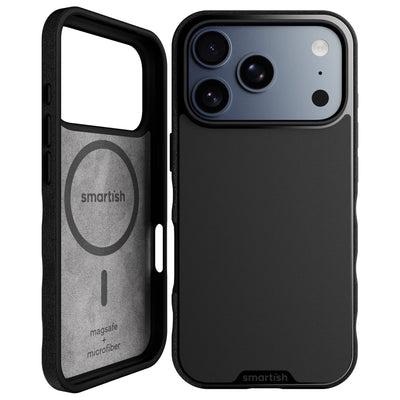
A magnetic case designed around the accessory ring can add holding force and provide a better grip surface. The Gripmunk with MagSafe® - Slim Case for iPhone 16 Pro illustrates this approach with built-in strong magnets, textured side rails, air-pocket corners, raised edges, and a smooth back. It is specifically designed for iPhone 16 Pro, so confirm model compatibility before purchasing for another phone.
The Gripmunk with MagSafe® - Slim Case for iPhone 16 Pro is drop-tested 50 times from 6 feet, with successful protection results, but no case promises immunity from every impact. Its air-pocket corners act like small airbags, while textured sides help reduce slips. For a 211-gram phone on rough pavement, this combination matters beyond magnetic strength alone.
For a moving vehicle, use a centered magnetic ring, firm accessory contact, a stable mount arm, and a case with meaningful holding force. The question is whether the phone, case, mount, and road-facing setup have enough margin for sudden movement.
Camera Mechanism Insurance: How Magnet Strength Protects That New Variable Aperture Lens
A variable aperture camera adds moving parts behind the lens, giving the iPhone 18 Pro more control over light while adding hardware that a hard impact can disturb. The magnet ring does not shield the camera itself. It helps keep the phone attached to a mount, stand, or charger, making magnetic holding force part of a drop-prevention system.
Why Variable Aperture Adds More Moving Parts and More Risk
A fixed aperture has fewer mechanical adjustments. A variable aperture changes the opening through which light enters with small components that must move and remain aligned. Optical stabilization already relies on precise movement inside the camera module. Adding an adjustable aperture means more tolerances, actuators, and surfaces that may be affected by a sharp shock.
Ordinary magnetic accessories should not damage the lens when properly aligned. The larger concern is impact energy: a loose phone can land on its camera bump, transfer force through the lens housing, or suffer a corner strike that shifts internal parts.
How a Secure Magnetic Hold Prevents Pavement Impact
Strong magnetic attachment lowers the chance that the phone leaves its mount during a turn, vibration event, or cable tug. Alignment matters as much as raw force. A centered ring distributes contact around the accessory instead of relying on a small off-center patch that can encourage rotation. A case ring keeps the accessory interface consistent when the phone is not bare.
MagSafe Case Design: Raised Camera Ring and Impact Absorption
The Gripmunk with MagSafe® - Slim Case for iPhone 16 Pro combines strong built-in magnets, a raised camera edge, textured side rails, and air-pocket corners. Raised edges keep the camera from sitting directly against a table, while air pockets act like small airbags during a drop. Its microfiber interior helps prevent scratches and dings.
The Gripmunk with MagSafe® - Slim Case for iPhone 16 Pro has been drop-tested 50 times from 6 feet with successful protection results. This does not promise protection from every impact, and it is specifically designed for iPhone 16 Pro, not automatically iPhone 18 Pro. Check the model before ordering. Look for accurate ring placement, a raised camera surround, corner cushioning, and a grip that helps prevent drops.
Does Case Thickness Weaken MagSafe? The Truth About Materials and Magnet Distance
Case thickness can reduce magnetic pull because magnets work through distance. Each layer between the phone ring and accessory creates an air gap, while backplate materials such as flexible polymers, metal elements, adhesive layers, and decorative inserts change the magnetic path. Protective cases can still work well when their rings are accurately placed and sized for the construction.
How Backplate Thickness and Material Affect Magnetic Pull
A thin back can preserve a close connection, but thinness alone does not guarantee performance. Magnet grade, magnet count, ring diameter, polarity, surface contact, and texture affect holding force and sliding. A case may feel weak when its ring is off-center, the accessory has a large gap, or a metal plate interrupts the intended path.
A well-designed magnetic case compensates for protective layers with a correctly positioned ring and magnets selected for the added distance. This separates a case that merely claims MagSafe compatibility from one designed around the magnetic system.
Slim vs. Protective Cases: Where the Real Trade-Off Is
| Case approach | Magnetic design priority | Protection features to check | Best fit |
|---|---|---|---|
| Slim magnetic case | Short magnet-to-accessory distance and low profile | Raised camera and screen edges, grippy sides | Pockets, desks, chargers, and light daily carry |
| Protective magnetic case | Higher holding margin through a thicker back | Air-pocket corners, impact cushioning, reinforced frame | Vehicle mounts, active use, and frequent drops |
The trade-off is not only thin versus thick. A slim case can protect well when its corners, rails, camera lip, and ring work together. A protective case can absorb more impact, but added layers require stronger magnets and accurate spacing. The Gripmunk with MagSafe® - Slim Case for iPhone 16 Pro combines a slim profile, textured sides, raised edges, air-pocket corners, and built-in strong magnets. Confirm the model before purchase.
MagSafe Alignment for 25W Charging: Why Every Millimeter Counts
MagSafe and Qi2 wireless charging have a peak speed ceiling of 25W, according to the supplied research brief. Best charging behavior depends on coil alignment, not magnet strength alone. Off-center coils may reduce efficiency, create extra heat, or cause an inconsistent connection even when the phone remains attached.
Choose a case ring that centers naturally on the charger and limits rotation. A smooth back helps pocket use, while precise placement keeps the charging puck in place. The practical formula is sufficient holding force, controlled spacing, and case protection.
The Smartish Guide to MagSafe Accessories That Won’t Let You Down
If you’re still wondering how strong is magsafe on iPhone 18 Pro, accessory choice matters as much as the internal ring. A desk charger has an easy job; a car mount must handle vibration, cable tension, and rough pavement. Choose by alignment, contact area, holding margin, and phone support.
What to Look for in a Magnetic Car Mount or Desk Stand
Choose a mount with a flat, stable face and a magnetic center aligned with the phone. A flexible arm should not wobble, and a vent clip or dashboard base should stay planted during turns. A desk stand should support the phone rather than make it hang from the magnet alone. Check charging puck compatibility, coil alignment, cable routing, and release point.
- Use a centered magnetic ring designed for MagSafe or Qi2 accessories.
- Choose a mount with a firm base and minimal arm flex.
- Check that the accessory supports the phone with more than magnetic force alone.
- Keep the charging puck and phone coils properly aligned for the available 25W ceiling.
- Inspect the connection after installing a case, since added distance changes the setup.
Wallet Snap Security: How Much Hold Do You Need?
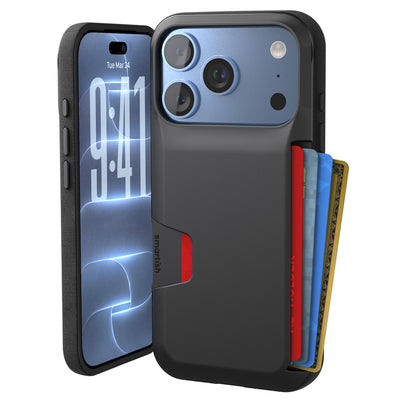
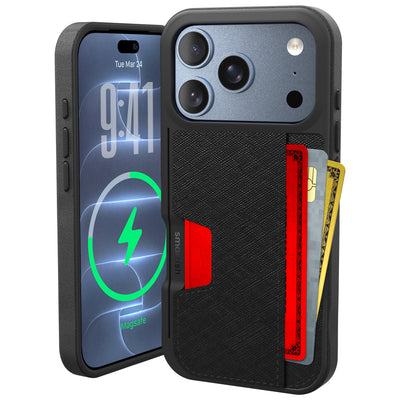
A magnetic wallet should resist sliding as the phone moves in and out of a pocket. Seek a centered ring, firm backing, and footprint that does not rock. A slim card holder places less demand on the connection than a loaded wallet. Keep the load reasonable and test it over a soft surface before trusting it above concrete.
Our Top Picks for iPhone 18 Pro: Gripmunk and Gripzilla Cases
| Case | Design focus | Best accessory match | Buying note |
|---|---|---|---|
| Gripmunk with MagSafe | Slim profile, strong built-in magnets, grippy sides, raised edges, and air-pocket corners | Chargers, wallets, desk stands, and everyday mounts | Verified product fit is iPhone 16 Pro |
| Gripzilla | Protection-focused case design for people who expect more drops and rough handling | Vehicle mounts and active daily use | Confirm the exact phone model before purchase |
The Gripmunk with MagSafe® - Slim Case for iPhone 16 Pro adds a centered magnetic interface, textured side rails, raised camera and screen edges, and air-pocket corners. It has been drop-tested 50 times from 6 feet with successful protection results, though no case promises protection from every impact. The Gripmunk with MagSafe® - Slim Case for iPhone 16 Pro is specifically for iPhone 16 Pro, so verify compatibility before buying for an iPhone 18 Pro.
Frequently Asked Questions
Will the iPhone 18 Pro use a MagSafe charger?
The iPhone 18 Pro is expected to support MagSafe charging, based on the magnetic ring and charging benchmarks discussed for the phone. A bare iPhone 18 Pro ring may provide about 900 to 1,100 grams of vertical pull, while alignment, accessory quality, and movement still affect the connection.
Do MagSafe chargers stop charging the iPhone 18 Pro at 100%?
MagSafe chargers generally stop actively charging an iPhone after the battery reaches 100%, then resume charging as needed to maintain the level. The iPhone 18 Pro can still benefit from careful alignment, since a centered connection supports steadier charging and helps avoid unnecessary movement.
Can I use a 30W charger for MagSafe on the iPhone 18 Pro?
A 30W power adapter can be used with a MagSafe charger for the iPhone 18 Pro, while wireless charging remains limited by the phone and charger’s supported ceiling. The article places MagSafe and Qi2 charging at up to 25W, so a higher-rated adapter does not automatically increase the phone’s wireless speed.
Are MagSafe chargers good for the iPhone 18 Pro?
MagSafe chargers are a good fit for the iPhone 18 Pro, especially for desk charging and other mostly stationary use. The phone’s magnetic ring helps center the charger, while a moving setup such as a car mount needs a stable arm, firm contact, and enough holding force for bumps and side movement.
Is there a downside to MagSafe on the iPhone 18 Pro?
The main downside of MagSafe on the iPhone 18 Pro is that a straight pull rating does not predict performance during twisting, sliding, vibration, or drops. The bare ring is estimated at 900 to 1,100 grams of vertical pull, so a stronger magnetic case can provide more margin for mounts and moving vehicles.
Will a magnetic case make MagSafe stronger on the iPhone 18 Pro?
A well-designed magnetic case can provide more holding force than the bare iPhone 18 Pro ring, with research benchmarks placing high-grade cases around 1,500 to 2,200 grams. Smartish’s Gripmunk with MagSafe is designed specifically for iPhone 16 Pro, so shoppers should confirm model compatibility before buying for another iPhone.