





how many cards fit in an iPhone wallet case
For most people, a wallet case feels comfortable with an ID and two or three payment cards. The answer to how many cards fit in an iPhone wallet case depends on the case format, card thickness, and whether you can pull a card out without a checkout-line wrestling match. A slot that technically holds four cards may feel cramped in daily use.
Key Takeaways
- Most iPhone wallet cases work best with an ID and a few payment cards rather than a fully loaded wallet.
- Card thickness and case design affect capacity, so slot count alone may overstate what fits comfortably.
- Choose a case that lets you remove cards easily, especially when paying at a checkout.
Think of capacity as more than a number: it includes easy card access, room for any cash you carry, and a case that still closes or stays attached as designed. Here’s how to judge the real limit before your phone turns into a pocket-sized filing cabinet.
The Wallet Case Card Count Conundrum: What's Realistic?
For many everyday setups, two or three cards is a practical target. Some cases can hold more, but advertised capacity usually describes what fits, not what slides out easily or stays comfortable in a pocket. If your daily set is a driver’s license plus three payment or transit cards, check the case’s stated capacity and allow for card thickness before deciding it will work.
Advertised vs. Actual Capacity: The Sneaky Truth
Capacity means the number of cards a case can physically store; comfortable capacity means you can retrieve them without prying, forcing a flap shut, or making the phone awkward to hold. Those numbers aren’t always twins. A slot can accept an extra card and still be too tight for quick access. Treat the listed limit as a ceiling, not a promise that every combination of cards will feel good.
Understanding Different Wallet Case Types (Integrated, Folio, MagSafe)
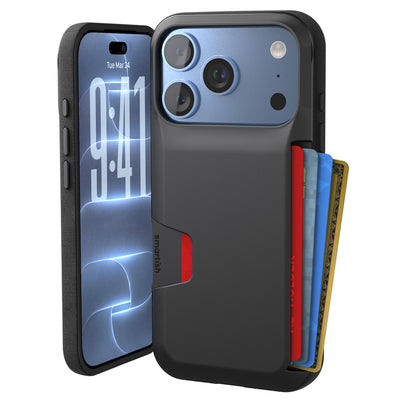
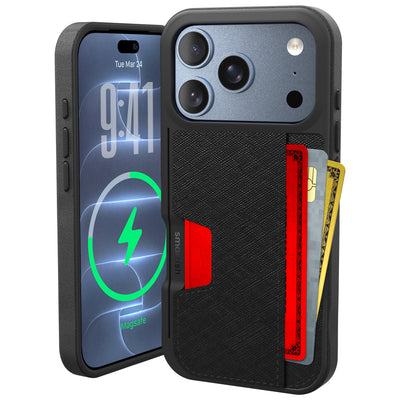
Integrated cases keep cards in a pocket attached to the case, while folios store them in a cover that folds over the screen. Magnetic wallets attach to the back of a compatible phone or case, so their hold and storage depend on the wallet’s design. Each format uses space differently: a slim back pocket has little room to spare, while a folio can add storage at the cost of a thicker folded package.
The 'Comfortable Carry' Metric: Your Daily Driver Needs
Test the setup you’ll actually carry: load your usual cards, remove the one you use most, then check whether the case closes, stays attached, and fits your pocket without feeling bulky. For a slim phone setup without built-in card storage, the Gripmunk - Slim Case for iPhone 16 Pro is a separate protective case, not a wallet case. Check exact iPhone model compatibility before choosing a case.
Beyond the Plastic: How Card Type and Thickness Really Matter
Card count alone can mislead because a pocket has to accommodate thickness as well as width and length. The ISO/IEC 7810 ID-1 standard specifies a thickness of 0.76 mm for standard identification cards, including credit cards. Raised details can take up additional room, so four thin cards may fit more comfortably than four cards with embossed numbers, even if both sets have the same count.
| What you’re carrying | What it means for fit | Practical check |
|---|---|---|
| Flat plastic cards | Usually stack more evenly. | Check that the stack slides out without pinching. |
| Cards with raised numbers | Raised details add thickness and can create pressure points. | Try the thickest card in the stack, not just a flat spare. |
| Metal payment cards | Can make a stack heavier and less flexible. | Test the full load for easy removal and a secure closure. |
| Folded cash | Adds bulk where cards already press against the pocket. | Check whether the case still closes or attaches flat. |
Flat Cards vs. Embossed Numbers: The Millimeter Difference
The ISO/IEC 7810 figure gives you a baseline, not a guaranteed fit for every stack. The research brief reports that embossed numbers can add up to 0.5 mm per card. That extra height can build quickly across several cards, making a snug slot feel jammed. Put embossed cards toward the outside of the stack if that helps them slide more freely, and test retrieval before relying on the setup.
Metal Credit Cards: Heavy Hitters That Eat Space
A metal card may take up a similar footprint to a plastic one, but its rigidity and weight can change how the stack behaves. It won’t flex as readily inside a tight pocket, and several stiff cards can make a wallet feel bulky. If you carry one, count it as a demanding card: pair it with fewer others and check that removing it doesn’t drag the rest of the stack along.
Beyond Credit Cards: IDs, Transit Passes, and Loyalty Cards
Count every card you plan to carry, not just payment cards. A driver’s license, transit pass, work badge, and store card all compete for the same pocket space. Thin membership cards may stack easily, but any card you need often should remain accessible rather than buried at the back. If tapping a transit pass through the case matters, test it with the full stack in place.
The Cash Conundrum: Folding Bills Without Breaking the Bank (or Case)
Four cards plus folded cash can create a bulge even when each item fits on its own. Bills add another layer across the stack, which can make a magnetic wallet less secure or keep a folio from closing neatly. If an emergency bill is part of your carry, test the case with the bill folded as you’d store it. The Gripmunk - Slim Case for iPhone 16 Pro has no card-storage claim here, so choose a separate wallet format for cards and cash.
Integrated Slots vs. Magnetic Pouches: Real-World Capacity Showdown
The right format depends on more than its card limit. Consider where the cards sit, how quickly you can reach them, and whether the storage stays put when your phone takes a tumble. A built-in pocket, a magnetic wallet, and a folio can all carry cards, but they handle access and phone coverage differently. Compare the way each format works in your daily routine, not just the number printed on its packaging.
| Format | Card access and capacity | Phone coverage | Best fit for |
|---|---|---|---|
| Integrated wallet case | Cards stay in a pocket built into the case; access depends on its opening and fit. | Case edges protect the phone, while the back pocket adds bulk. | Carrying a small set of cards in one attached setup. |
| Magnetic wallet | Detaches for separate use; capacity depends on the wallet’s design and secure hold. | The wallet covers part of the back, not the screen. | Removing card storage when you want a slimmer phone. |
| Folio case | Cards sit inside a folding cover; reaching them means opening the folio. | The cover folds over the screen when closed. | Keeping cards and screen coverage together. |
Integrated Wallet Cases: Built-in Security and Capacity
An integrated pocket keeps cards attached to the phone, so there’s no separate wallet to misplace or magnetic connection to detach. That makes it a straightforward choice for a compact everyday set. The trade-off is access: a tight pocket can make a frequently used card slow to remove, while a fuller stack can change how comfortably the case sits in your hand or pocket. Check whether the design has a thumb opening or another easy way to slide cards out. Storage built into a case also doesn’t automatically mean the screen is covered.
MagSafe Wallets: The Convenience Trade-Offs
A magnetic wallet lets you remove card storage when you want to carry the phone alone. That flexibility is handy, but the wallet’s hold matters as much as its pocket size. A stack beyond the design’s stated limit can make cards harder to retrieve and put extra demand on the magnetic attachment. Check that the wallet is intended for your exact phone or case setup, then test it with your usual cards before relying on it. A magnetic wallet leaves the front of the phone uncovered, so it isn’t a substitute for a screen-covering folio.
Folio Cases: Screen Protection Meets Card Storage
A folio folds over the display, adding a layer between the screen and the contents of your pocket or bag. Cards sit against the inside cover, which can be convenient if you want phone and wallet storage together. The folded cover adds bulk, though, and you’ll need to open it to reach cards or use the screen. Keep the inside clean and make sure stored cards lie flat. Grit or debris trapped between the cover and glass can cause fine scratches, so screen coverage is helpful only when the surface stays clear.
The Smartish 'Ish Test': When Function Meets Form for Your Cards
Run a practical fit test before choosing: load the cards you carry daily, retrieve the one you use most, and check whether the case or wallet stays secure as you handle the phone. If you want a slim protective case without card storage, Gripmunk - Slim Case for iPhone 16 Pro is a separate case, not a wallet case. Confirm exact iPhone model compatibility before ordering. The Gripmunk - Slim Case for iPhone 16 Pro may suit someone who prefers separate card storage, while a built-in pocket, magnetic wallet, or folio is the better format when you want cards attached to your phone.
The 'Too Many Cards' Problem: Stretching, Scratching, and Dropping Your Phone
A pocket that accepts one more card today may not hold its shape forever. A packed wallet case can turn ordinary tasks into little annoyances: a stuck card at checkout, a cover that won’t sit flat, or a phone that feels harder to grip. The useful limit is the point before storage starts interfering with access, comfort, or protection. Judge the setup by how it behaves after repeated use, not just whether you can force the stack inside once.
Will Overstuffing Stretch My Case's Card Slots?
Forcing extra cards into a snug pocket can put lasting tension on its opening and seams. Materials and construction vary, so there’s no universal card count at which a slot will stretch. Watch for warning signs instead: the pocket stays loose after you remove the cards, the edges pull apart, or cards slide out when you turn the phone. Stop adding cards if any of those show up. A storage pocket should hold its contents without needing a death grip.
The Screen Scratch Scare: Folios and Flat-Backs
Cards in a folio sit close to the display, and grit trapped between the cover and glass can rub against the screen. Keep the inside cover and screen clean, and avoid storing a loose key or other debris beside the cards. Check that every card lies flat before closing the folio. A flat-back wallet case keeps cards away from the display, but it doesn’t cover the screen when the phone lands face down. Choose based on the kind of contact you want to guard against.
Card Jams: When Ejection Becomes an Expedition
Try removing each card with the case loaded as you plan to carry it. If the top card comes out easily but the one you need is buried, rearrange the stack so your most-used card is easiest to reach. A thumb cutout can help, but it won’t fix a pocket packed beyond its comfortable limit. Don’t bend or yank a card to free it; repeated wrestling can strain the pocket and slow down every checkout.
Drop Protection: How Bulk Affects Your Phone's Safety Net
Extra cards change the shape and feel of a case. A raised bulge can make the phone less comfortable to grip, while a magnetic wallet loaded beyond its intended limit may not stay attached as securely. A case can’t promise that a phone will survive every fall, so avoid treating storage capacity as a protection rating. Check that the case fits the exact phone model, stays secure during normal handling, and doesn’t block the edges designed to help protect it.
Finding Your Sweet Spot: The 3-Card Daily Carry
Three cards can be a sensible starting point: an ID and two cards you use regularly. It’s a practical test load, not a rule for every wallet case or every routine. Add a transit pass or another must-have only if the stack still slides out cleanly and the case sits comfortably in your pocket.
Quick check: Load your usual cards, remove the one you reach for most, and check for a loose pocket, a bulging cover, or a wallet that shifts during handling. If any of those appear, carry fewer cards.
Your Pocket-Friendly EDC Audit: Streamlining Your Carry
A useful everyday carry setup starts with what you reach for, not what might come in handy once a year. Lay out your cards and sort them by actual use: daily, occasional, and “I forgot I had this.” That quick audit can reveal whether you need a higher-capacity wallet case or simply a smaller stack. A setup that fits on paper but makes your phone awkward to hold is not doing your pockets any favors.
The 'Must-Haves' vs. 'Nice-to-Haves' Card Audit
Keep your ID and the payment, access, or transit cards you use routinely. Set aside expired cards, seldom-used loyalty cards, and backups you can store elsewhere. Before removing an occasional card for good, consider whether you can access it another way. The goal is a smaller daily stack, not a heroic commitment to carry nothing.
Pairing Physical Cards with Digital Wallets (Apple Pay, etc.)
Apple Pay can reduce the number of payment cards you need to carry, where it’s accepted and set up for your account. It won’t replace a physical ID, every transit pass, or a card required for a specific purchase. Keep a physical backup for situations where contactless payment isn’t available, and check that your essential cards are accessible without unlocking a crowded pocket.
Case Recommendations for Different Card Counts (Smartish Style)
For a phone-and-card setup, choose a wallet format rated for your intended load and test card retrieval before relying on it. For a slim phone case with separate card storage, the Gripmunk - Slim Case for iPhone 16 Pro is a protective case, not a wallet case. Check that your iPhone model matches before ordering. The Gripmunk - Slim Case for iPhone 16 Pro suits a separate-wallet approach if you want your cards carried apart from the phone.
Final Thoughts: Less Clutter, More Clever
Do a quick pocket check after you pare down: confirm your essential cards are present, easy to retrieve, and stored without forcing the case. Revisit the setup when your routine changes, such as a new commute or workplace access card. A little less card clutter can mean a phone that’s easier to hold and a checkout that doesn’t involve a pocket excavation.
Frequently Asked Questions
How many cards can fit in an iPhone wallet case?
An iPhone wallet case is usually most comfortable with two or three cards. Some cases can physically hold more, but thickness, raised numbers, metal cards, and folded cash can make cards harder to remove or keep the case closed. Treat the listed capacity as a maximum, then test your everyday card stack.
Can I fit four cards in Apple Wallet?
Four physical cards may fit in some iPhone wallet cases, but Apple Wallet is a digital wallet app and does not store physical cards inside your phone. Check the case’s stated capacity and test whether four cards slide out easily and the case closes or stays attached as designed.
Does a MagSafe wallet mess up credit cards?
A MagSafe wallet should be checked against its maker’s guidance before you store credit cards in it. The article does not establish whether magnetic wallets can affect cards, so avoid assuming every card is safe; contact your card issuer or wallet manufacturer if you have concerns, especially about cards with magnetic stripes.
Which MagSafe wallet can hold three cards?
A MagSafe wallet with a stated capacity of at least three cards may suit a three-card carry, but fit depends on card thickness and the wallet’s design. Check whether its capacity describes physical storage, then test card access and whether the wallet stays attached with your usual cards inside.
What is the best iPhone wallet case?
The best iPhone wallet case is one that fits your exact iPhone model, carries your usual cards, and lets you retrieve them comfortably. Compare integrated pockets, folio covers, and magnetic wallets based on access, phone coverage, and space for cash. Test the full load before relying on its advertised card limit.
Can I carry cash in an iPhone wallet case with cards?
You can carry folded cash in some iPhone wallet cases, but bills add thickness alongside the cards. Test the case with the cash folded as you plan to carry it, and check that it still closes neatly or stays attached securely.