





drop tested iphone cases
Why Drop-Tested iPhone Cases Matter for Your Daily Hustle
Drop tested iPhone cases undergo controlled impact testing at specific heights and angles to prove they can protect your phone during real-world fumbles. The best drop tested iPhone cases combine air-pocket corners, raised edges, and grippy materials to absorb shock and prevent slips. Smartish cases like Gripmunk and Gripzilla pass the same drop tests despite different thicknesses, proving protection doesn't require bulk.
Real-World Drops vs. Lab Hype
Most phones hit the ground from pocket height (about 4 feet) or table level during everyday moments: grabbing coffee, pulling out keys, juggling groceries. Lab tests recreate these scenarios by dropping cases from 6+ feet onto concrete at multiple angles. The difference between marketing fluff and actual protection? Repeatable results across corner impacts, face-down slams, and camera-first falls.
Many brands slap "military-grade" labels on packaging without showing test footage or methodology. Real drop testing measures bounce height, settling time, and whether the screen or camera lens survives intact. When a case passes multiple drops at 6 feet, it proves the materials and design work together to dissipate force before it reaches your phone.
Cost of Repairs vs. Case Investment
Screen replacements start around $279 for newer iPhones. Camera module repairs can hit $449. Back glass repairs run $349 to $599 depending on your model. A quality drop tested case costs $20 to $40 and lasts years. One prevented drop pays for the case ten times over.
| Repair Type | Average Cost | Case Investment |
|---|---|---|
| Screen replacement | $279-$379 | $20-$40 one-time |
| Camera module | $449+ | |
| Back glass | $349-$599 |
Butterfingers Stories That Hit Home
Phones slip during the worst moments. Stepping off the bus. Reaching for a parking meter. Setting a phone on a car roof. One Smartish customer dropped a phone down concrete stadium stairs during a concert. The Gripzilla case bounced twice, and the phone powered on without a scratch. Another user's phone fell from a second-story balcony onto pavement. Air-pocket corners absorbed the impact, screen stayed perfect.
These saves happen because drop tested iPhone cases account for human clumsiness. Grippy edges prevent the initial slip. Raised bezels protect the screen when the phone lands face-down. Corner air pockets act like crumple zones in cars, compressing on impact to slow deceleration. Protection isn't about bubble-wrapping your phone--it's about smart engineering for the drops that actually happen.
How Drop Tests Actually Work (And What to Watch For)
Drop Heights, Angles, and Scenarios Explained
Standard drop tests release phones from 6 feet onto concrete or steel plates. Testers rotate the phone to land on all six surfaces: four edges, front, and back. Edge drops test corner reinforcement. Face-down drops verify raised screen protection. Back drops check camera ring height and overall shell integrity.
Some tests add variables like dropping onto gravel, tile, or asphalt. Multi-drop protocols repeat impacts 26 times or more to prove durability over months of use. A case that survives one 6-foot drop might crack on the fifth. Repeated testing separates one-hit wonders from daily drivers.
Corner, Face, and Camera Drops: The Real Killers
Corner impacts are the most common and most dangerous. When a phone rotates during a fall, it usually lands on a bottom corner first. That single point absorbs all the kinetic energy. Cases without reinforced corners transfer shock directly to the phone's frame, cracking screens from the inside out.
Face-down drops test whether raised edges actually work. A screen needs at least 1 mm of clearance when the case lies flat. Anything less and the glass kisses the ground on impact. Camera drops are newer concerns--protruding lenses on modern iPhones shatter easily. A proper raised camera ring lifts the lenses above surfaces when the phone rests on its back.
Watch the Bounce: When a dropped phone bounces high or multiple times, the case isn't absorbing energy. Quality cases compress and settle quickly, converting motion into material deformation instead of letting the phone ricochet.
Beyond the Numbers: Settling Time and Force Absorption
Drop height is only part of the story. Two cases can pass a 6-foot test with wildly different results. The best cell phone case for drop protection minimizes peak force and settling time. Peak force measures the maximum impact load transmitted to the phone. Lower peak force means less stress on internal components.
Settling time tracks how long the phone keeps moving after initial impact. A phone that bounces three times takes longer to settle than one that compresses and stops. Materials matter here: TPU (thermoplastic polyurethane) absorbs shock through elastic deformation. Polycarbonate shells distribute force across a wider area. Hybrid designs combine both for maximum energy dissipation.
Materials That Deliver Real Drop Protection
TPU and Polycarbonate: Soft Cushion Meets Hard Shell
TPU forms the inner layer of most protective cases. This flexible polymer compresses on impact, converting kinetic energy into heat. It bounces back to its original shape after deformation, ready for the next drop. TPU excels at absorbing corner impacts where force concentrates on small areas.
Polycarbonate creates the rigid outer shell. This hard plastic resists scratching and spreads impact force across the case's surface. When a phone hits concrete, polycarbonate prevents penetration while TPU underneath cushions the blow. Together, they create a system stronger than either component alone.
Hybrid Builds for Everyday Wins
The best iPhone cases for protection layer materials strategically. Air-pocket corners use hollow TPU chambers that collapse progressively, slowing deceleration. Rigid backplates add stiffness to prevent case flexing that could pop phones out on impact. Grippy sidewalls use textured TPU that increases friction without feeling tacky.
Material thickness matters less than design. A slim case with proper air pockets and raised edges can match protection from a bulkier design. Both Gripmunk (slim) and Gripzilla (thicker) pass identical drop tests because they use the same hybrid construction principles. The difference is cushion depth, not protective capability.
| Material | Function | Best For |
|---|---|---|
| TPU (inner) | Shock absorption, flexibility | Corner impacts, repeated drops |
| Polycarbonate (outer) | Scratch resistance, force distribution | Back/edge protection, structural rigidity |
| Air pockets | Progressive compression, crumple zones | High-impact corners |
Grip Textures That Prevent Slips
The best drop protection is the drop that never happens. Textured sidewalls increase surface friction so phones don't slide out of hands or pockets. Good grip feels secure without leaving residue or attracting lint. Finger grooves give thumbs natural resting spots during one-handed use.
Grippy edges use micro-patterns molded into TPU. These patterns increase contact area between your hand and the case. Unlike sticky coatings that wear off, molded textures last the life of the case. The right grip texture prevents slips during the moments when phones drop most: pulling from pockets, reaching across tables, texting while walking.
Slim vs. Protective: Finding Your Protection Sweet Spot
Can Slim Cases Handle Drops Like the Thick Ones?
Slim cases protect through smart engineering, not bulk. A case only needs enough material to absorb impact energy and keep raised edges above screens. Gripmunk measures under 2 mm thick but passes the same 6-foot drop tests as thicker alternatives. The secret? Strategically placed air pockets and a hybrid TPU-polycarbonate build.
Thickness adds cushioning depth, not protection quality. Gripzilla offers more cushion for users who prefer extra reassurance or work in demanding environments. Both cases use identical corner reinforcement and raised edge heights. Your choice depends on pocket feel and aesthetic preference, not protective capability.
MagSafe Compatibility Without Compromise
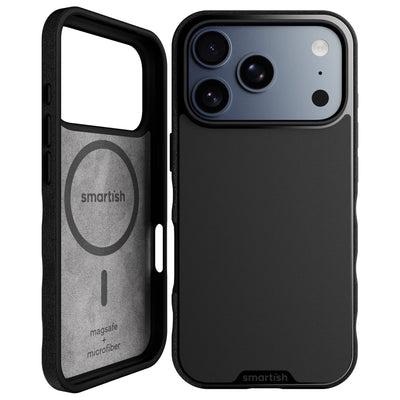
MagSafe magnets sit between the case's inner and outer layers without affecting drop performance. Gripmunk and Gripzilla both support MagSafe charging and accessories while maintaining full protection. The magnetic ring doesn't create weak points because it's embedded in solid material, not cutting through structural elements.
Testing shows MagSafe-compatible drop tested iPhone cases pass the same impact tests as non-magnetic versions. The best iPhone 14 cases for protection and best drop tested iPhone cases for newer models include MagSafe without compromise.
Key Features That Pass the Ish Test
Air-Pocket Corners: Your Crumple Zones
Air-pocket corners work like car crumple zones, compressing progressively to slow impact force. When a phone lands corner-first, hollow chambers collapse in stages. The first layer absorbs initial shock. Deeper layers engage as compression continues. This staged absorption spreads deceleration over more time, reducing peak force on the phone.
All Smartish cases include air-pocket corners as standard. These aren't marketing gimmicks--they're engineered chambers with specific wall thicknesses and compression ratios. During testing, phones with air-pocket corners show lower peak impact forces compared to solid-corner designs. That reduction can make the difference between a cracked screen and a working phone.
Raised Edges for Screen and Camera Safety
Raised screen edges lift the display approximately 1 mm above flat surfaces. When a phone lands face-down, the case's bezel contacts the ground while the screen hovers safely above. This tiny gap prevents scratches during slides and direct impacts during drops.
Camera rings protect protruding lenses the same way. Modern iPhone cameras extend beyond the phone's back, making them vulnerable when placed on tables or during back-first drops. A raised camera ring surrounds the lenses, taking impacts before glass touches anything. This simple feature prevents one of the most expensive repairs on new phones.
Precise Cutouts and Everyday Usability
Button cutouts balance protection with usability. Covered buttons prevent dust and debris from entering gaps while maintaining tactile feedback. Only the camera control button gets a true cutout for gesture recognition. Port openings stay accessible without creating weak points in the case structure.
Precise engineering means cases fit without gaps or looseness. Tight tolerances prevent phones from shifting inside cases during impacts. A phone that moves even 2 mm before the case catches it experiences higher peak forces. Proper fit also stops dust and lint from collecting between the case and phone.
Coverage for Every iPhone: 14 to 17 and Beyond
iPhone 14, 16, 16 Pro Max, and 17 Model Fits
Each iPhone generation changes dimensions slightly, requiring model-specific cases. Best iPhone 14 cases for protection don't fit iPhone 16 models due to camera placement and button location changes. Smartish designs cases for each release, ensuring precise cutouts and proper raised edge heights for every model from iPhone 14 through iPhone 17.
Pro Max models need special attention due to larger screens and heavier weight. More mass means more kinetic energy during drops. Cases for Pro Max phones use reinforced corners and slightly thicker sidewalls to handle the extra force.
Clear Cases That Fight Yellowing
Clear cases show off your phone's original color while providing full protection. Anti-yellowing formulations use UV-resistant materials that maintain transparency over years of sun exposure. Clear cases prove protection doesn't require hiding your phone's design.
All Smartish cases, including clear versions, offer customization options. Clear cases work particularly well for users who upgrade phones frequently and want to showcase each new color. The same drop-tested construction applies regardless of transparency.
Wallet Cases Without the Bulk Penalty
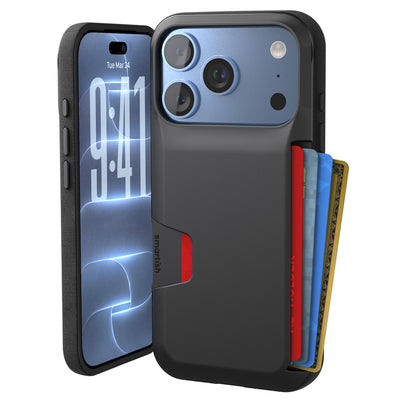
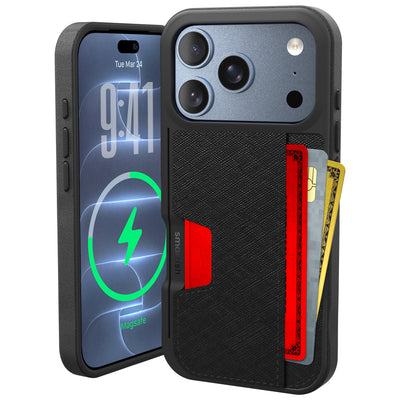
Wallet cases combine phone protection with card storage, eliminating the need to carry a separate wallet. Wallet Slayer Vol. 1 and Vol. 2 hold multiple cards and cash while maintaining protective features like air-pocket corners and raised edges. Vol. 2 adds a kickstand for hands-free viewing.
These cases are thicker than slim options due to card slots, but they replace your wallet entirely. The trade-off makes sense for users who want to carry one item instead of two. Both volumes protect phones during drops while keeping essentials accessible. Note that wallet cases aren't MagSafe compatible due to card storage interfering with magnetic charging.
For hands-free convenience with older models, the Dancing Queen - Crossbody Wallet Case for iPhone 11 Pro Max secures 5 cards plus cash, includes an adjustable crossbody strap to keep your hands free, and includes a removable wristlet. Built for the iPhone 11 Pro Max, it comes in colors like Stiletto Black-Gold, Bath Bomb Blue, and Flavor of the Month. At $29.99 to $34.99, it's a wallet solution that doesn't compromise on style or security.
Smartish Drop-Tested Cases: Protection That Punches Above Its Price
Gripmunk: Slim MagSafe That Survives Drops
Gripmunk keeps your phone slim without sacrificing drop protection. At under 2 mm thick, it slides into pockets easily while delivering air-pocket corners, raised screen edges, and a raised camera ring. The hybrid TPU-polycarbonate build passes 6-foot drop tests despite its minimal profile. MagSafe compatibility works right out of the box--charge wirelessly and attach accessories without removing the case.
Finger grooves along the sides create natural grip points for one-handed use. The textured edges are grippy, not sticky, so the case doesn't attract lint or resist sliding into tight pockets. Gripmunk fits iPhone models from 14 through 17, with precise cutouts for the camera control button on newer models. Clear versions resist yellowing, and all colors are customizable.
Gripzilla: Extra Cushion for Active Days
Gripzilla adds thicker TPU cushioning for users who want extra reassurance. The rigid backplate keeps the case from flexing during impacts, while the soft bumper wraps the edges to absorb corner drops. Despite the added material, Gripzilla passes the same drop tests as Gripmunk because both use identical engineering principles: air-pocket corners, raised edges, and hybrid construction.
MagSafe works just as well in Gripzilla as it does in slimmer cases. The magnets sit embedded in the case structure without creating weak points or reducing shock absorption. Gripzilla fits people who work outdoors, commute on rough terrain, or simply prefer the feel of more material in their hands.
Wallet Slayer Vol. 1 & 2: Cards + Protection
Wallet Slayer Vol. 1 and Vol. 2 combine card storage with drop-tested protection, eliminating the need to carry a separate wallet. Both versions hold multiple cards and cash while maintaining air-pocket corners and raised edges. Vol. 2 adds a kickstand for hands-free viewing during commutes or desk work. These cases are thicker than slim options because they replace an entire wallet, not just protect a phone.
Wallet cases aren't MagSafe compatible due to card interference with magnetic charging. If you need MagSafe, choose Gripmunk or Gripzilla. If you're tired of juggling a phone and wallet, Wallet Slayer cases solve that problem. They're built for people who want one pocket item instead of two, with the same drop protection you'd expect from any Smartish case.
The Dancing Queen - Crossbody Wallet Case for iPhone 11 Pro Max takes wallet functionality further with an adjustable crossbody strap and removable wristlet. It secures 5 cards plus cash, includes lip gloss loops for quick access, and comes in colors like Stiletto Black-Gold and Bath Bomb Blue. At $29.99 to $34.99, it's designed for iPhone 11 Pro Max users who want hands-free convenience without carrying a bag.
Wirecutter Picks and Real-User Saves
Smartish cases have earned Wirecutter's "best case for most people" recognition eight years running. That consistency comes from passing drop tests year after year across multiple iPhone generations. Real users report saves that back up lab results: phones dropped down stadium stairs, off second-story balconies, and onto concrete sidewalks, all surviving without screen damage.
One customer's Gripzilla case took a phone through a 15-foot fall onto gravel during a hiking trip. The phone bounced once and powered on without a scratch. Another user dropped a phone from a moving car onto asphalt. Air-pocket corners compressed on impact, and the raised screen edge kept the glass from touching the road. These saves happen because drop tested iPhone cases account for real-world clumsiness, not just controlled lab conditions.
| Case | Thickness | MagSafe | Best For | Price Range |
|---|---|---|---|---|
| Gripmunk | Slim (~2 mm) | Yes | Everyday carry, minimal bulk | $20-$30 |
| Gripzilla | Protective (~3 mm) | Yes | Active use, extra cushion | $25-$35 |
| Wallet Slayer Vol. 1 | Thick (wallet) | No | Replacing wallet + phone | $30-$40 |
| Wallet Slayer Vol. 2 | Thick (wallet) | No | Wallet + kickstand | $30-$40 |
Protection You Can Trust: All Smartish cases pass the same drop tests, from slim Gripmunk to thicker Gripzilla. Choose based on your daily routine and pocket preferences, not fear of inadequate protection.
Drop tested iPhone cases prove their worth through repeatable results, not marketing claims. Air-pocket corners, raised edges, and hybrid materials work together to absorb impacts and prevent slips. Smartish cases deliver this protection across every iPhone model from 14 to 17, with options for slim carry, extra cushion, or wallet functionality. The best cell phone case for drop protection is the one you'll actually use, and that means balancing protection with the way you live. Whether you choose Gripmunk for minimal bulk or Gripzilla for extra reassurance, you're getting drop-tested engineering that has saved thousands of phones from pavement, stairs, and everything in between.
MagSafe compatibility works right out of the box--charge wirelessly and attach accessories without removing the case. For troubleshooting wireless charging, MagSafe support offers guidance to ensure your charging experience is smooth and efficient.
Frequently Asked Questions
What design features make drop-tested iPhone cases effective?
The best drop-tested iPhone cases are designed with a few smart tricks. They usually have air-pocket corners that act like crumple zones, absorbing impact to slow your phone's fall. Raised edges, or bezels, are also key; they lift the screen and camera lenses off surfaces when your phone lands flat. Plus, grippy materials help prevent those slips from happening in the first place.
How do lab drop tests simulate real-world phone accidents?
Lab drop tests go beyond just dropping a phone once. They recreate everyday fumbles, often from 6 feet or more, onto hard surfaces like concrete. Testers drop the phone on all six sides, including corners, face-down, and back-first, to make sure every part of the drop-tested iPhone case can handle the unexpected. It's about repeatable results, not just marketing fluff.
Do all protective iPhone cases need to be bulky?
Nope, not at all! We've found that smart engineering makes all the difference, not just adding bulk. Cases can pass rigorous drop tests even with a slim profile, proving that clever design and material choices can dissipate force just as well as a thick, heavy case. It's about how the case is built, not just how big it is.
What types of impacts are most dangerous for an iPhone?
From what we've seen, corner impacts are the real phone killers. When a phone lands on a single corner, all that kinetic energy gets focused on one spot, which can crack screens from the inside. Face-down drops are also a big worry if your drop-tested iPhone case doesn't have properly raised edges to protect the screen. And with today's fancy cameras, a direct hit to the lens can be a costly repair.
What materials are commonly used in quality drop-tested iPhone cases?
Quality drop-tested iPhone cases often use a smart combo of materials. Thermoplastic polyurethane, or TPU, is a flexible polymer that's great for absorbing shock, especially in corners. Then there's polycarbonate, a hard plastic that forms the rigid outer shell to spread impact force and resist scratches. Together, these materials create a protective system that's stronger than either one alone.
Is a drop-tested iPhone case a worthwhile investment?
Absolutely, it's a no-brainer! Think about it, replacing an iPhone screen can set you back hundreds of dollars, and camera or back glass repairs are even more. A solid drop-tested iPhone case usually costs a fraction of that, around $20 to $40, and can last for years. Preventing just one drop means the case pays for itself many times over, keeping your phone safe and your wallet happy.