



magsafe case vs magnetic case
Shopping for a magnetic phone case should not feel like decoding a tiny tech contract. The phrase magsafe case vs magnetic case gets used as if the two mean the same thing, but the hardware underneath can produce very different results. One case may support a proper magnetic ring, reliable alignment, and faster wireless charging. Another may contain a single metal plate that attracts a mount and stops there.
This comparison focuses on magnet layout, charging output, accessory grip, alignment, protection, and pocket behavior. The goal is to help you choose a case your charger, wallet, car mount, and butterfingers can live with.
MagSafe Case vs. Magnetic Case: Cutting Through the Hype
The confusion starts with the word “magnetic.” A generic magnetic case can hold a metal plate or a few magnets, letting a phone attach to a dashboard mount. A MagSafe case is built around Apple’s circular magnetic interface, with magnets positioned to align accessories and the phone’s charging coil. Qi2 cases follow an open standard from the Wireless Power Consortium, while MagSafe remains Apple’s accessory system. Both depend on accurate alignment, not merely on having something metal inside the case.
That distinction affects more than whether a wallet stays attached. A certified MagSafe or Qi2 setup can support wireless charging up to 15W, while a typical non-certified magnetic Qi setup often reaches a 7.5W ceiling with an iPhone. Misaligned magnets can make charging pause, restart, or quit before morning. This comparison covers physical layouts, accessory hold, charging behavior, and daily usability.
How We Picked the Best Magnetic Phone Cases
We judged cases by what happens after the unboxing excitement wears off. A magnetic case has one job beyond protecting the phone: it needs to keep accessories centered and connected through ordinary use. That means examining the magnet array, case thickness around the charging coil, alignment with chargers, and behavior in a pocket, car mount, or crowded bag.
We separated specifications from assumptions. A case can attract a mount without supporting full-speed wireless charging. A strong initial snap does not guarantee that a wallet will resist twisting. A ring printed on packaging proves little unless its position matches the phone’s coil and the accessory standard.
- Magnetic layout: We looked for a complete circular array rather than one plate or scattered magnets.
- Charging compatibility: We checked whether the design supports MagSafe or Qi2 alignment, plus the difference between 15W certified charging and typical 7.5W standard Qi charging.
- Accessory stability: Wallets, grips, stands, battery packs, and car mounts should attach without sliding, spinning, or losing contact during normal movement.
- Case construction: The shell, raised bezels, corner cushioning, button cutouts, camera clearance, and inner lining all matter after the magnetic demo ends.
- Daily handling: Side texture should help prevent drops without turning the case into pocket sandpaper. The back should move in and out of a pocket without snagging.
- Signal behavior: We considered possible effects around the compass, NFC, wireless charging coil, and other phone radios, especially with poorly placed metal plates.
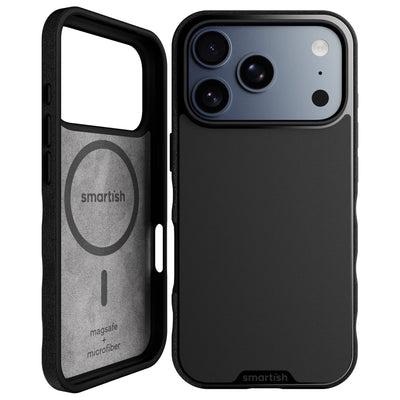
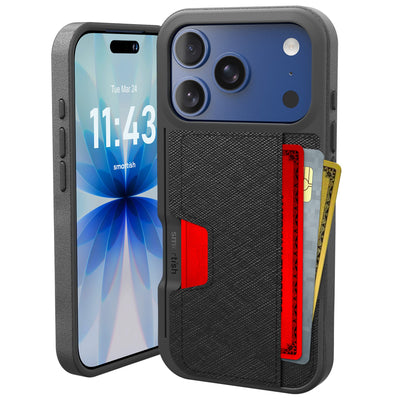
That process favors a purpose-built system over a case that simply happens to attract metal. The Gripmunk with MagSafe® - Slim Case for iPhone 16 Pro fits that approach with built-in strong magnets compatible with MagSafe, plus a slim design made for the iPhone 16 Pro.
The Real Difference: MagSafe Ring Arrays vs. Basic Magnetic Plates
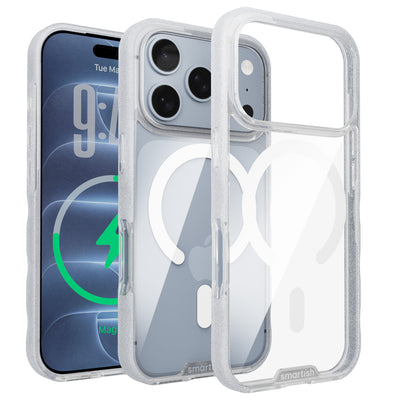
The key hardware difference is shape and placement. Apple’s MagSafe system uses a standardized circular array of 36 neodymium magnets around the charging coil, according to Apple’s published MagSafe design information. That ring creates a repeatable connection point for chargers and accessories. Qi2 uses a similar magnetic alignment concept under the Wireless Power Consortium standard. When the rings meet correctly, the charging coils sit across from each other.
A basic magnetic case usually takes a shorter route. It may use a rectangular steel plate, a horseshoe magnet, or a few small magnets positioned to hold a particular car mount. That can work for mounting, but it does not automatically reproduce the circular alignment used by MagSafe or Qi2. The plate may sit between the phone and charger, shift the connection point, or cover part of the wireless charging area. Attraction is not compatibility, and “magnetic” is not a charging certification.
| Feature | MagSafe or Qi2 ring case | Basic magnetic plate case |
|---|---|---|
| Magnet layout | Circular array centered around the charging coil | Plate, strip, or limited magnet placement |
| Accessory alignment | Designed for repeatable centering with compatible chargers and accessories | Depends on the mount and the plate position |
| Wireless charging | Can support certified MagSafe or Qi2 charging up to 15W | Often operates at standard Qi behavior, commonly up to 7.5W on iPhone |
| Accessory hold | Ring contact spreads force around the connection | Hold depends on a smaller contact area and magnet orientation |
| Common problem | Compatibility still depends on the charger and accessory | Sliding, twisting, heat, or charging interruptions from poor alignment |
Holding force is another place where layout beats label copy. Research comparing aligned Halbach arrays with single metal plate designs found an average holding-force difference of about three times. That does not mean every ring case will hold every accessory three times better. It shows why a distributed array can resist twisting more effectively than one flat plate. A wallet attached to a ring has contact around a broad circle, while a plate-style case may grip at one narrow region and let the accessory rotate or peel away.
Charging exposes weak designs quickly. A certified MagSafe or Qi2 charger needs the phone and charger coils to sit in the right place. If a case shifts the phone, the charger may reduce output, generate extra heat, or stop and restart. The magnets may still be touching while the coils are no longer aligned.
The “fake magnetic” trap usually looks like a case with a printed circle, a thin steel insert, or vague language such as “MagSafe ready.” Look for explicit compatibility details instead: MagSafe support, Qi2 certification, charging output, and the accessory types tested with the case. A case can attach to a magnetic car mount and still fail to support a MagSafe wallet or full-speed wireless charging.
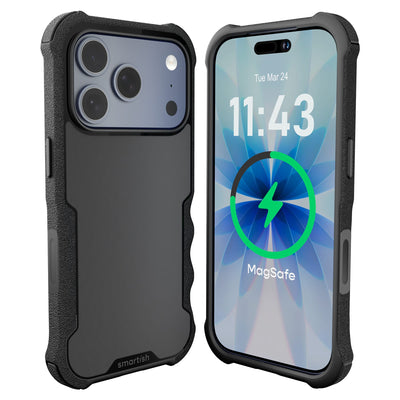
The Gripmunk with MagSafe® - Slim Case for iPhone 16 Pro is designed specifically for iPhone 16 Pro and includes built-in strong magnets compatible with MagSafe. It also has protective air-pocket corners that act like small airbags to cushion and protect the phone from drops, raised edges for the screen and camera, and a soft microfiber interior to help prevent scratches and dings. The textured sides help prevent slipping without feeling sticky, while the smooth back is easier to slide into a pocket. It has been drop-tested 50 times from 6 feet with successful protection results, without claiming that any case can defeat every possible drop.
Beyond Charging: Protection, Grip, and Pocketability
A magnetic case still has to survive phone ownership away from a charging pad. Drops happen near concrete, phones slide off counters, and pockets are already crowded without adding a case that catches every thread. The Gripmunk with MagSafe® - Slim Case for iPhone 16 Pro uses protective air-pocket corners that act like small airbags, raised edges around the screen and camera, and a soft microfiber lining to help guard against scratches and dings. It has also been drop-tested 50 times from 6 feet with successful protection results.
Handling comes down to the contrast between the sides and the back. Textured case sides help your fingers hold on during one-handed scrolling, quick photos, and the “carrying too many things at once” maneuver. A smooth back lets the phone slide into a jeans pocket or bag without fighting the fabric. The Gripmunk with MagSafe® - Slim Case for iPhone 16 Pro is designed with that split personality: grippy where your hand needs help, smooth where your pocket needs cooperation. Precise cutouts keep buttons usable. On iPhone 16 Pro, complete access to the Camera Control button matters because a recessed opening or thick wall can make a quick camera adjustment difficult.
Magnetic hardware can affect daily function if it is poorly placed. A large metal plate or scattered magnets may sit near the wireless charging coil, NFC area, or compass sensor, creating accessory compatibility problems or less predictable readings. A purpose-built ring keeps the connection centered and avoids covering the phone with unnecessary metal. Check the case and accessory pairing before buying: a wallet may stay attached while a car mount twists, or a charger may connect while shifting enough to interrupt power.
Gripmunk with MagSafe® - Slim Case for iPhone 16 Pro: Secure handling without pocket drama
Pros
- Air-pocket corners cushion the phone during drops.
- Raised screen and camera edges add separation from flat surfaces.
- Textured sides improve hand control without a sticky feel.
- Smooth back slides more easily into pockets and bags.
- Precise access supports the iPhone 16 Pro Camera Control button.
- Soft microfiber lining helps protect the phone from interior scratches.
Cons
- Its confirmed fit is limited to iPhone 16 Pro, so another model requires a different case.
- Magnetic accessory performance still depends on the charger, mount, or wallet paired with it.
Protection and comfort are connected. A case that is difficult to grip invites drops, while one that snags on a pocket becomes annoying enough to leave at home. For shoppers comparing a magsafe case vs magnetic case, inspect corner cushioning, bezel height, button access, surface texture, interior lining, and the space around sensors instead of judging only the magnet symbol.
Which Magnetic Case is Right for Your iPhone (or Android)?
Choose the case by the accessories you actually use, not by the biggest magnet claim on the box. If you charge on a pad, switch between wallets and grips, or rely on a car mount every day, a properly aligned magnetic ring is the safer pick. If you only need a phone to stick to one dashboard mount, a basic magnetic plate may do the job, though it offers less flexibility for chargers and add-ons.
Gripmunk with MagSafe® - Slim Case for iPhone 16 Pro: Best for everyday iPhone 16 Pro users
Best for: iPhone 16 Pro owners who want dependable accessory attachment, drop protection, hand grip, and easy pocket use in one slim case.
Gripmunk with MagSafe® - Slim Case for iPhone 16 Pro is the Smartish recommendation because it addresses the whole routine, not just the magnetic snap. Built-in strong magnets support MagSafe accessories and high-speed wireless charging. Air-pocket corners cushion the phone during drops, raised edges protect the display and camera, and textured sides help keep butterfingers under control. The smooth back slides into a pocket without turning denim into an enemy. Precise cutouts provide complete access to the iPhone 16 Pro Camera Control button. It is available from $19.99 to $24.99 in several colors and patterns.
Qi2-compatible Android cases: Best for open-standard charging
Android shoppers should look for Qi2 compatibility rather than borrowing Apple terminology by assumption. Qi2 is an open standard from the Wireless Power Consortium, and a compatible case can provide magnetic alignment with Qi2 chargers and accessories. Confirm the exact phone model, charging output, and accessory support before buying. A case that fits the camera cutout may still place its ring incorrectly, leaving a charger to slip, heat up, or stop transferring power mid-session.
For shoppers comparing a magsafe case vs magnetic case, the practical verdict is straightforward: pick the verified ring system if charging, accessory choice, and stable alignment matter. Pick a basic plate only for a narrow mounting need. The Gripmunk with MagSafe® - Slim Case for iPhone 16 Pro is the clear Smartish fit for confirmed iPhone 16 Pro compatibility and daily protection without pocket drama.
Frequently Asked Questions
Is a magnetic phone case the same as MagSafe?
A magnetic phone case is not necessarily the same as a MagSafe case. MagSafe cases use a centered circular magnet array designed for compatible chargers and accessories, while generic magnetic cases may rely on a metal plate or a few magnets for mounting. A magnetic attachment alone does not confirm MagSafe alignment or charging support.
What are the disadvantages of MagSafe cases?
MagSafe cases can cost more and may still have accessory or charger compatibility limits. Poor alignment, case thickness, or accessory design can cause sliding, twisting, heat, or interrupted charging. A purpose-built case such as the Gripmunk with MagSafe for iPhone 16 Pro adds air-pocket corners and raised edges while keeping a slim, pocket-friendly design.
Why was MagSafe discontinued?
MagSafe has not been discontinued as Apple’s magnetic accessory system. MagSafe remains available for compatible iPhone accessories, while Qi2 offers a related open standard from the Wireless Power Consortium. Shoppers should check whether a case supports MagSafe or Qi2 instead of assuming every magnetic case uses the same system.
Do you actually need a MagSafe case?
You need a MagSafe case only if you want reliable use of MagSafe chargers, wallets, battery packs, stands, or car mounts through the case. A basic magnetic case may be enough for a specific mount, but it may not provide centered charging or stable support for a range of accessories. The Gripmunk with MagSafe is made for iPhone 16 Pro and supports MagSafe accessories.
Does MagSafe drain your battery?
MagSafe does not inherently drain an iPhone battery faster than other wireless charging methods. Battery impact depends more on charging heat, alignment, charging habits, and the charger being used. A properly aligned MagSafe or Qi2 setup can transfer power more efficiently than a poorly aligned magnetic case and charger combination.