




iPhone Duo case
A foldable phone asks more from a case than a regular slab. It closes twice as thick, has a moving spine, and places expensive glass near corners, edges, and hinges. The right iPhone Duo should protect those areas without turning your pocket into a phone-shaped brick.
Key Takeaways
- A case for iPhone Duo needs to shield the hinge and corners without making the phone feel twice as thick when closed.
- Look for a design that uses slim, impact-absorbing materials around the spine so the phone folds and unfolds without extra bulk.
- The best cases keep the pocket-friendly feel of a foldable by using reinforced edges and a light frame instead of heavy padding.
- Protecting the expensive glass on a foldable means choosing a case with precise cutouts and a snug fit, not a bulky shell.
Look for a secure two-piece fit, grippy sides, raised screen and camera protection, and corner cushioning that helps spread impact. The goal is practical protection for commutes, couch drops, crowded bags, and the classic “I definitely had a better grip five seconds ago” moment.
The iPhone Duo Puzzle: Why Your iPhone Duo Case Needs to Be Smarter
A Duo phone needs a case designed around movement, not a shell that only fits its closed shape. A good design uses separate front and back pieces that stay aligned while the phone opens and closes, protects the hinge without blocking its travel, and adds grip where the device is thickest. It should leave room for the cover screen, inner display, cameras, buttons, and wireless charging hardware.
The “Oops, I Dropped It” Anxiety: Protecting Your Big Investment
That nervous little flinch after a drop makes sense. A foldable phone combines a cover display, flexible inner panel, camera bump, hinge mechanism, and multiple edges in one expensive package. Research from PhoneArena describes leaked case designs around a prominent rear camera plateau, so the camera area needs real clearance instead of a decorative rim.
Corner and hinge impacts deserve attention. Gorilla Case Store reports that more than 70% of foldable smartphone repairs come from corner or hinge impacts during everyday drops. A case cannot make a phone drop-proof, but impact zones deserve more thought than a smooth plastic cover.
Beyond Basic: What Makes a Foldable Case Different?
A standard phone case wraps one rigid frame. A foldable case must move with two sections while keeping displays clear and allowing the phone to close properly. That is why two-piece construction is common. The pieces protect each half independently, while adhesive support, fitted edges, or both help prevent sliding during repeated opening and closing.
Thickness matters, too. Foldable devices double in thickness when closed, and research shared by Gorilla Case Store says edge grip becomes 40% more important for preventing drops. Texture on the sides gives your fingers something to hold without adding a sticky feel. Soft interior lining helps guard against scuffs, while raised bezels keep glass away from tables and countertops.
The Smartish Approach: Protection Without the Pocket Bulk
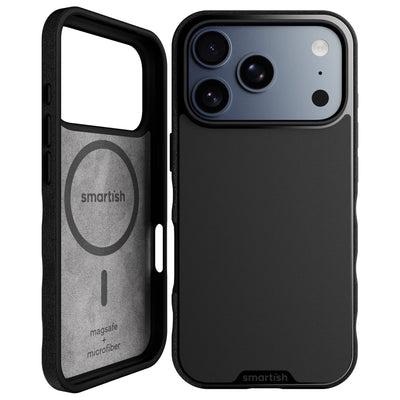
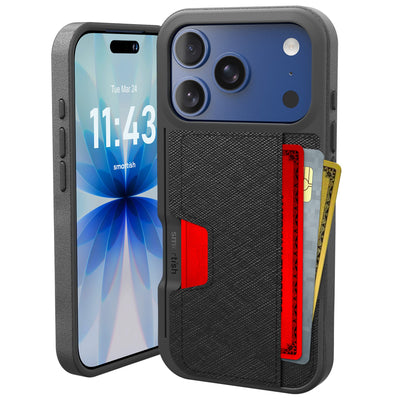
The Gripmunk with MagSafe® - Slim Case for iPhone 16 Pro shows what to seek in a slim case: textured sides for control, a smooth back for easier pocket use, protective air-pocket corners, raised screen and camera edges, and a soft microfiber lining inside. Those details handle ordinary hazards without adding armor just for show.
Decoding the Duo Case: Key Features That Actually Matter
Two-Piece Designs: How They Snap Together and Stay Put
Separate pieces let each half follow the phone’s movement instead of fighting it. The fit should feel precise around the frame, with edges that hold position as you open, close, and handle the device one-handed. Adhesive strips may add initial stability, but a well-shaped case should not depend on flimsy attachment alone. Check for full frame coverage, clean button access, and enough clearance that the case does not press against the hinge or prevent the phone from closing flat.
Hinge Coverage: Protected Spine or Smooth Fold?
Hinge coverage involves a tradeoff. A covered spine can keep grit and direct impact away from the moving mechanism, while an open hinge area allows a natural fold and reduces moving parts. Either design needs room for the hinge to travel. A rigid flap that bunches, rubs, or blocks the fold is not protection. It is a tiny plastic traffic jam.
Look for coverage that shields the outside of the hinge without forcing the phone past its intended closing position. The hinge should remain easy to inspect and clean. Dust, pocket lint, and grit are small until they find a moving seam.
Grip and Texture: Keeping Your Slippery Duo in Hand
Closed foldables are thicker and often heavier than traditional phones, so side texture has a practical job. A patterned or lightly grippy TPU edge can reduce sliding from your palm, a car seat, or a sloped countertop. It should provide friction without feeling tacky or collecting pocket lint.
The balance matters: grippy sides help during use, while a smoother back can slide into a pocket or bag without dragging clothing along.
Screen and Camera Lips: Your First Line of Defense
Raised edges create a buffer when the phone lands face down or the camera rests on a table. Dummy-leak analysis from AppleInsider and SlashGear points to a pronounced rear camera plateau, so a case should provide roughly 1.5 to 2.0 millimeters of raised bevel clearance around that area. The exact fit depends on final phone dimensions, but the lens should not be the first thing touching the table.
Screen lips should rise above the display without interfering with swipes, folding action, or a screen protector. Check cutouts around microphones, speakers, buttons, and camera controls. A protective edge that makes daily controls awkward has missed the assignment.
What to Look For Before You Buy
Pros
- Two-piece construction can follow the phone’s folding movement.
- Textured edges improve hand control on a thicker closed device.
- Air-pocket corners help cushion impact at common drop zones.
- Raised bezels create clearance around displays and camera lenses.
Cons
- Extra hinge coverage can affect the feel of opening and closing.
- A loose split case may shift during repeated use.
- Overbuilt rims can interfere with screen protectors or pocket comfort.
- No case can remove every risk from a drop, grit, or hard impact.
MagSafe on a Duo? Yes, You Can Have It All (Without the Hassle)
MagSafe can work with a foldable phone, but the case has to place its magnetic array correctly. A two-piece design does not rule out wireless charging or magnetic accessories. Each section can protect its half while the charging ring sits in the proper position on the rear panel. For shoppers considering an iPhone Duo case, the real question is fit and alignment, not whether the phone folds.
How MagSafe Works on Two-Piece Cases
A split case usually has a front frame and rear shell. The rear section carries the magnets, while the front piece protects the cover display and frame. Since the parts do not form one solid slab, the phone can open and close without dragging a magnetic ring across the hinge. Shaped edges help both pieces stay in place as the device moves.
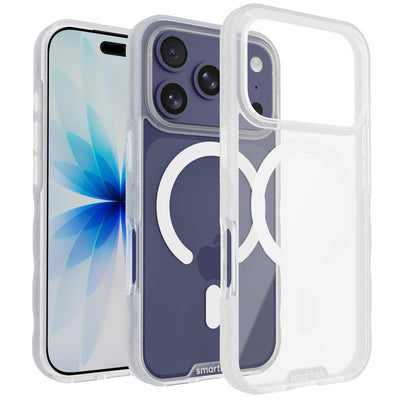
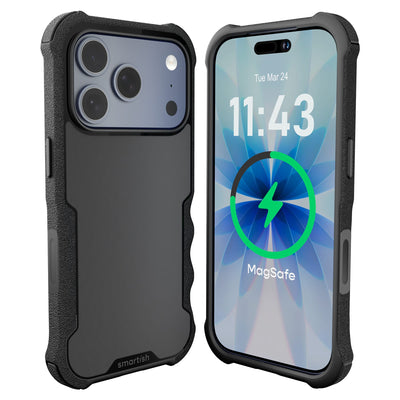
The Gripmunk with MagSafe® - Slim Case for iPhone 16 Pro uses built-in strong magnets compatible with MagSafe, allowing secure attachment to MagSafe accessories and high-speed wireless charging. Its fit is designed specifically for iPhone 16 Pro, so compatibility should not be assumed across a future foldable model or a rumored iPhone 18 Duo case.
Alignment Is Everything: Ensuring a Strong Connection
Magnets need to meet the accessory’s charging coil in the right spot. If the ring sits too high, too low, or near a thick seam, a wallet, charger, or mount may attach weakly or sit crooked. Check that the case leaves the charging area unobstructed and that the rear panel is flat enough for a stable connection.
Charging Speed and Reliability: What to Expect
Wireless charging performance depends on the phone, charger, case thickness, alignment, temperature, and accessory. A MagSafe-compatible case can support the phone’s intended charging system, but it cannot turn every charger into a perfect match. Test the exact phone, case, and charger combination before relying on it overnight. Watch for heat, interrupted charging, or a connection that breaks when the phone shifts.
Beyond Charging: Other MagSafe Accessories for Your iPhone Duo
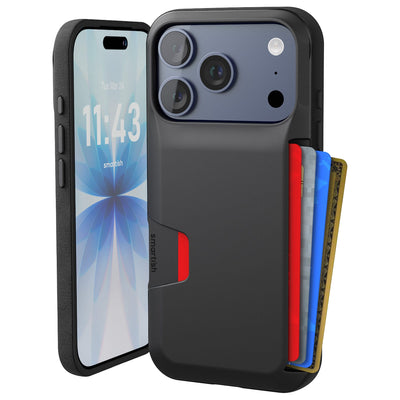
A magnetic stand can make a folded phone easier to use on a desk, while a car mount keeps navigation visible without a clamp squeezing the frame. A card holder can reduce pocket clutter, and a battery pack can add power without a cable. Check the accessory’s footprint before buying. The phone should still open freely, and the attachment should not press against the hinge or cover display.
Pocket-Friendly Protection: Finding the Sweet Spot Between Slim and Safe
A foldable device already has a thicker closed profile, so a case should place material where impacts happen instead of wrapping the phone in unnecessary armor. The best iPhone Duo case balances a secure frame, corner cushioning, raised edges, and usable grip with a shape that works in daily carry.
The Bulk Factor: Why Some Cases Feel Like Bricks
Bulk often comes from thick walls, oversized hinge covers, rigid plates, and raised edges that extend farther than needed. These features can make the phone harder to hold and more awkward to close. A case also needs clearance for the hinge, camera plateau, buttons, speakers, and charging area. If those details are solved with excess material, protection harms comfort.
Closed iPhone Duo double in thickness, making hand control especially important. The research brief cites a 40% increase in the importance of edge grip for preventing drops. Texture is a smarter design choice than simply adding more shell around the phone.
Smart Design Choices: How Texture and Air Pockets Slim Down Protection
Textured TPU sides give fingers friction without a sticky feel. Air-pocket corners create small crush zones that can cushion impact, while a smoother back makes the phone easier to slide into a pocket or bag. Raised edges protect the display and camera from direct contact with flat surfaces, and a microfiber lining helps reduce scratches and dings inside the case.
The Gripmunk with MagSafe® - Slim Case for iPhone 16 Pro uses protective air-pocket corners that act like small airbags to cushion and protect the phone from drops. Its sides have a textured grip that prevents slipping without being sticky, while the back is smooth for easier pocket use. It has also been drop-tested 50 times from 6 feet with successful protection results. The test offers evidence, not a promise against every accident.
Real-World Fit: Will It Still Slide into Your Pocket or Bag?
Check whether the case catches on denim, crowds the pocket opening, or snags on a bag’s lining. A smooth rear surface helps with removal, while grippy sidewalls keep the phone from sliding during use. The case should close fully without pressure from a hinge cover, and its camera rim should sit above the lenses.
Soft microfiber can help prevent particles from rubbing against the phone’s finish, while precise cutouts preserve access to buttons, speakers, microphones, and camera controls. The Gripmunk with MagSafe® - Slim Case for iPhone 16 Pro provides complete access to iPhone 16’s new Camera Control button with precise cutouts and reinforced edges.
Pricing Reality: Smart Protection Does Not Need to Cost a Fortune
Sensible value comes from useful construction: reliable fit, corner cushioning, raised protection, grip, lining, and magnetic compatibility. The Gripmunk with MagSafe® - Slim Case for iPhone 16 Pro retails for $19.99 to $24.99 and pairs with MagSafe gear, keeping practical protection within reach.
| Design detail | What it helps with | What to check |
|---|---|---|
| Textured sidewalls | Hand control and drop prevention | Friction without a sticky finish |
| Air-pocket corners | Shock cushioning at impact zones | Coverage that does not interfere with folding |
| Smooth rear panel | Easy pocket and bag removal | No bulky plate or snag-prone texture |
| Raised screen and camera edges | Distance from tables and other surfaces | Enough clearance without blocking gestures |
Quick Pocket Check
- Does the phone close fully without case pressure?
- Do the corners have cushioning, not just decorative thickness?
- Can the case slide into a pocket without catching?
- Does the grip help your hand without collecting lint?
- Does the price match the features you will use?
Your Duo Case Checklist: Making the Smart Choice
Choosing an iPhone Duo case gets easier when you judge it by daily behavior instead of packaging. It should stay aligned while the phone opens and closes, leave the hinge room to move, protect the screen and camera from table contact, and feel secure in your hand. The Gripmunk with MagSafe® - Slim Case for iPhone 16 Pro offers a reference point: textured sides, air-pocket corners, raised edges, a soft microfiber interior, and a smooth back for easier carrying.
Quick Take: The Smartish “Ish” Test for Duo Cases
Ask a few practical questions. Does the case stay put after repeated folding? Can you reach buttons, speakers, cameras, and the Camera Control button without awkward cutouts? Does the phone close fully without a hinge cover bunching up? Can you grip the thicker closed device without a sticky feel? A case passes the “ish” test when it solves those annoyances without creating new ones. Also check pocket access, charging alignment, cleaning, and normal phone use.
Common Questions Answered, No Gunk Required!
A properly fitted two-piece case should not keep the phone from closing flat. Its sections need clearance around the hinge and enough friction around each frame to avoid sliding. Hinge coverage can reduce exposure to grit and direct knocks, but it must allow the spine to move naturally. MagSafe can remain dependable when the magnetic ring is accurately positioned, though the phone, case, and charger should be tested together before overnight use.
When to Go Slim vs. When to Go Tough
Choose a slim design for pockets, commuting, desk use, and ordinary handling. Prioritize textured edges, corner cushioning, raised bezels, and a secure fit rather than thick walls everywhere. A tougher build may suit construction sites, frequent outdoor use, or harder impacts. The tradeoff is more material, more pocket presence, and a less natural folding feel.
The Final Verdict: Protection That Works for Your Life
The best iPhone Duo case is one you can live with every day. The Gripmunk with MagSafe® - Slim Case for iPhone 16 Pro focuses on practical protection, usable grip, magnetic accessory support, and a price of $19.99 to $24.99. Before buying any folding-phone case, confirm model fit, inspect hinge clearance, check camera protection, and test charging with your preferred accessory. Clever beats bulky when the details do their job.
Quick Pros and Cons
Pros
- Focused protection for corners, screens, cameras, and moving sections.
- Textured grip can improve control on a thick closed phone.
- Accurate magnetic alignment supports convenient accessory use.
Cons
- Hinge coverage can change the opening and closing feel.
- Two-piece cases require careful fitting and regular inspection.
- Wireless charging performance depends on the complete setup.
Frequently Asked Questions
Will there be cases for the iPhone Duo?
iPhone Duo cases will likely be available if Apple releases a foldable iPhone, but no case fit can be confirmed until the phone’s final design and dimensions are public. A proper iPhone Duo case should use a secure two-piece fit, protect corners and cameras, allow hinge movement, and leave room for both displays.
Is the iPhone Duo really coming?
The iPhone Duo has not been officially confirmed by Apple, so its release timing and final features remain unknown. Until Apple shares verified specifications, shoppers should treat rumors carefully and avoid buying a case based only on leaked dimensions or concept images.
Why is the iPhone Duo expected to be so expensive?
The iPhone Duo is expected to cost more because foldable phones require flexible displays, specialized hinges, and a more complex construction than standard iPhones. Those parts also create more demanding case requirements, including protection for the hinge, moving sections, exposed glass, and camera edges.
Is the iPhone Duo worth it?
The iPhone Duo may be worth it for people who want a larger inner display in a phone that closes for carrying, but the value will depend on price, durability, software, and battery life. A smart case can add grip and impact protection, though no case makes a foldable phone damage-proof.
Will the iPhone Duo fail?
The iPhone Duo could succeed or fail based on reliability, comfort, price, and how well Apple handles the hinge and folding displays. Foldable phones ask more from daily accessories, so an iPhone Duo case should stay aligned during opening and closing without blocking the hinge or displays.