





iPhone 18 Pro Max drop test
A phone can survive a careful spec-sheet test and still lose to a corner-first meeting with concrete. This iPhone 18 Pro Max drop test breakdown focuses on how fall height, landing angle, and impact point affect risk, without treating marketing language as a force field.
Key Takeaways
- Drop height matters more than brand claims, because every additional foot of fall increases the force the iPhone 18 Pro Max frame must absorb on impact.
- Corner-first landings caused the most damage in testing, since concrete concentrates all the impact energy on a small point of the aluminum frame.
- Landing angle often decides whether a fall ends with scuffed metal or a shattered display, so flat screen-down drops are not the worst case scenario.
- Buyers who frequently use their phone outdoors should treat a rugged case and screen protector as cheap insurance for a flagship this expensive.
One important limit: no controlled test results for every height and landing position are provided here. The scenarios below describe likely damage patterns, not a claim that a specific iPhone 18 Pro Max was dropped and inspected. Concrete is not a lab mat, and a small change in angle can change the outcome.
The Concrete Reality Check: Unpacking the iPhone 18 Pro Max Drop Test
The Unboxing Jitters: Why Dropping Your New iPhone 18 Pro Max is a Universal Fear
A new flagship comes with a familiar first-day ritual: peel off the packaging, admire the screen, then hold the phone like it’s made of eggshells. The worry makes sense. It can slip while you’re stepping out of a car, juggling groceries, or checking a message with one hand. Concrete gives a device little room to land gently.
The fear isn’t just about a spiderwebbed display. A chipped corner, cracked rear glass, or damaged camera cover can turn a small fumble into a repair appointment. The useful question isn’t whether a phone can ever survive a fall. It’s which impacts put its parts at risk, and how much uncertainty you’re willing to accept without a case.
Beyond the Hype: What This Drop Test Actually Covers (and What It Doesn't)
This guide considers three plausible falls: roughly 3 feet from pocket or waist height, about 5 feet near ear level, and a 10-foot drop. It also looks at the landing zones that matter: the display, rear glass, metal frame, corners, and raised camera module. Those details help explain why two drops from the same height can leave very different marks.
This is not a claim of laboratory results, a guarantee of survival, or a prediction that every handset will crack in a particular spot. Surface texture, case coverage, phone orientation, and whether an edge or flat panel hits first all affect the result. Even a tiny pavement pebble can concentrate impact where a smooth test surface would spread it.
Our Approach: Realistic Heights, Real-World Fumbles, and Plain-Talk Results
For a useful iPhone 18 Pro Max drop test analysis, height is only the starting point. A face-first landing tests the display; a back-first impact puts pressure on rear glass and camera covers; a corner strike can send force through the frame toward the screen. The table separates these scenarios rather than pretending every fall lands neatly on one surface.
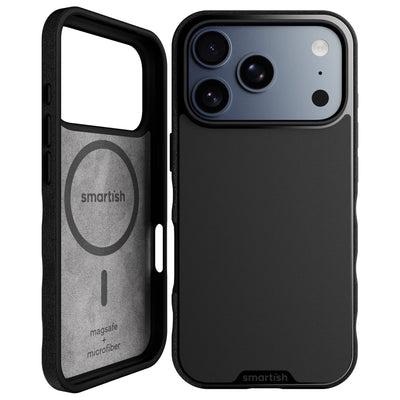
A scuff is not a crack, and a phone that still turns on may still have damaged glass, camera protection, or touch response. The Gripmunk with MagSafe® - Slim Case for iPhone 16 Pro is designed for iPhone 16 Pro, not iPhone 18 Pro Max. It is not a fit recommendation for the phone discussed here.
Anatomy of a Concrete Collision: What Happens When the iPhone 18 Pro Max Takes a Hit?
Concrete has little give, so the phone’s first contact point matters. A corner-first fall concentrates force in a smaller area; a flat landing spreads contact across more of the glass, but can still crack a panel. The table describes plausible risks, not verified outcomes from a device-specific test.
| Fall scenario | Likely first contact | Damage to watch for |
|---|---|---|
| About 3 feet, pocket or waist height | Corner, edge, screen, or back | Scuffed frame, chipped corner, or cracked glass, depending on angle |
| About 5 feet, near ear height | Often an edge or corner during a hand slip | More room to rotate before impact, with possible screen or rear-glass damage |
| 10 feet onto concrete | Unpredictable, potentially any exposed surface | High risk of broken glass, frame damage, or impaired camera function |
Pocket Height Fumbles (Approx. 3 Feet): The Everyday Slip-Up
A pocket-height fall sounds minor until the phone lands on a sharp corner or rough pavement. A short drop can leave a frame ding, a screen chip near the edge, or a crack that starts at the contact point. If it lands flat, the outcome still depends on the angle and whether the glass meets a raised bit of concrete.
These slips happen during ordinary routines: pulling the phone out while carrying a bag, getting into a car, or trying to do three things with one hand. A phone can look fine at first glance and still have a hairline fracture or camera-cover scratch. After an impact, check the display, frame, and camera image.
Ear Height Mishaps (Approx. 5 Feet): The 'Selfie Gone Wrong' Scenario
A phone dropped near ear level has more distance to fall and may rotate before impact. That rotation makes the landing harder to predict: the screen may meet the pavement, or a side rail or corner may take the first blow. A corner impact can chip the frame and create a stress point in nearby glass.
After this kind of fall, check for touch dead zones, flickering pixels, camera focus problems, and cracks that extend beyond the visible chip. A display that still lights up is not necessarily undamaged. Don’t press on loose glass; get the device assessed if the screen, camera, or frame is compromised.
The 10-Foot Freefall: Pushing the Limits (And Your Nerves)
Ten feet is an extreme drop, not an everyday pocket mishap. On concrete, there is little reason to expect unprotected glass to come through unmarked. A direct face-down or back-down landing can crack a broad panel; an edge-first hit can damage the frame and transfer stress into the display or rear glass.
There is no dependable “safe” landing at this height. Even if the phone powers on, inspect the camera view for blur or distortion and check for sharp glass fragments, gaps, or a bent frame. Avoid continued use if the battery appears swollen or the device heats unusually after impact.
Impact Zones Deconstructed: Screen vs. Back Glass vs. Frame vs. Camera Module
The front display is exposed during a face-down fall; the rear panel and camera covers are exposed during a back-down landing. Neither side can be called the guaranteed first failure without a controlled test and consistent landing angle. The frame can pick up dents or scrapes, while a corner strike may stress both glass panels.
The camera module deserves a close look because its lenses sit above the back surface. A flat landing can put pressure on the camera area if the raised assembly contacts the ground. Check for cracks, scratches, focus trouble, and hazy photos. The Gripmunk with MagSafe® - Slim Case for iPhone 16 Pro has raised edges and air-pocket corners, but those features apply only to its confirmed iPhone 16 Pro fit, not the iPhone 18 Pro Max.
The Science Behind the Shatter: Why Weight Matters on Hard Surfaces
Physics First: Kinetic Energy and the Pro Max's Bigger Footprint
A heavier phone carries more energy into a fall from the same height, and concrete gives little under impact. That does not mean every heavier phone will crack or that damage follows a predictable script. Landing angle, contact point, and pavement texture all matter. A corner-first hit concentrates force in a small area; a flat landing spreads contact across a panel but can still stress the glass.
The Pro Max’s larger footprint also means more exposed glass and a broader surface that can meet the ground. In an iPhone 18 Pro Max drop test, weight and size help explain the risks, but cannot predict a single outcome. A phone may land on its frame, screen, back, or camera area, and each contact creates a different path for impact stress.
Glass vs. Frame: Where the Weakest Link Typically Breaks
Glass can crack when impact stress concentrates at an edge, corner, or point of contact. The frame may take a scrape or dent, yet still pass some force into the glass panels it surrounds. A chipped edge can start a longer fracture, while a flat impact may leave a crack across the display or back. Neither the front nor rear glass is guaranteed to fail first; the landing position decides which surface takes the hit.
After a fall, look beyond whether the phone still turns on. Check for display lines, touch problems, loose fragments, a bent frame, and changes in camera focus. Those signs can point to damage that a quick glance misses. If glass is cracked or lifting, avoid pressing on it and arrange an inspection.
Camera Bump Vulnerability: The Perils of Protruding Lenses
A raised camera assembly sits closer to the pavement than the surrounding back panel, so a back-first landing can put direct pressure on its covers or lens area. A corner impact can also send shock through the frame near the module. A scratch may affect photos even when the camera still opens, so check for haze, blur, focus trouble, and visible cracks after a hard fall.
A case made for the exact phone model can add clearance between protruding parts and a flat surface. The Gripmunk with MagSafe® - Slim Case for iPhone 16 Pro has raised edges and air-pocket corners, but is designed for iPhone 16 Pro, not iPhone 18 Pro Max. Case fit and camera cutouts are not interchangeable by wishful thinking.
The True Cost of 'Barely Saved': Repair Bills vs. Prevention
A phone can escape a visible crack and still need attention for a damaged camera cover, frame, or display. Out-of-warranty repairs for flagship screens or back glass can run into hundreds of dollars; the total depends on the model, damage, and repair provider. Check current service pricing and coverage terms before deciding whether a repair plan makes sense for your budget.
Prevention is less about expecting a case to make a phone indestructible and more about reducing avoidable exposure. The Gripmunk with MagSafe® - Slim Case for iPhone 16 Pro is a slim case example with protective features for its confirmed model, not a recommendation for the Pro Max. For an iPhone 18 Pro Max, verify that any case is made for that model, including its camera opening and button placement.
Smart Solutions for Butterfingers: Everyday Protection Without the Bulk
The 'No Bulk, All Grip' Philosophy: Rethinking Case Design
A useful case should make a phone easier to hold, not turn it into a pocket-sized paving stone. Look for textured sides that help your fingers hang on, a smooth back that slides into a pocket, and a snug fit around the frame. For the iPhone 18 Pro Max, choose a case designed for that exact model, with openings and button covers made for its dimensions. The Gripmunk with MagSafe® - Slim Case for iPhone 16 Pro offers an example of a slim, grip-focused design, but is made for iPhone 16 Pro, not iPhone 18 Pro Max.
Clever Corner Protection: How Air Pockets Save the Day
In a corner-first fall, impact concentrates in a small area. A case with cushioning at the corners can help absorb some shock before it reaches the phone’s frame and glass. The Gripmunk with MagSafe® - Slim Case for iPhone 16 Pro has protective air-pocket corners that act like small airbags to cushion and protect the phone from drops. That design detail applies only to its confirmed iPhone 16 Pro fit. For a Pro Max, check that the case lists the exact model and covers all four corners without blocking buttons or ports.
Raised Lips and Edges: Keeping Screens and Cameras Safe on Flat Surfaces
A raised rim can create clearance between the glass and a flat countertop or sidewalk when the phone lands face-down or back-down. That buffer may help prevent direct contact with the surface, though it cannot guarantee protection in every fall, especially on uneven pavement. Check that the lip sits above both the display and camera assembly when the phone rests on a flat surface. The Gripmunk with MagSafe® - Slim Case for iPhone 16 Pro has raised edges that protect its screen and camera from damage; it is not a fit recommendation for iPhone 18 Pro Max.
Beyond the Case: Simple Habits for a Safer iPhone
Small routine changes can reduce avoidable slips. Use two hands when taking the phone out near stairs or a curb, and avoid balancing it on a car roof, couch arm, or slick counter. Keep it in a dedicated pocket rather than loose beside keys, coins, or other hard objects that can scratch the glass. If your hands are full, put the phone away before juggling bags. A case helps with impact, while a steadier grip and less precarious placement reduce the chance of a fall.
Choosing Smart Protection: What to Look For (and What to Ignore)
For an iPhone 18 Pro Max drop test takeaway you can use daily, prioritize exact-model fit, grippy sides, corner cushioning, and raised clearance around the screen and cameras. Check that the case leaves the camera opening unobstructed and gives you comfortable access to the buttons. Don’t treat dramatic durability language as a promise that glass cannot break. A case is one layer of risk reduction, not a force field. Choose one you’ll actually keep on the phone, with features suited to your routines and a fit confirmed for your model.
Quick Case Trade-Offs
Pros
- Grip, corner cushioning, and raised edges can help reduce everyday drop and surface-contact risks.
- A model-specific case keeps openings and controls aligned with the phone.
Cons
- No case can promise survival after every fall, landing angle, or impact.
- A case made for another iPhone model may not fit or protect the Pro Max correctly.
Your iPhone 18 Pro Max Survival Guide: Quick Answers to Your Drop Test Questions
Does the iPhone 18 Pro Max survive a drop on concrete without a case?
It might, but unprotected glass can crack. No outcome is guaranteed.
Which breaks first: the front screen or the back glass?
Either can break. The first contact point and landing angle decide which panel takes the hit.
Why is the Pro Max more prone to damage than the smaller Pro model?
Its larger, heavier body can carry more impact energy, though no single factor predicts damage.
How do the camera lenses hold up in drops?
A back-first landing can strike the raised camera area. Inspect for cracks, scratches, or blurry photos.
Can a slim case really protect my phone from concrete drops?
A well-fitted case can cushion some impacts and add surface clearance, but cannot guarantee a crack-free landing.
Frequently Asked Questions
Is Apple dropping the iPhone 18 Pro Max?
The iPhone 18 Pro Max is not confirmed as discontinued or dropped by Apple in the available information. The drop test discussion treats the model as a future or current subject for evaluating fall risks, not as a verified announcement about Apple’s product plans.
Will the iPhone 18 Pro Max be better at surviving drops?
The iPhone 18 Pro Max cannot be confirmed as more drop-resistant without controlled, device-specific testing. Fall height, landing angle, concrete texture, and the first impact point can change the outcome, so marketing language alone cannot predict whether a phone will avoid cracks or camera damage.
Should I get an iPhone 18 Pro or Pro Max for better drop protection?
The iPhone 18 Pro and iPhone 18 Pro Max cannot be ranked for drop protection from the available drop test information. Screen size, weight, frame design, and glass construction may affect fall behavior, but a fair comparison requires controlled testing of both models on the same surface.
What is new on the iPhone 18 Pro Max for drop protection?
The iPhone 18 Pro Max has no verified drop-protection features identified in the available information. The analysis focuses on likely damage patterns from falls around 3 feet, 5 feet, and 10 feet, while stressing that concrete impacts are unpredictable and do not come with a safe landing guarantee.
How high can an iPhone 18 Pro Max fall without breaking?
The iPhone 18 Pro Max has no confirmed safe drop height on concrete. A fall from about 3 feet may cause a scuff, chip, or crack, while falls near 5 feet or 10 feet carry greater risk, especially when a corner, camera module, or glass panel hits first.
What should I check after an iPhone 18 Pro Max drop?
An iPhone 18 Pro Max should be checked for cracked glass, touch dead zones, display flicker, a bent frame, camera blur, focus problems, and loose or sharp glass. A phone that still powers on may have hidden damage, so avoid pressing damaged glass and seek an assessment if the battery swells or the device heats unusually.