




do iPhone 17 Pro cases fit iPhone 18 Pro
Wondering do iPhone 17 Pro cases fit iPhone 18 Pro? The short version is encouraging: current reports point to shared exterior dimensions and unified case tooling for the two Pro generations. That means many cases should transfer without a wrestling match. The details still matter, especially around the camera island, button covers, lens clearance, and magnetic alignment.
Key Takeaways
- Shared exterior dimensions between the iPhone 17 Pro and 18 Pro mean many cases swap over smoothly, but the camera island and button placement require a closer look.
- Small differences in camera bump depth can block your lens or mess with magnet alignment, so hold the case up to your phone before committing.
- Button cover material and cutout position change just enough between generations to make press feel inconsistent, so test your volume and power buttons right away.
- Case manufacturers update their tooling each year, so sticking with a brand that refits new models gives you the best chance at a perfect seal.
Here’s the case-designer version, without the “just eyeball it” method. A case can look compatible and still pinch a button, sit crooked around the cameras, or leave a pricey finish rubbing against trapped grit. We’ll break down the fit points that decide whether reuse is sensible or just optimistic pocket engineering.
The Quick Verdict: Will Your iPhone 17 Pro Case Fit the iPhone 18 Pro?
The Short Answer (Spoiler: It's Usually Yes, But.)
So, do iPhone 17 Pro cases fit iPhone 18 pro? Based on available reports, usually yes, provided the case was designed around the Pro chassis and not merely labeled with a broad model family. Multiple accessory manufacturers have confirmed unified tooling for the iPhone 17 Pro and iPhone 18 Pro generations. That supports backward compatibility without cutting, stretching, or performing any kitchen-table surgery.
Why Apple Stays Consistent (Mostly)
Apple can change processors, cameras, battery capacity, and internal components without moving every exterior reference point. Keeping the frame dimensions, button positions, charging coil, and camera opening consistent also gives accessory makers a stable target. Retail packaging and supplier confirmations add support to the shared-fit picture, but packaging is not a substitute for testing the case on the actual phone.
When 'Close Enough' Isn't Good Enough
A case should sit fully around the frame, keep every button crisp, and leave the camera lenses unobstructed. If it rocks, bows near a corner, presses a control, or blocks part of the flash or microphone, retire it. For context, research cited by MacRumors identifies roughly 0.2mm to 0.4mm as a typical tolerance range where rigid cases can fail to seat around camera islands or button covers. Tiny? Yes. Invisible to a hard shell? Not always.
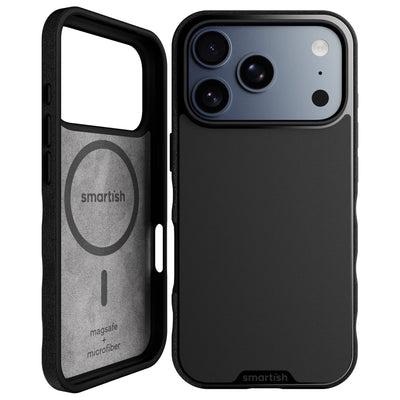
The Gripmunk with MagSafe® - Slim Case for iPhone 16 Pro is a separate, model-specific example of why precise openings matter. It is designed specifically for iPhone 16 Pro, so it should not be treated as an iPhone 17 Pro or iPhone 18 Pro recommendation. Case fit is a model-by-model business, not a family reunion.
Anatomy of a Case Fit: Buttons, Bump, and Beyond
Fit is more than whether a phone can be pushed into a shell. A reliable check covers the control covers, camera cutout, charging magnets, frame tension, and protective lip. If you are asking do iPhone 17 Pro cases fit iPhone 18 Pro, these are the physical checkpoints that turn a promising rumor into a useful answer.
Button Breakdown: Action Button & Camera Control
Press each covered control before judging the case a success. The Action Button needs a cover that lands squarely and clicks without excessive force. The Camera Control area needs a precise opening or properly shaped cover so swipes, taps, and presses register naturally. A shifted opening can make a case feel “installed” while quietly turning basic camera access into thumb gymnastics.
Camera Bump Dimensions: The Critical Clearance
The camera island is the usual troublemaker because it combines a broad raised area, individual lenses, flash hardware, and microphone openings. Check that the case does not touch the lens glass, pinch the island corners, or reduce the height of the protective camera lip. A rigid shell that misses by a fraction can flex under pressure, leave a gap for debris, or refuse to sit flat.
MagSafe Ring Alignment: Powering Up Without Hassle
MagSafe depends on the ring position inside the case, not just the phone’s outer dimensions. A properly aligned magnet array should hold accessories centered over the charging coil. For a deeper explanation of the technology, see our guide to how MagSafe works. Test attachment with a wallet or charger, then check that the connection remains stable when the phone is lifted. Magnetic attraction alone is not proof of good alignment. A ring that sits high, low, or off-center can make accessories wobble and charging less dependable.
The Thickness Factor: A Millimeter Matters (Sometimes)
A slight change in phone thickness does not automatically end compatibility. Flexible walls can accommodate modest variation, while hard polycarbonate has less room to negotiate. The deciding factors are the shell’s inner dimensions, corner geometry, camera opening, and button architecture. Battery changes only become a fit problem if they alter the exterior envelope enough to create pressure or prevent full seating.
| Fit point | What to check | Failure sign |
|---|---|---|
| Action Button | Cover lands directly over the control and clicks cleanly | Stiff press, poor response, or constant pressure |
| Camera Control | Opening supports taps, presses, and swipe gestures | Blocked access or a cover that feels misaligned |
| Camera island | Lenses and flash have open space; lip rises above the glass | Pinching, contact with lens glass, or a crooked seat |
| MagSafe ring | Accessories attach at the center and remain stable | Wobble, weak hold, or off-center charging |
| Frame and corners | Phone sits flush with even edge tension | Gaps, rocking, bowing, or corners that pop free |
For comparison, the Gripmunk with MagSafe® - Slim Case for iPhone 16 Pro illustrates the value of model-specific construction: precise Camera Control access, raised screen and camera edges, air-pocket corners, a microfiber interior, and built-in MagSafe magnets. Those features only count when the case matches the phone it was made for.
Case Material Matters: Flexible vs. Rigid Fits
Case material decides how much wiggle room a phone gets. A flexible shell can absorb small differences in frame thickness, corner shape, or camera-island geometry. A rigid shell has a narrower tolerance zone, so even a tiny mismatch may keep it from seating evenly. If you’re asking do iPhone 17 Pro cases fit iPhone 18 pro, start by identifying the case material before assuming a shared exterior size guarantees a good fit.
The 'Snug' vs. The 'Stuck': How Materials Tolerate Variance
A snug case grips the phone without bowing, pinching, or making removal feel like a minor home-improvement project. A stuck case needs force because its inner dimensions are too tight or its corners do not match the chassis. Check for even edge tension, responsive buttons, clear camera openings, and a flat back. A phone that technically slides inside is not enough. The case also needs to stay secure during normal handling and protect the screen and lens glass without pressure points.
TPU & Silicone: The Forgiving Friends
TPU and silicone bend around modest dimensional changes, making them more tolerant of a slightly different frame or battery profile. TPU often combines flexible edges with structured corners, while silicone offers a soft, grippy feel. Both materials can make reuse practical, though stretching should not expose the phone’s sides or weaken the camera lip. Test every control after installation. If the Action Button feels stiff or the Camera Control area responds poorly, the case is not earning its keep.
Hard Shells & Polycarbonate: The Precise Pointers
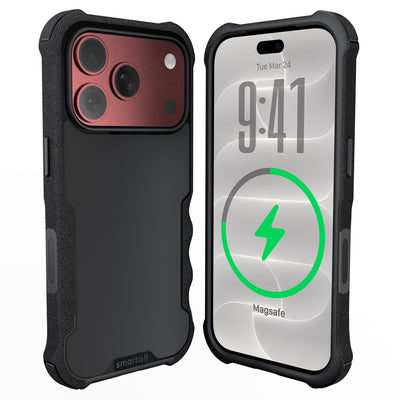
Polycarbonate and other hard shells hold their shape, which helps with impact structure and a clean profile. They also have less patience for dimensional variation. A camera cutout that misses by a fraction can press against the island, while a tight corner may crack, pop loose, or leave the phone sitting crooked. Rigid cases deserve a closer inspection of lens clearance, button covers, charging access, and corner alignment.
Wallet Cases: More Than Just a Pocket
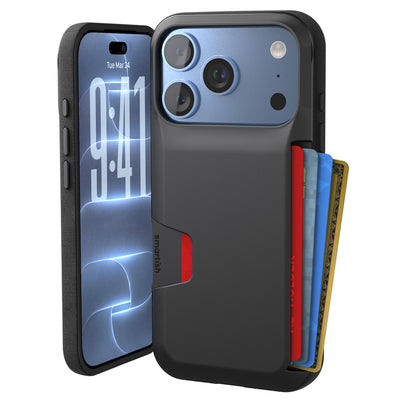
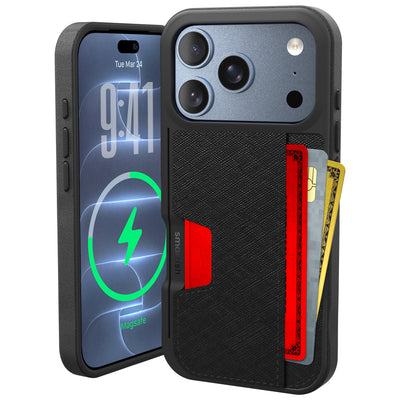
Wallet cases add card slots, magnetic hardware, folio panels, or a built-in stand, so fit affects more than the phone shell. A misaligned fold can cover the camera, a weak closure can expose the screen, and extra tension can interfere with wireless charging. The Gripmunk with MagSafe® - Slim Case for iPhone 16 Pro shows why model-specific openings, raised edges, a microfiber lining, and air-pocket corners matter. The Gripmunk with MagSafe® - Slim Case for iPhone 16 Pro is made for iPhone 16 Pro only, not the newer Pro generations.
Material Tradeoffs at a Glance
Pros
- Flexible materials tolerate small fit differences.
- Rigid shells provide stable structure and defined edges.
- Wallet designs can combine phone protection with card storage.
Cons
- Soft cases may stretch if the fit is too tight.
- Hard shells can pinch controls or crack around pressure points.
- Wallet hardware may affect charging and camera access.
Beyond the Fit: Protecting Your Finish & Avoiding Scuffs
A case can fit the phone and still cause trouble if its interior is dirty, worn, or slightly distorted. If you’re asking do iPhone 17 Pro cases fit iPhone 18 Pro, add one more test to the button and camera checks: can the case hold the phone without rubbing its finish? A shared chassis does not make trapped grit harmless. Tiny particles can act like sandpaper during everyday movement, especially around the frame, corners, camera island, and charging port.
The Clean-Fit Challenge: Dust, Debris, and Dings
Pockets and bags are miniature junk drawers. Lint, sand, crumbs, and metal dust can slip through openings and settle between the phone and its case. Every time you grip the device, that debris may shift across the frame. Remove the case in a clean area and check the inner corners, button channels, camera opening, and bottom edge. Wipe the case separately, let any washable material dry fully, and inspect for rough spots. A clean interior gives the phone a fair shot at staying clean too.
Preventing Scratches: What Old Cases Can Do to New Phones
Older cases can develop stretched edges, hardened sections, cracked corners, or a lining that has lost its softness. Those changes create pressure points against an aluminum or titanium frame. A case does not need to look damaged to cause scuffs, either. Repeated friction around a camera cutout or button opening can leave marks over time. Check for polished wear tracks, grit embedded in adhesive, and areas where the interior has separated. If the phone’s finish shows fresh rubbing after a short test, stop using that case.
Smartish Value: Smart Protection Without the Sticker Shock
Replacing a case should not feel like paying a cover charge for your own phone. Look for useful construction rather than a dramatic spec sheet: a soft interior, raised screen and camera edges, dependable grip, protected corners, and accurate openings. The Gripmunk with MagSafe® - Slim Case for iPhone 16 Pro is one model-specific example. It has a microfiber lining, air-pocket corners, textured sides, raised edges, and built-in MagSafe magnets. It is made for iPhone 16 Pro, so it is not a confirmed fit for either newer Pro model.
When to Invest in a New Case (Even If the Old One “Fits”)
Buy a new case if the old one slips off a corner, blocks a control, touches lens glass, weakens accessory attachment, or shows interior wear. Fresh hardware also deserves a fresh inspection, especially if you care about preserving its finish through a full upgrade cycle. The Gripmunk with MagSafe® - Slim Case for iPhone 17 Pro demonstrates the kind of model-specific precision to seek, but compatibility must match the exact phone generation. A case that passes a quick fit check is promising. One that protects without pressure, grit, or guesswork is the keeper.
Frequently Asked Questions
Will the iPhone 17 Pro and iPhone 18 Pro be the same size?
The iPhone 17 Pro and iPhone 18 Pro are currently reported to share exterior dimensions and unified case tooling. That gives many iPhone 17 Pro cases a good chance of fitting the iPhone 18 Pro, though camera clearance, button response, frame seating, and MagSafe alignment still need a hands-on check.
What other iPhone cases fit the iPhone 17 Pro?
Cases made specifically for the iPhone 17 Pro are the safest fit for that phone. Reports also support possible compatibility between iPhone 17 Pro and iPhone 18 Pro cases, while cases for other iPhone models should not be assumed compatible without checking dimensions, camera openings, and controls.
Will the iPhone 17 Pro case fit the regular iPhone 17?
An iPhone 17 Pro case should not be assumed to fit the regular iPhone 17. The Pro model can differ in frame size, camera layout, button placement, and thickness, so a case labeled for the regular iPhone 17 needs its own compatibility confirmation.
Which iPhone cases fit each other?
Only iPhone cases for models with matching exterior dimensions, camera openings, button positions, and charging alignment should be treated as interchangeable. Current reports point to possible shared fit between iPhone 17 Pro and iPhone 18 Pro cases, but a rigid shell still deserves a real-device test before regular use.
Which iPhones have the same case size?
The iPhone 17 Pro and iPhone 18 Pro are the pair currently reported to share case dimensions and tooling. That report does not make every iPhone case interchangeable, so check the exact model, camera island, control covers, protective lip, and MagSafe ring before reusing a case.
How can you test whether an iPhone 17 Pro case fits an iPhone 18 Pro?
An iPhone 17 Pro case fits an iPhone 18 Pro only if the phone sits flush, buttons click cleanly, camera lenses and flash stay clear, and MagSafe accessories attach in the center. Check for rocking, corner gaps, pressure on controls, lens contact, or a crooked camera opening before trusting the case.
Does MagSafe alignment matter when reusing an iPhone 17 Pro case on an iPhone 18 Pro?
MagSafe alignment matters when reusing an iPhone 17 Pro case on an iPhone 18 Pro because the ring must sit over the phone's charging coil. Test a wallet or charger for centered attachment and stable hold, since magnetic attraction alone does not prove the ring is positioned correctly.