





best screen protector that doesn't affect display quality
Your phone’s screen is a masterpiece of glass, color, and light. Until it meets a rogue key or the pavement face-first. The thing meant to save it often ruins the view. Turns out, finding the best screen protector that doesn't affect display quality is less about luck and more about understanding how light interacts with glass.
Key Takeaways
- Your screen protector should be invisible to your eyes, not just tough against scratches.
- Cheap protectors mess with light refraction, turning that beautiful display into a blurry mess.
- Look for tempered glass with an oleophobic coating and high transparency rating so you get clarity without the glare.
- Thickness matters: too thick and colors wash out, too thin and you lose drop protection.
- Installation without bubbles is half the battle, because trapped air distorts light just as much as a bad coating.
We’ve all seen them. Those cheap plastic sheets that turn a high-end screen into a foggy window. Or matte finishes that make 4K video look grainy. At Smartish, we think protection should be invisible. Sacrificing clarity to avoid cracks isn’t a solution. It’s a compromise. Here’s how to keep your screen sharp without one.
What is a screen protector that doesn't affect display quality?
A screen protector that doesn’t affect display quality is all about light transmission. Premium tempered glass lets nearly all light pass through. No distortion, no color shift. The difference between a good protector and bare glass is undetectable to the human eye (just ask any Reddit thread). You’re looking for thin glass (0.3-0.33 mm), strong adhesive, and a top-notch oleophobic coating. Skip anything with a rainbow effect or hazy tint. The best protectors respect your phone’s engineering. They don’t mess with it.
Benefits of a high-clarity screen protector
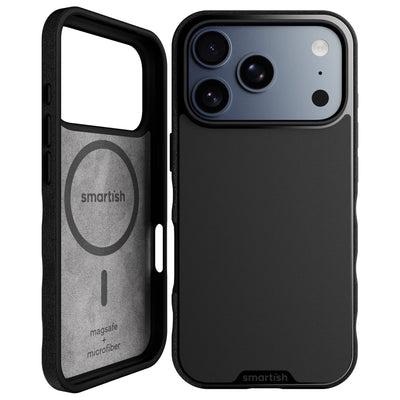
Clear visual experience is the big one. Colors stay punchy, text stays razor-sharp, and those deep blacks your OLED screen loves won’t get washed out. Anti-reflective properties work as intended, so you’re not fighting a greasy, cloudy mess. The tactile feel? Just like the original screen. Smooth swipes, responsive taps. No “suction” feeling under your finger. A quality oleophobic coating keeps smudges at bay and lasts as long as the glass itself, so you spend less time wiping and more time using. Pair it with a slim case for iPhone 16 Pro for full protection without the bulk.
High-Clarity vs. Matte Finishes
Pros
- Maintains original color accuracy and brightness
- Provides a smooth, "naked" screen feel
- Does not interfere with front-facing cameras
Cons
- Fingerprints may be more visible than on matte glass
- Glare can be an issue in direct sunlight
- Requires precise installation to avoid bubbles
How to Choose the Best Screen Protector That Doesn’t Affect Display Quality
For crystal-clear viewing, tempered glass beats plastic every time. High-grade glass matches your phone’s refractive index, so light passes through at the same angle. No blur, no distortion. Stick to 0.3 mm to 0.33 mm thickness: enough impact resistance to survive a drop, but thin enough to stay invisible. A thinner profile also means your light sensor works correctly, so auto-brightness isn't thrown off.
Pro tip: Check the light transmission rating. Premium protectors transmit nearly all light, which is why they look identical to the bare screen. Even a small drop in transmission can make your display look noticeably dimmer outdoors.
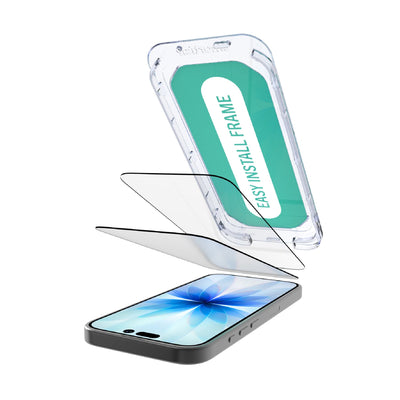
Installation makes or breaks clarity. Use an alignment frame to center the glass perfectly and apply in a low-dust environment. A steamy bathroom after a hot shower works. A perfect seal prevents the “halo effect” at the edges. Quality oleophobic coatings repel fingerprints and keep the display sharp all day (Wirecutter backs this up). And go with “2.5D” rounded edges. They prevent light from catching on the rim and creating a distracting glimmer. That kind of attention to detail is what separates a basic piece of glass from the best screen protector that doesn't affect display quality. Curious how modern tech plays with glass? Check out our guide on how MagSafe works.
| Feature | High-Clarity Tempered Glass | Matte/Anti-Glare Film | Privacy Filter Glass |
|---|---|---|---|
| Light Transmission | Maximum | Reduced | Dim |
| Color Accuracy | Perfect | Slightly Muted | Shifted/Darkened |
| Sharpness | Original Resolution | Grainy Texture | Potential Pixelation |
| Touch Feel | Smooth Glass | Paper-like/Satin | Smooth Glass |
Matte protectors reduce glare but add a grainy “sparkle” that kills resolution. If you edit photos or watch high-bitrate video, clear tempered glass is the only way to preserve pixel density and crisp text. Your protector’s job is to stay out of the way and let the technology shine.
References
Frequently Asked Questions
We get it. Choosing the right layer of defense for your digital lifeline can feel like a deep dive into specs and marketing fluff. To save you the headache, we have rounded up the most common questions people ask before they buy a best screen protector that doesn't affect display quality. No corporate speak, just straight talk from a team that lives and breathes this stuff.
Do matte or privacy screen protectors ruin the picture?
They definitely change the experience. Matte finishes use a textured surface to scatter light and reduce glare. While that helps outdoors, it often creates a grainy "sparkle" effect on solid colors and reduces the sharpness of text. Privacy filters are even more aggressive. They narrow the viewing angle to prevent prying eyes from seeing your screen, but this process blocks a significant amount of light. Most users notice a drop in brightness and a slight color shift. If your priority is a flawless image for media or creative work, a clear, high-transmission glass is the only way to go.
Will a glass protector mess with my touch sensitivity?
Only if it is thick, poorly made, or installed incorrectly. Modern high-quality tempered glass is incredibly thin, usually around 0.3 millimeters. At that thickness, your phone’s capacitive touch sensors can "see" your finger just as well as they would through the bare screen. Problems usually arise when there is dust or air trapped under the glass, which creates dead spots. A precisely cut, thin protector with a strong adhesive layer will feel exactly like the original screen. You will forget it is even there until the day it saves your phone from a nasty spill.
Can I reuse a screen protector after I take it off?
Technically, you can try, but we don't recommend it. Once you peel a protector off, the adhesive picks up every speck of dust and lint in the vicinity. Even if you clean it, you will likely end up with bubbles and a hazy look that ruins the very display quality you wanted to protect. Plus, if the glass has absorbed any impact, its structural integrity is already compromised. For the price of a decent meal, you can grab a fresh one from the best collection and start over with a perfect, crystal-clear view.
Does the oleophobic coating actually matter?
Absolutely. This is the invisible layer that repels oil from your fingers. Without it, every swipe leaves a permanent-looking smudge that requires constant wiping. Cheap protectors often use a subpar coating that wears off within a few weeks. A premium protector uses a durable, high-quality coating that lasts as long as the glass itself. It keeps your screen looking clean and reduces friction, so your thumb glides smoothly instead of sticking to the glass. It is a small detail that makes a huge difference in your daily satisfaction.
How do I get rid of those tiny bubbles under the glass?
If the bubble is just air, you can usually push it toward the edge with a credit card or a soft cloth. But if the bubble doesn't move, it is likely a speck of dust. In that case, the only fix is to lift the glass, use a piece of tape to dab the dust away, and reapply. To avoid this dance entirely, always apply your protector in a clean, low-dust environment. Some people even run a hot shower first to weigh down the dust particles in the air. A little prep work goes a long way toward that invisible, factory-fresh finish.
About the Founder
Matt Altschul is the founder and CEO of Smartish, the Austin-based mobile accessories brand known for clever, durable, and quality products. From wallet phone cases to grip-happy MagSafe designs, Smartish has been making everyday life a little easier by solving unexpected needs since 2009.
It all started with one clever idea: combine a wallet and a phone case. That sketch turned into the Wallet Slayer, which kicked off a full-blown line of problem-solving products. Now ranked among the best iPhone cases and top-rated iPhone accessories on Amazon.
With nearly two decades of e-commerce experience, Matt has scaled Smartish into a go-to brand for top MagSafe accessories and everyday tech gear that’s as functional as it is fun. He leads a quirky team of thinkers, makers, and meme-sharers who bring Smartish’s personality-packed products to life across Amazon, Shopify, and beyond.
🚀 Achievements
- Wallet Slayer launched the brand and remains a fan-favorite best-seller.
- Named Wirecutter’s “Best iPhone Case for Most People” 8 years running.
- Sponsors a cat condo (“Meownsion”) and dog kennel (“The Pup Pad”) at the Austin Humane Society, covering medical and dietary needs for pets awaiting adoption.
🔍 Core Values
- Get Gritty: solve unexpected needs with a curious mindset.
- Stay Hustlin’: Get it done. Quickly. Add sparkles.
- Squad Up: Together we can move mountains, or at least really big rocks.
- Spread Good Vibes: A motley crew of misfits, sharing cat memes and crushin’ it!
- Broadcast The Facts: Communicate fast like mushrooms in a forest.
💡 Expertise
- Durable, high-quality phone-case engineering (air-pocket corners, 1 mm raised edges).
- Personalization via the Smartish Design Studio. Make your case one-of-a-kind.
- Function-first product development that turns unexpected needs into simple solutions.
Want more Smartish? Follow us @StaySmartish or shop our collections at https://smartish.com.