




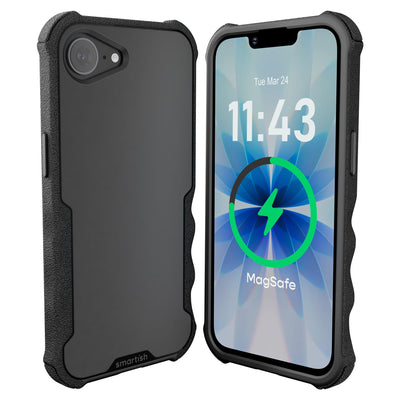


Best iPhone 15 Cases: Quick Picks by Use Case
The best iPhone 15 case is the one that solves the way you actually use your phone. Some people want the thinnest possible everyday case. Some want a case that can survive drops, coffee-shop tables, car cup holders, and the occasional sidewalk bounce. Others want a wallet case so they can leave the house with fewer things in their pockets. The iPhone 15 lineup makes those choices more important because the phone is light, expensive, camera-heavy, and designed around MagSafe accessories.
If you want a simple starting point, choose by habit. Pick a grippy everyday case if your phone is usually in your hand. Pick a wallet case if your phone and cards always travel together. Pick a tougher case if your phone gets used at work, around kids, at the gym, or anywhere drops are part of the day. Pick a clear case if you want the color of the iPhone 15 to show, but check the grip, buttons, and raised edges before you buy.
- Best everyday iPhone 15 case: a slim, grippy MagSafe-compatible case that is easy to hold and easy to pocket.
- Best protective iPhone 15 case: a case with cushioned corners, raised screen and camera edges, and enough texture to reduce slips.
- Best wallet iPhone 15 case: a case that holds the cards you actually use without turning the phone into a brick.
- Best clear iPhone 15 case: a case that shows off the phone while still giving you reliable buttons, edges, and grip.
That sounds basic, but it prevents the most common mistake: buying the case that looks best in a product photo instead of the case that feels best on day 30.
What Matters Most in an iPhone 15 Case
A good iPhone 15 case has to do several small jobs well. It should protect against ordinary drops, keep the screen and camera from sitting directly on surfaces, make the phone easier to hold, work with charging accessories, and still feel good enough that you do not want to take it off. If one of those jobs fails, the case becomes annoying fast.
Grip Comes First
The iPhone 15 is not hard to hold because it is huge; it is hard to hold because modern phones are smooth, flat, and used one-handed in distracted moments. Grip matters more than people think. A case can have strong drop claims, but if it is slippery, it increases the chance of the drop in the first place. Look for textured sides, a shape that sits securely in your palm, and material that does not feel greasy after a few days of normal use.
Raised Edges Protect the Expensive Parts
The screen and camera island are the parts you most want to keep away from tables, counters, and pavement. A useful case should have a raised lip around the screen and a raised edge around the camera area. The goal is not to make the phone bulky. The goal is to give the glass a little breathing room when you set the phone face down or when it lands at an awkward angle.
Buttons Should Feel Like Buttons
Button feel is one of the fastest ways to tell whether a case was carefully designed. Mushy buttons make the phone feel cheap. Misaligned button covers make everyday actions frustrating. On the iPhone 15, where people constantly adjust volume, lock the screen, take screenshots, and use camera shortcuts, button precision matters. A case should preserve a clean click instead of making you press harder than you should.
MagSafe Should Be Reliable, Not Just Listed
Many iPhone 15 buyers use MagSafe chargers, mounts, grips, wallets, and car accessories. A case that says it is MagSafe-compatible should hold accessories confidently and charge without constant repositioning. If you use a car mount or battery pack, magnet strength becomes more than a convenience feature. It is the difference between a setup that feels secure and one that makes you nervous every time you hit a bump.
Smartish iPhone 15 Case Styles to Consider
Smartish cases are built around practical daily annoyances: phones slipping out of hands, cards getting left behind, camera bumps scraping on tables, and cases feeling bulkier than they need to be. The right Smartish case depends on what you want to simplify.
For Most People: A Slim Grippy Case
If you want the safest recommendation for everyday use, start with a slim grippy case. This is the case style that works for commuters, students, parents, office days, and travel because it does not ask you to change how you use the phone. It should slide into a pocket easily, work with wireless charging, and add enough hold that the phone feels less fragile in your hand.
The best version of this category balances three things: a secure side texture, enough corner protection for common drops, and a profile that still feels like an iPhone 15. If you hate bulky cases but also hate using a naked phone, this is the lane to stay in.
For Card Carriers: A Wallet Case
A wallet case makes sense if you regularly carry an ID, a main card, and maybe one backup card. It is not meant to replace a full wallet for every person. It is meant to make quick errands, school pickup, walks, nights out, and travel days easier. A good iPhone 15 wallet case should hold cards securely without making them impossible to remove. It should also avoid the loose, stretched-out feeling that cheaper card slots can develop over time.
The key question is how many cards you genuinely need on your phone. If the answer is one to three, a wallet case can remove a surprising amount of pocket clutter. If you carry cash, receipts, loyalty cards, and several IDs, you may be happier with a regular case plus a separate wallet.
For Rougher Days: Extra Protective Cases
If your phone lives around concrete, tools, kids, gym bags, hikes, or job sites, choose protection over thinness. A more protective case should have reinforced corners, confident grip, and enough structure to handle repeated daily abuse. The best protective case is not necessarily the largest one. It is the one that adds protection in the places where phones actually hit: corners, edges, screen lip, and camera area.
This category is also worth considering if you keep phones for several years. A slightly tougher case can help the iPhone 15 stay in better condition through the full ownership cycle, which matters for resale, trade-in value, and simple peace of mind.
For Showing Off the Phone: Clear Cases
Clear cases are popular because the iPhone 15 colors are part of the appeal. The trade-off is that clear cases can become slippery, scratchy, or yellow-looking if the materials and finish are not right. If you choose a clear case, do not judge it only by transparency. Check whether it has a raised camera edge, usable buttons, MagSafe support if you need it, and enough grip to keep the phone from feeling like a bar of soap.
How to Choose the Right iPhone 15 Case for Your Routine
The simplest way to choose is to picture the three places your phone spends the most time. If it is usually in your hand, prioritize grip. If it is usually on a desk, counter, or nightstand, prioritize raised edges and camera protection. If it is usually attached to accessories, prioritize MagSafe strength. If it is usually in a bag with keys, chargers, snacks, and everything else life throws in there, prioritize scratch resistance and overall durability.
Also think about how often you remove your case. If you swap cases constantly, a flexible case that is easy to take on and off may matter. If you put one case on and leave it there for a year, long-term comfort matters more. A case can feel fine for five minutes and still be annoying after a week if the edges are sharp, the back is slick, or the buttons require too much pressure.
Choose Thin If You Value Pocket Feel
Thin cases are best for people who are careful with their phones and mainly want grip, scratch protection, and a little everyday drop coverage. They keep the iPhone 15 feeling like an iPhone 15. The trade-off is that they may not be the best choice for repeated hard drops or rough work environments.
Choose Protective If Drops Are Normal
If you drop your phone often, do not overthink it. Choose the more protective case. The tiny amount of extra size is usually worth it the first time the phone hits a hard floor. Look for corners and edges that feel intentionally built, not just a thick back panel with marketing copy.
Choose Wallet If Convenience Beats MagSafe Minimalism
Wallet cases are about convenience. They are best when you want your essentials attached to the thing you already never forget. Just remember that some wallet designs may change how you use MagSafe accessories, depending on card placement and case structure. If MagSafe charging is central to your setup, check compatibility before committing.
Final Recommendation
For most iPhone 15 owners, the best case is a grippy everyday case with reliable MagSafe support, raised screen and camera protection, and buttons that still feel crisp. That combination covers the widest range of real-life use without making the phone feel overbuilt. If you carry cards every day, move to a wallet case. If your phone takes punishment, choose a tougher protective case. If the color of the phone is the point, choose a clear case carefully and do not compromise on grip.
The right case should make your iPhone 15 easier to use, not just safer to drop. That is the standard worth using: protection, comfort, grip, and convenience working together in a case you will actually keep on your phone.
Common iPhone 15 Case Mistakes to Avoid
Do not buy an iPhone 15 case only because it is the cheapest option in the search results. A very cheap case can be fine for short-term scratch protection, but the weak points usually show up quickly: loose corners, buttons that stop lining up, a slick finish, or a camera lip that is too low to matter. The case is protecting a phone that costs far more than the case, so the better question is whether it will still feel dependable after months of use.
Another mistake is choosing maximum bulk when you do not need it. A huge case can be reassuring, but if it makes the phone uncomfortable, you may start taking it off at home, in the car, or while charging. The best protection is the protection you actually keep on the phone. For many iPhone 15 owners, a balanced case with grip, raised edges, and solid corners is more useful than the biggest case available.
Finally, do not ignore accessory habits. If you use a MagSafe charger every night, a MagSafe car mount every day, or a phone grip while traveling, compatibility should be part of the first decision, not an afterthought. A case that forces you to remove it for charging or mounting will become frustrating quickly.
Care Tips to Make Your Case Last Longer
A little maintenance keeps an iPhone 15 case looking and feeling better. Take the case off occasionally and wipe away dust or grit that collects around the camera opening, buttons, and charging port. Tiny debris can create scratches over time, especially if the phone lives in a bag or pocket with keys. Use a soft cloth and avoid harsh cleaners unless the case maker specifically says they are safe for the material.
If you use a clear case, clean it more often. Clear materials show fingerprints, pocket lint, and surface marks faster than darker cases. If you use a wallet case, avoid overstuffing the card slot. Forcing in extra cards can stretch the holder and make the fit less secure. If you use a rugged case, check the corners after hard drops. A case can keep protecting the phone after impact, but visible cracks or loosened areas are signs it may be time to replace it.
The goal is simple: keep the phone seated properly, keep the edges clean, and replace the case when it no longer holds the phone the way it should. A worn-out case is better than no case, but it is not the same as a case that is still doing its full job.
When to Replace Your iPhone 15 Case
Replace your case when the corners no longer hug the phone tightly, when the raised screen or camera edges have worn down, or when the buttons stop lining up cleanly. A case can look mostly fine and still be past its best if the fit has loosened. That matters because impact protection depends on the phone staying seated correctly inside the case.
You should also replace a case after a serious drop if you see cracks, separated layers, or corners that feel softer than they used to. The case may have done exactly what it was supposed to do by absorbing the hit, but that can mean it has less protection left for the next one. Think of it like replacing a helmet after a major impact: the outside is only part of the story.
If your needs change, the right case can change too. A slim case may be perfect for normal office days, while a more protective case makes sense for travel, outdoor work, or a busy season with more drops and more movement. The best iPhone 15 case is not a permanent identity. It is a tool for the way you are using the phone right now.
FAQs About iPhone 15 Cases
What type of case is best for the iPhone 15?
Most people should choose a slim grippy case with raised screen and camera edges plus MagSafe support if they use magnetic chargers or mounts.
Do iPhone 14 cases fit the iPhone 15?
No. The iPhone 15 has different dimensions and camera/button alignment, so use a case made for your exact iPhone 15 model.
Are wallet cases worth it?
Wallet cases are worth it if you usually carry one to three cards and want fewer things in your pocket. If you rely heavily on MagSafe accessories, check compatibility first.